ON THIS DAY ·
Assassination of Amílcar Cabral
20 Jan 1973 — Africa’s most original revolutionary thinker — agronomist and strategist of the Guinean war — is assassinated in Conakry months before victory. “Tell no lies, claim no easy victories.” Remember him.
WW2 is free — every chapter. Try chapters 1–2 of any 2 other atlases (3 with a free account). Opening a new atlas uses one of them. Membership opens all 21 — Join.
Free printable Decolonization of Africa study guide, sent by email ↓
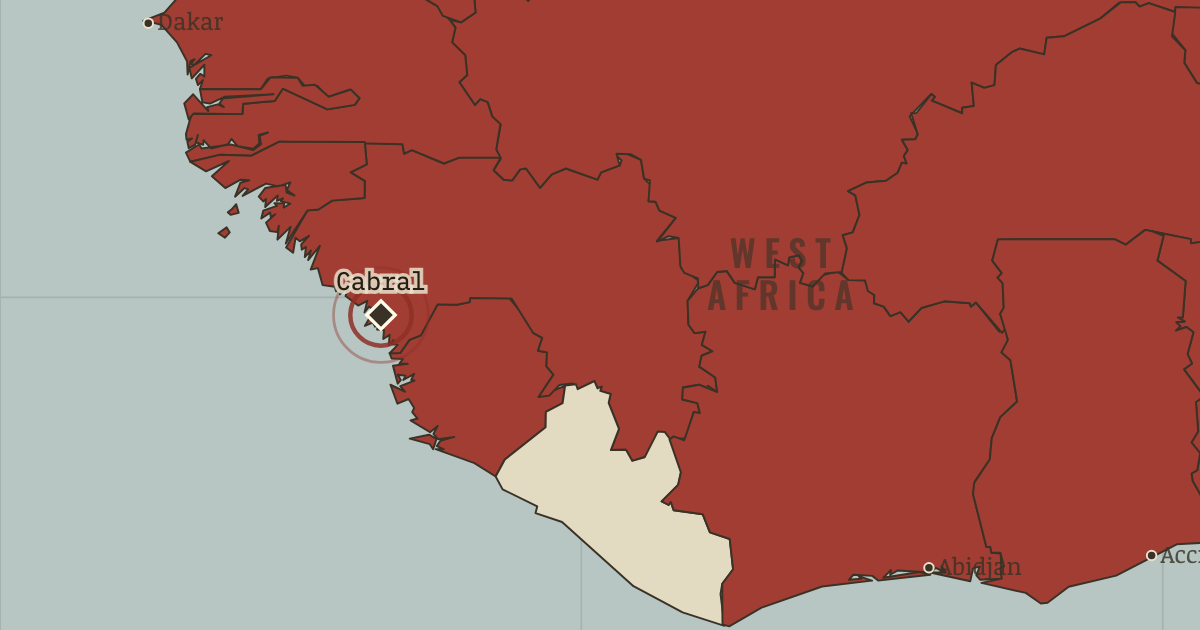
The moment in context
Portugal described its colonies as overseas provinces and fought to keep them from the early 1960s. Cabral’s PAIGC built liberated zones with schools and clinics inside Guinea-Bissau, FRELIMO waged war in Mozambique, and the MPLA, FNLA and UNITA competed inside Angola. Cold War and regional patrons armed these movements, but each conflict also grew out of the particular local form of Portuguese rule and out of rivalries among the movements themselves. The decisive weakness was never really military; it was that a poor dictatorship had no democratic mechanism through which war-weariness could change policy, so the fighting simply continued.
From Portuguese Colonial War, chapter 8 of The Decolonization of Africa, 1945–1994 (AUG 1975).
The place: Assassination of Amílcar Cabral — map and full story →
Teach this in 5 minutes
- Why it happened — Why Lisbon could not let go. Unlike Britain and France, Portugal was Europe’s poorest state and an authoritarian one. Salazar’s regime staked its legitimacy on being a great…
- The turn — Luanda, 11 November 1975 — freedom and civil war on the same day. As Portugal’s flag comes down, three liberation movements are already fighting for the capital, Cuban troops are landing to hold it for the MPLA,…
- What it changed — Five flags in one year. Guinea-Bissau (recognized 1974), then in 1975 Mozambique, Angola, and the island states. The last major European empire on the continent dissolved…
Then ask the room: Why did the Portuguese empire, the weakest of the colonial powers, hold on to its African colonies longest — and why did it then collapse all at once? The argued answer is on the chapter page →
The atlas that shows it
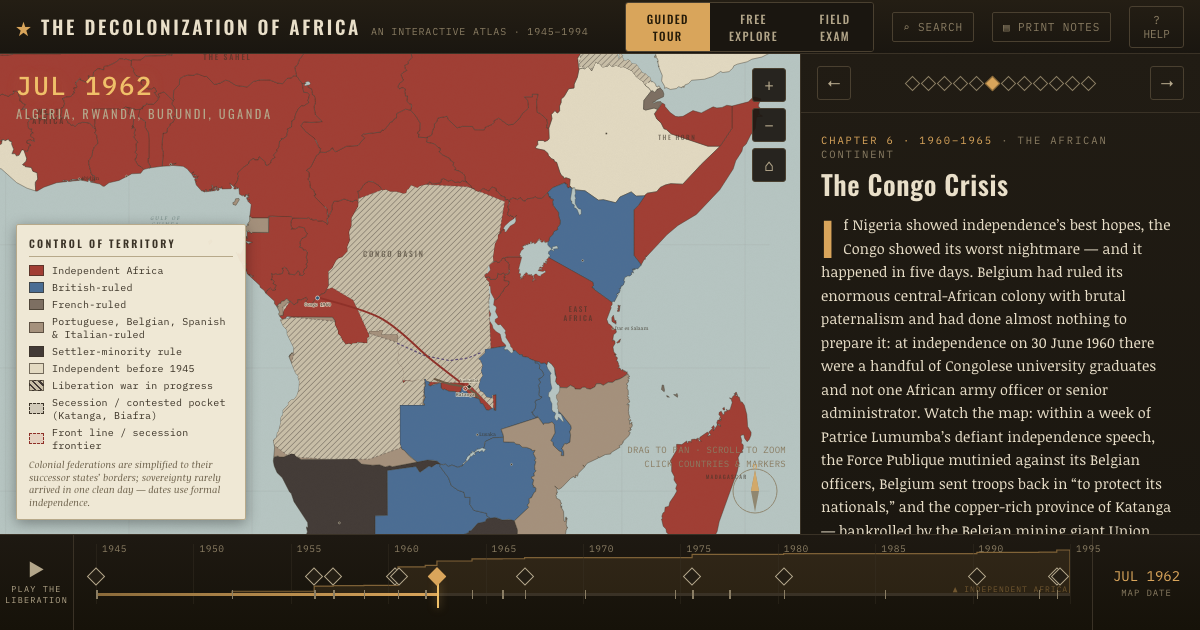
THE FREE PRINTABLE STUDY GUIDE
Join the Dispatch — a short welcome series, then a letter when a new atlas opens — and the printable study guide for The Decolonization of Africa is yours now, free.
NO TRACKING · YOUR ADDRESS IS USED FOR THE DISPATCH AND NOTHING ELSE · UNSUBSCRIBE ANYTIME