ON THIS DAY ·
Fall of Addis Ababa
5 May 1936 — Badoglio’s motorized column enters the capital; Mussolini proclaims empire from a balcony in Rome. In Geneva the exiled emperor warns: “It is us today. It will be you tomorrow.”
WW2 is free — every chapter. Try chapters 1–2 of any 2 other atlases (3 with a free account). Opening a new atlas uses one of them. Membership opens all 21 — Join.
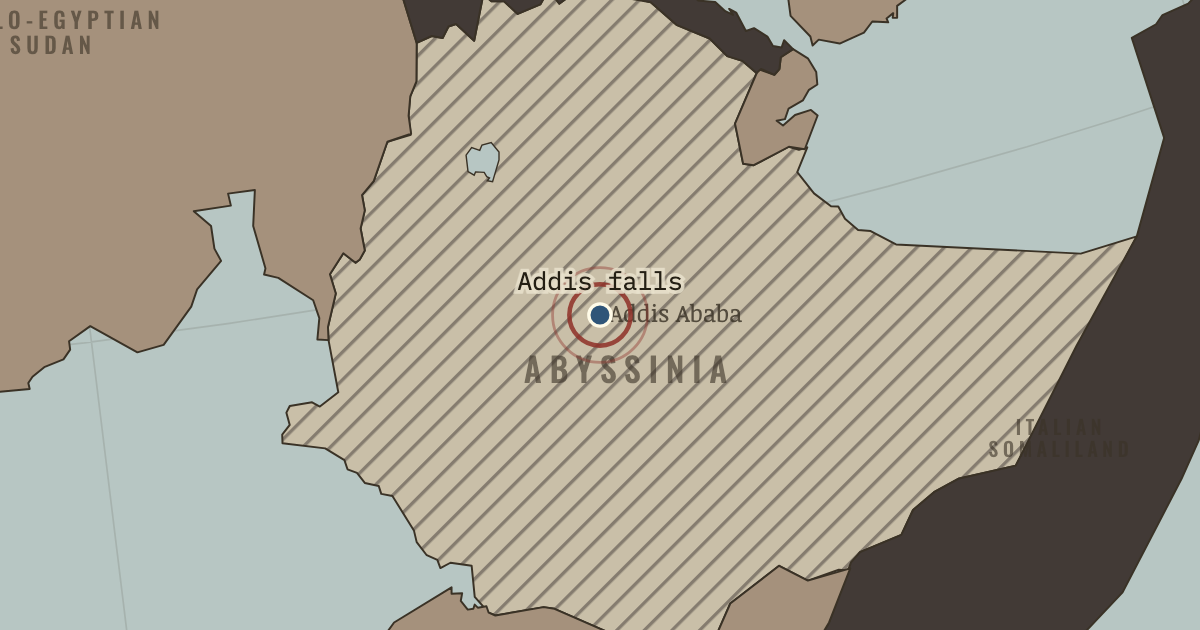
The moment in context
Italy turned the clash at Wal Wal, which occurred well inside Abyssinian territory, into the pretext for a war it had long intended to fight. Haile Selassie appealed to the League while Italian troops and supplies moved openly through the Suez Canal all year, an early sign of how little the machinery of Geneva frightened a determined aggressor. In October 1935 Italian armies advanced from Eritrea and Somaliland against a fellow member state, and the contest was desperately unequal from the start.
From Italian invasion of Abyssinia, chapter 4 of The Road to War, 1931–1941 (1935).
The place: Fall of Addis Ababa — map and full story →
Teach this in 5 minutes
- Why it happened — A regime that needed a triumph. Fascism sold itself as the antidote to Italy’s “mutilated victory” of 1918, and by 1934 the promised greatness was overdue: the corporate economy…
- The turn — Paris, December 1935. The Hoare–Laval pact is the hinge because it revealed the system’s two guarantors negotiating against their own verdict: while the League’s…
- What it changed — The Stresa Front becomes the Axis. Sanctioned by his Stresa partners while Germany stayed benevolently neutral (and kept buying Italian goods), Mussolini reversed his alignment inside…
Then ask the room: Britain and France chose not to close the Suez Canal or embargo oil. Was half-hearted sanction worse than none at all? The argued answer is on the chapter page →
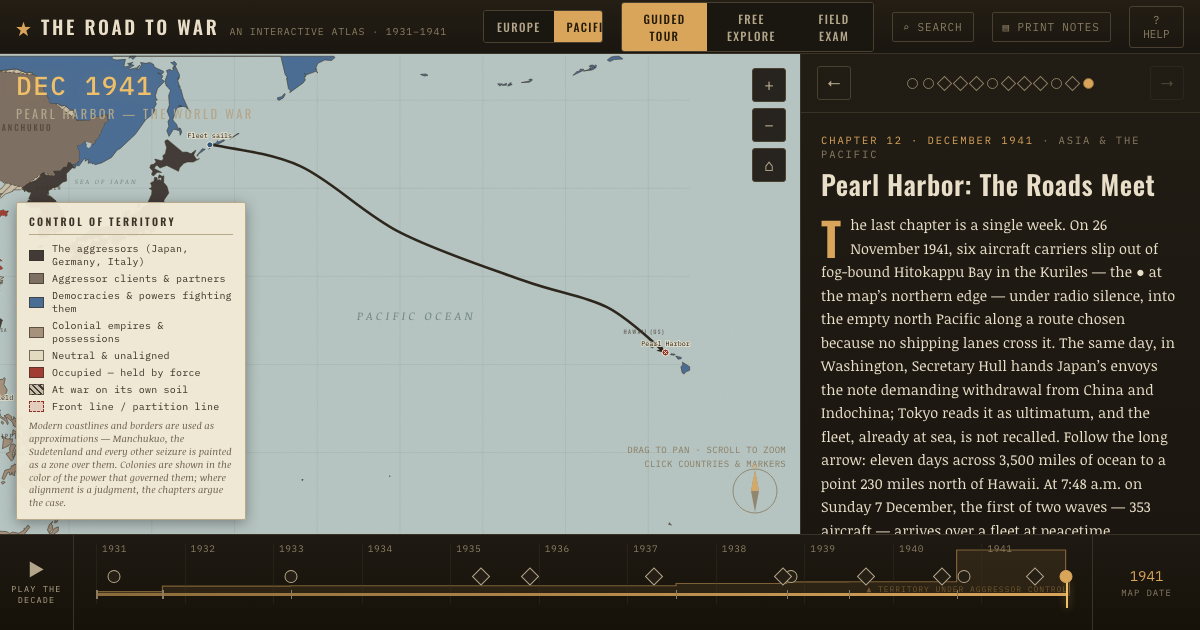
The atlas that shows it
THE FREE PRINTABLE STUDY GUIDE
Join the Dispatch — a short welcome series, then a letter when a new atlas opens — and the printable study guide for The Road to War is yours now, free.
NO TRACKING · YOUR ADDRESS IS USED FOR THE DISPATCH AND NOTHING ELSE · UNSUBSCRIBE ANYTIME