ON THIS DAY ·
Organisation of African Unity
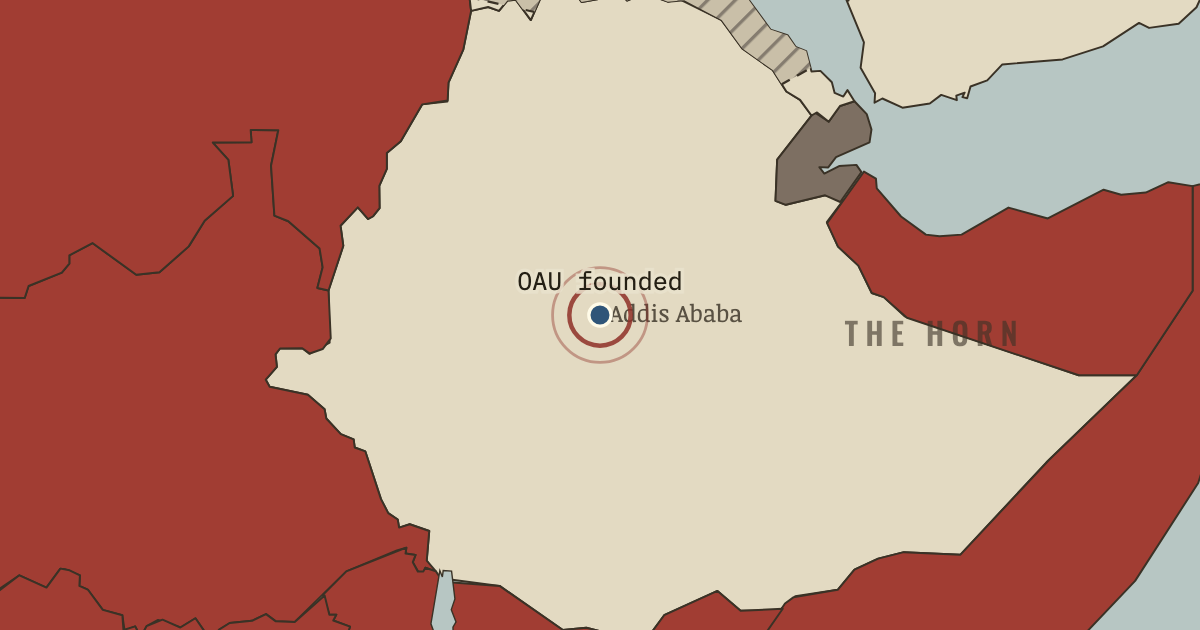
25 May 1963 — Thirty-two heads of state meet in Addis Ababa to found the Organisation of African Unity, and a year later pledge to keep the borders inherited from empire — a choice historians still debate as guarantor of peace or freezer of injustice.
WW2 is free — every chapter. Try chapters 1–2 of any 2 other atlases (3 with a free account). Opening a new atlas uses one of them. Membership opens all 21 — Join.
Free printable Decolonization of Africa study guide, sent by email ↓
The moment in context
The border decision of 1963–64 was a deliberate tradeoff rather than an oversight. The colonial lines had divided some peoples and forced others into shared states, yet reopening every frontier risked producing a Katanga on every disputed boundary, so Africa’s leaders chose legal stability instead. The choice largely worked on its own terms, because most international borders held even when governments were overthrown by force, and outright wars between African states remained rare. What it could not do was relieve the internal pressure that artificial borders and inherited economies generated, and that pressure found other outlets.
From Africa after independence, chapter 7 of The Decolonization of Africa, 1945–1994 (JAN 1967).
The place: Organisation of African Unity — map and full story →
Teach this in 5 minutes
- Why it happened — The border bargain of 1964. The OAU enshrined uti possidetis. Colonial borders are inviolable. To prevent a continent-wide unravelling into secession and irredentist war. The…
- The turn — Addis Ababa & Cairo, 1963–64 — the borders are frozen. In founding the OAU and then resolving to respect inherited frontiers, Africa’s leaders made the single most consequential structural decision of…
- What it changed — Biafra: the border principle tested in blood. The Nigerian civil war was the OAU’s doctrine enforced at terrible cost. Most African states backed the federation against secession, and the…
Then ask the room: The OAU’s decision to keep colonial borders is defended as the guarantor of African peace and attacked as the freezing of colonial injustice. Weigh the case. The argued answer is on the chapter page →
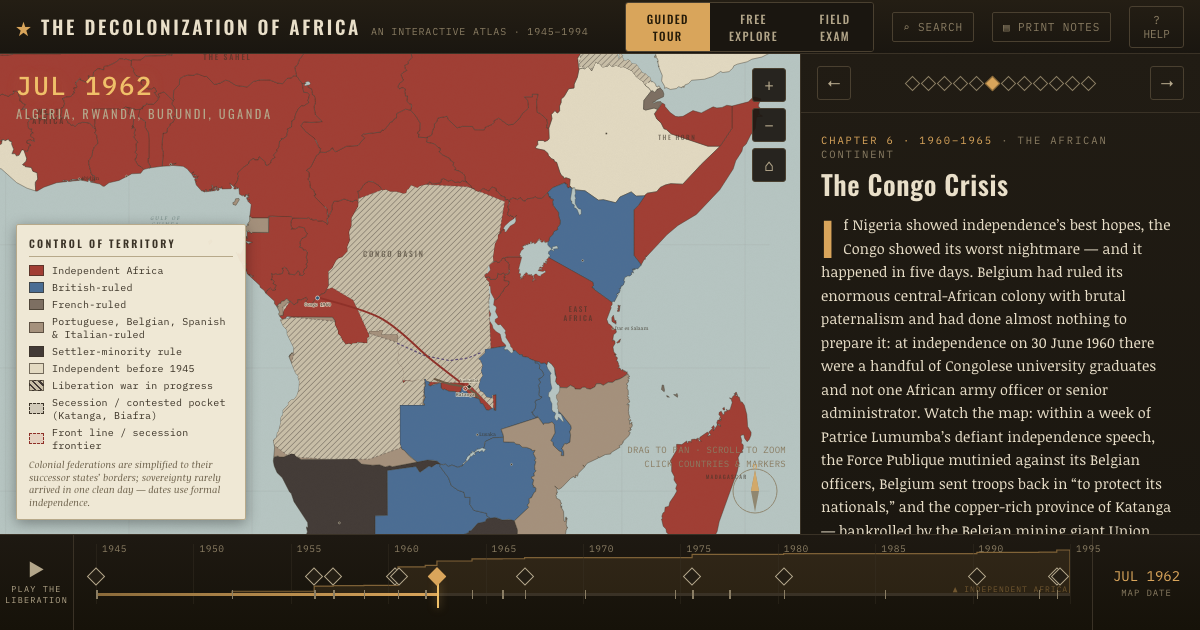
The atlas that shows it
THE FREE PRINTABLE STUDY GUIDE
Join the Dispatch — a short welcome series, then a letter when a new atlas opens — and the printable study guide for The Decolonization of Africa is yours now, free.
NO TRACKING · YOUR ADDRESS IS USED FOR THE DISPATCH AND NOTHING ELSE · UNSUBSCRIBE ANYTIME