ON THIS DAY ·
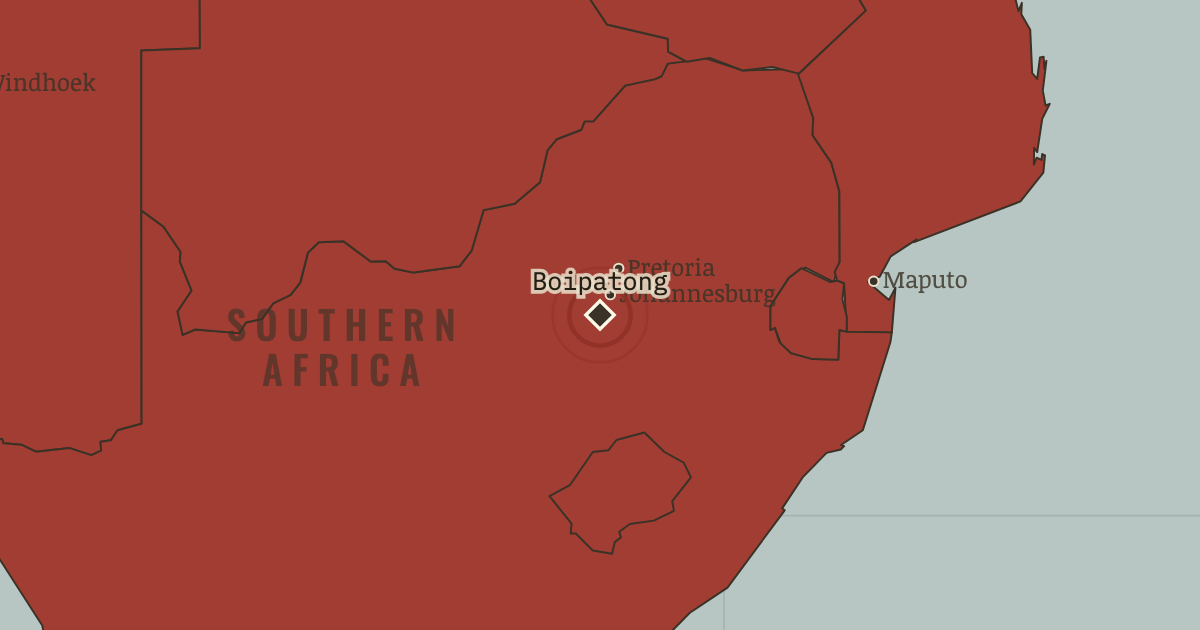
Boipatong massacre
17 Jun 1992 — Hostel-dwellers, with apparent police complicity, kill 45 township residents. The massacre nearly collapses the talks — evidence of a “third force” stoking violence to derail the transition. Remember them.
WW2 is free — every chapter. Try chapters 1–2 of any 2 other atlases (3 with a free account). Opening a new atlas uses one of them. Membership opens all 21 — Join.
Free printable Decolonization of Africa study guide, sent by email ↓
The moment in context
The CODESA negotiations turned on a single dispute, since the government sought protections that could preserve a white veto while the ANC demanded majority rule secured by constitutional rights. Violence shadowed the talks throughout, and later investigations exposed the involvement of elements within the security forces in arming and encouraging township killing, a covert effort to prove that Black rule would mean chaos. The 1992 Boipatong massacre led the ANC to break off negotiations, and the whole settlement seemed for a moment to be slipping away.
From End of apartheid, chapter 11 of The Decolonization of Africa, 1945–1994 (APR 1994).
The place: Boipatong massacre — map and full story →
Teach this in 5 minutes
- Why it happened — Two sides that could each destroy but not win. The negotiation worked because the balance of power was a genuine stalemate: the ANC could make the country ungovernable but not seize the state.…
- The turn — The election, 27 April 1994. Twenty million people, most of them voting for the first time, queue for hours to cast the ballot apartheid had denied them for a century. Four days…
- What it changed — The map completes. With South Africa’s vote, the political decolonization of Africa is complete: every territory that was European-ruled or settler-ruled in 1945 is…
Then ask the room: The South African transition is celebrated as a peaceful miracle, yet it nearly collapsed in violence several times. What actually made it hold — and what does it teach about ending entrenched conflicts? The argued answer is on the chapter page →
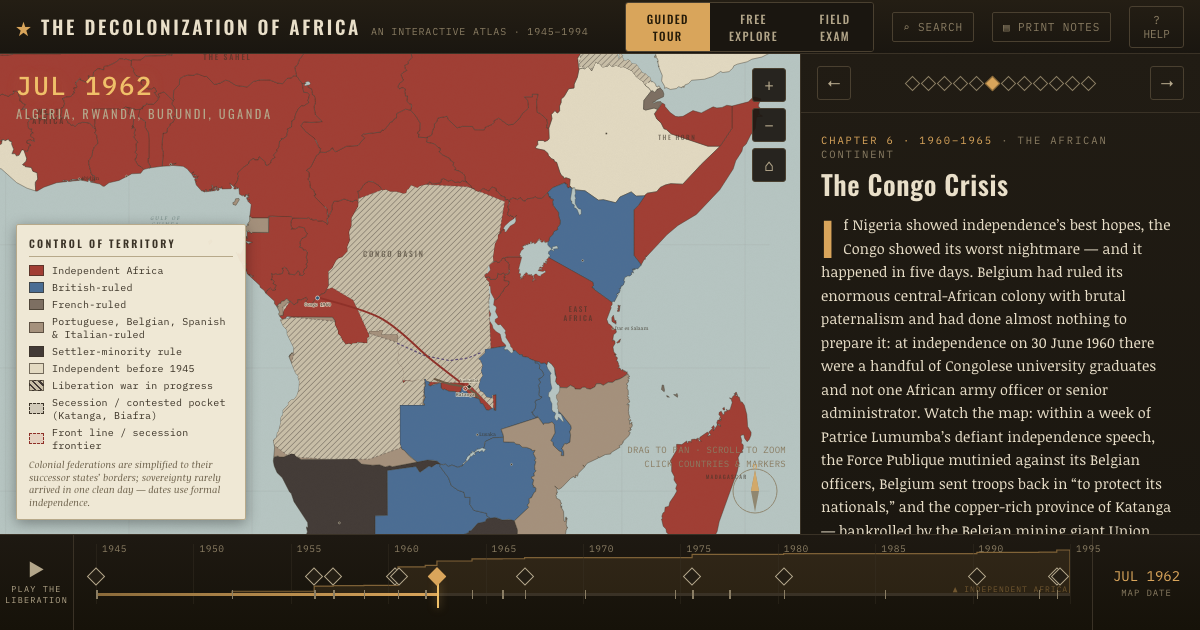
The atlas that shows it
THE FREE PRINTABLE STUDY GUIDE
Join the Dispatch — a short welcome series, then a letter when a new atlas opens — and the printable study guide for The Decolonization of Africa is yours now, free.
NO TRACKING · YOUR ADDRESS IS USED FOR THE DISPATCH AND NOTHING ELSE · UNSUBSCRIBE ANYTIME