ON THIS DAY ·
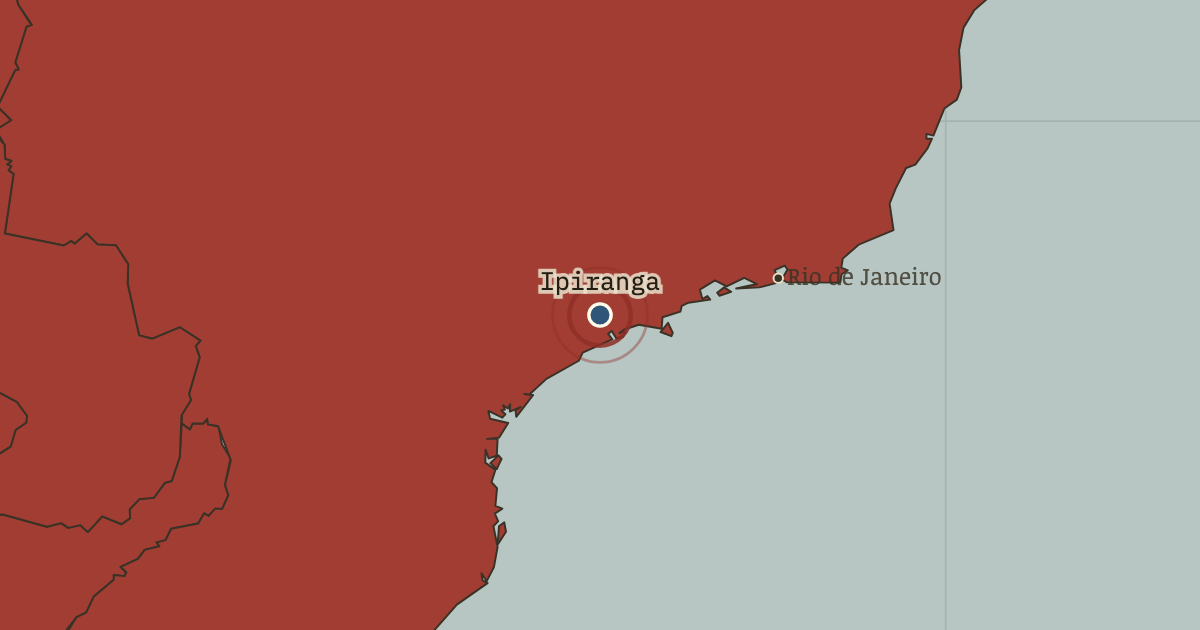
Cry of Ipiranga
7 Sep 1822 — Prince Pedro, ordered home to Lisbon, chooses Brazil instead: “Independence or death!” An empire, not a republic — and slavery stays.
WW2 is free — every chapter. Try chapters 1–2 of any 2 other atlases (3 with a free account). Opening a new atlas uses one of them. Membership opens all 21 — Join.
Free printable Age of Revolutions study guide, sent by email ↓
The moment in context
When Napoleon forced Spain’s royal family from power, Spanish American cities asked who held legitimate authority. Juntas formed in 1810, often claiming loyalty to Ferdinand VII while governing locally. In Mexico, Hidalgo mobilized Indigenous and mestizo villagers, which frightened creole elites as much as royal officials. His defeat showed that independence and social revolution could pull in different directions. Ferdinand’s return in 1814 did not restore the old bargain; he rejected constitutional rule and sent reconquest forces under Morillo.
From Latin American wars of independence, chapter 10 of The Age of Revolutions, 1775–1848 (DEC 1824).
The place: Cry of Ipiranga — map and full story →
Teach this in 5 minutes
- Why it happened — The metropole vanished first. Unlike 1776, the crisis began at the imperial center: with the king captive and Spain itself a battlefield, loyalty had no address. The juntas’…
- The turn — Ayacucho, 9 December 1824. Sucre, 29 years old, outnumbered 9,300 to 5,800 on a plateau higher than any European battlefield, destroys the Viceroy’s army in an afternoon — the…
- What it changed — Republics on paper, caudillos in practice. Bolívar’s Gran Colombia fractures into Venezuela, New Granada and Ecuador by 1830 (“I have ploughed the sea,” he writes, dying, that year); war-made…
Then ask the room: Same age, same Enlightenment, similar wars — why did British America produce one durable federation and Spanish America a dozen fragile republics? The argued answer is on the chapter page →
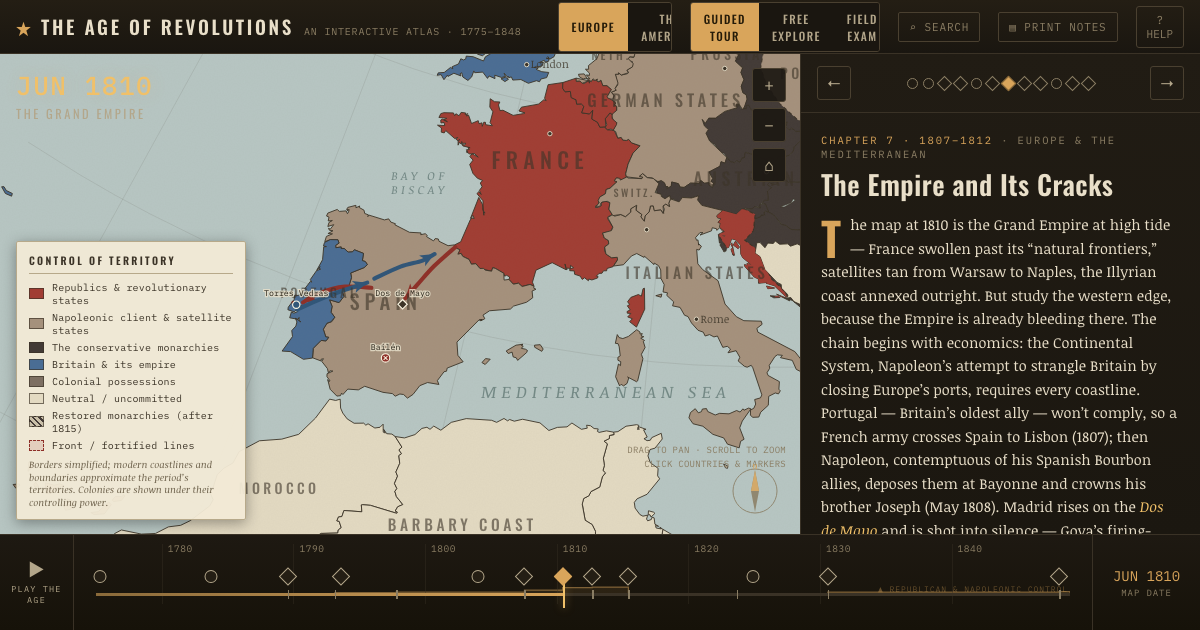
The atlas that shows it
THE FREE PRINTABLE STUDY GUIDE
Join the Dispatch — a short welcome series, then a letter when a new atlas opens — and the printable study guide for The Age of Revolutions is yours now, free.
NO TRACKING · YOUR ADDRESS IS USED FOR THE DISPATCH AND NOTHING ELSE · UNSUBSCRIBE ANYTIME