ON THIS DAY ·
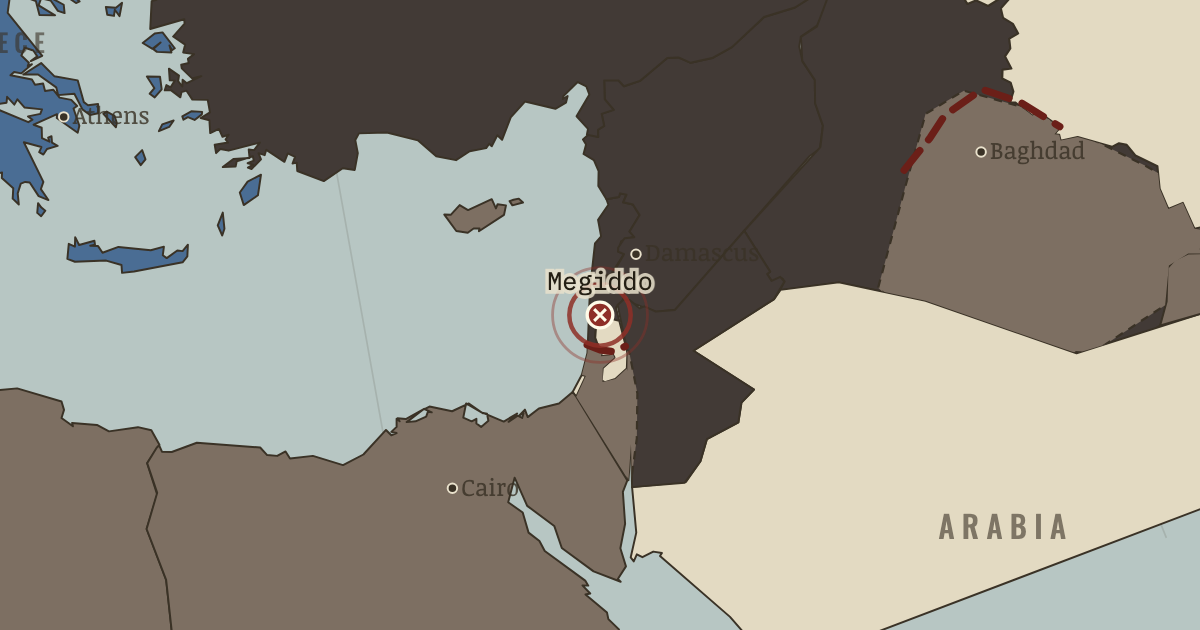
Battle of Megiddo
19-25 Sep 1918 — Allenby’s deception, cavalry and aircraft destroy three Ottoman armies in a week; Damascus falls 1 October with the Arab Northern Army entering alongside. The Ottoman armistice is signed aboard a British battleship on 30 October.
WW2 is free — every chapter. Try chapters 1–2 of any 2 other atlases (3 with a free account). Opening a new atlas uses one of them. Membership opens all 21 — Join.
The moment in context
Operation Michael opened on 21 March with a short, intense bombardment. The stormtroopers moved around the strongpoints and broke the front of the British Fifth Army, and Germany advanced farther than it had since 1914. The advance then outran its artillery, food and ammunition, and the later offensives repeated the same pattern. They won large salients on the map but never split the Allies apart or captured an objective that would decide the war.
From Spring Offensive and Hundred Days, chapter 12 of The Great War, 1871–1923 (AUG 1918).
The place: Battle of Megiddo — map and full story →
Teach this in 5 minutes
- Why it happened — Why the trench finally broke. By 1918 both sides had solved break-in: predicted artillery fire (no registration, no warning), infiltration or armor to cross the zone, air…
- The turn — Amiens, 8 August 1918. Not the deepest advance of 1918 — but the day the German army stopped believing. Units yelled “strikebreaker!” at reinforcements; 15,000 men…
- What it changed — Five weeks, three armistices. Bulgaria (29 September), the Ottomans (30 October), Austria-Hungary (3 November — its emperor’s peoples already declaring independence behind it):…
Then ask the room: Germany’s spring offensives are often called tactically brilliant and strategically bankrupt. Could any German strategy have won in 1918 — or was the only winning move not to play? The argued answer is on the chapter page →
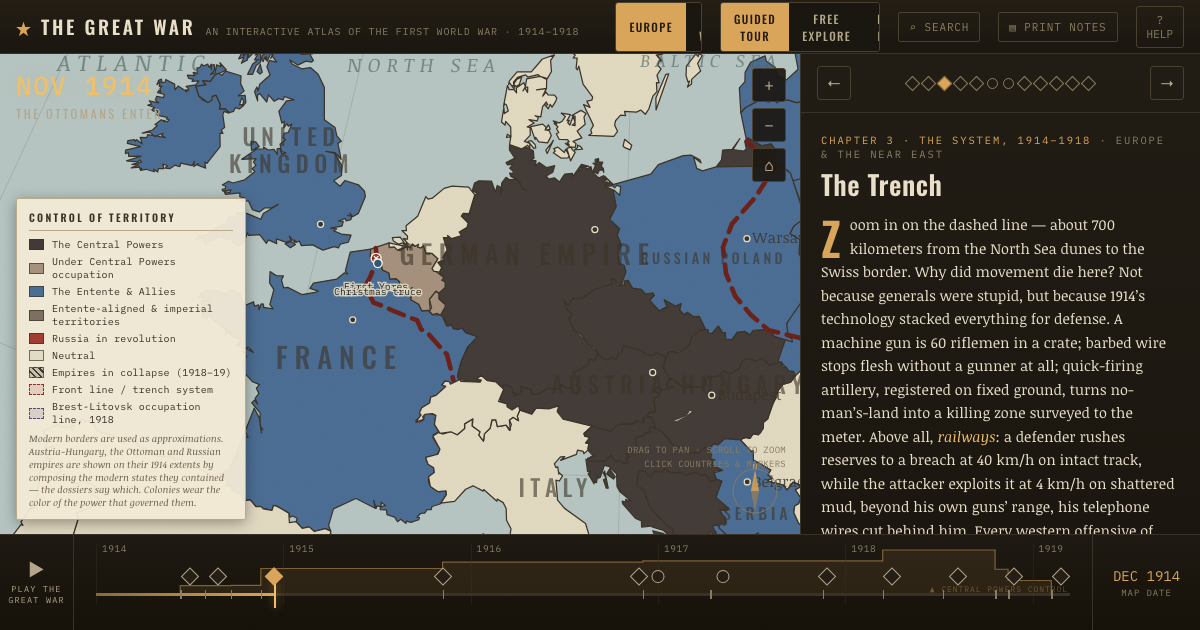
The atlas that shows it
THE FREE PRINTABLE STUDY GUIDE
Join the Dispatch — a short welcome series, then a letter when a new atlas opens — and the printable study guide for WWI is yours now, free.
NO TRACKING · YOUR ADDRESS IS USED FOR THE DISPATCH AND NOTHING ELSE · UNSUBSCRIBE ANYTIME