ON THIS DAY ·
Kiel mutiny
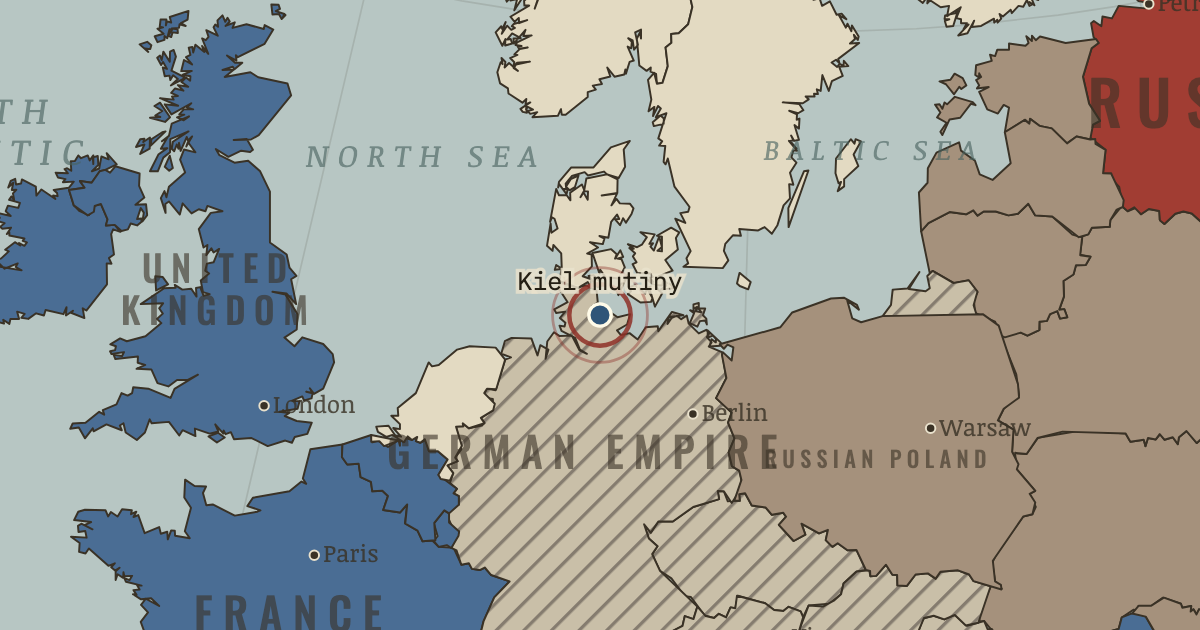
3 Nov 1918 — Ordered out for a final death-ride against the Royal Navy, the High Seas Fleet’s sailors refuse and raise red flags. In a week workers’ and soldiers’ councils hold every major German city; on the 9th the Kaiser abdicates.
WW2 is free — every chapter. Try chapters 1–2 of any 2 other atlases (3 with a free account). Opening a new atlas uses one of them. Membership opens all 21 — Join.
The moment in context
The leaders of the German fleet ordered a final sortie in late October, and the sailors at Kiel refused to die in a battle that could no longer change the war. Their mutiny spread into revolution as workers’ and soldiers’ councils appeared across Germany, and the Kaiser abdicated on 9 November. A republic was proclaimed almost in passing.
From Armistice and the end of WWI, chapter 13 of The Great War, 1871–1923 (NOV 1918).
The place: Kiel mutiny — map and full story →
Teach this in 5 minutes
- Why it happened — Collapse from the rear, forced from the front. Hold both truths against the myths: the German army was beaten in the field — retreating, surrendering in mass, its allies gone, its front weeks…
- The turn — The eleventh hour, 11 November 1918. Matthias Erzberger, Catholic politician, signs for Germany — because the generals arranged for civilians to own the defeat; he will be assassinated…
- What it changed — Four empires, one map of hatching. Scrub to 1919 and watch the successor world assemble: republics in Vienna and Berlin, Soviet power in the red east, new states from Helsinki to…
Then ask the room: Should the Allies have fought on to Berlin in 1919 instead of granting an armistice? The argued answer is on the chapter page →
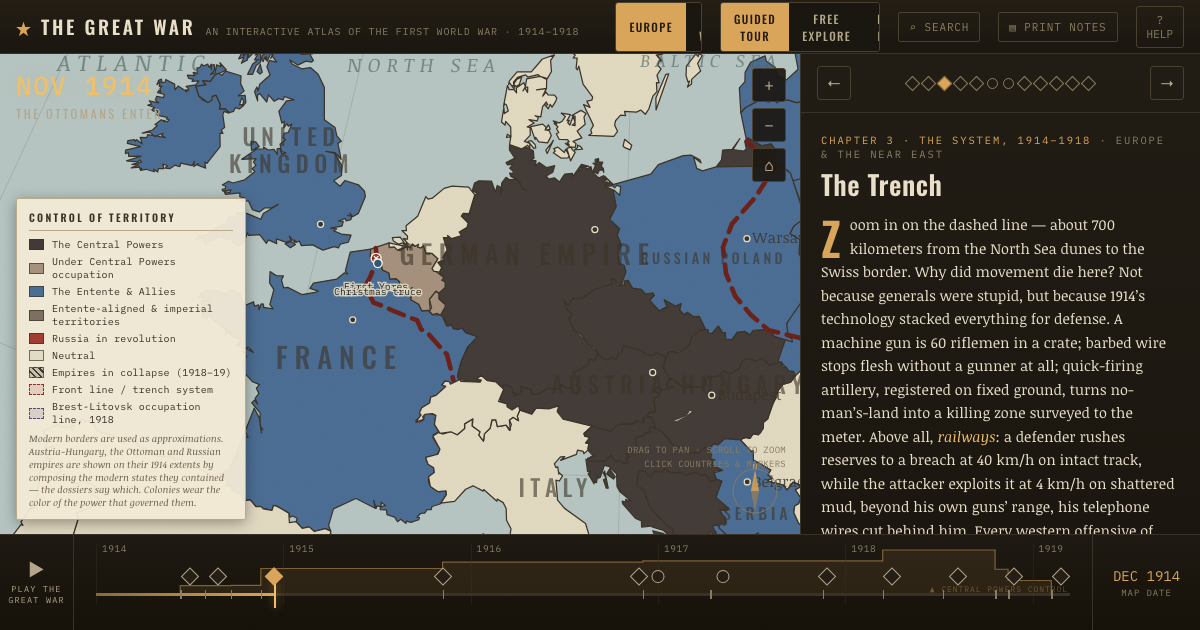
The atlas that shows it
THE FREE PRINTABLE STUDY GUIDE
Join the Dispatch — a short welcome series, then a letter when a new atlas opens — and the printable study guide for WWI is yours now, free.
NO TRACKING · YOUR ADDRESS IS USED FOR THE DISPATCH AND NOTHING ELSE · UNSUBSCRIBE ANYTIME