ON THIS DAY ·
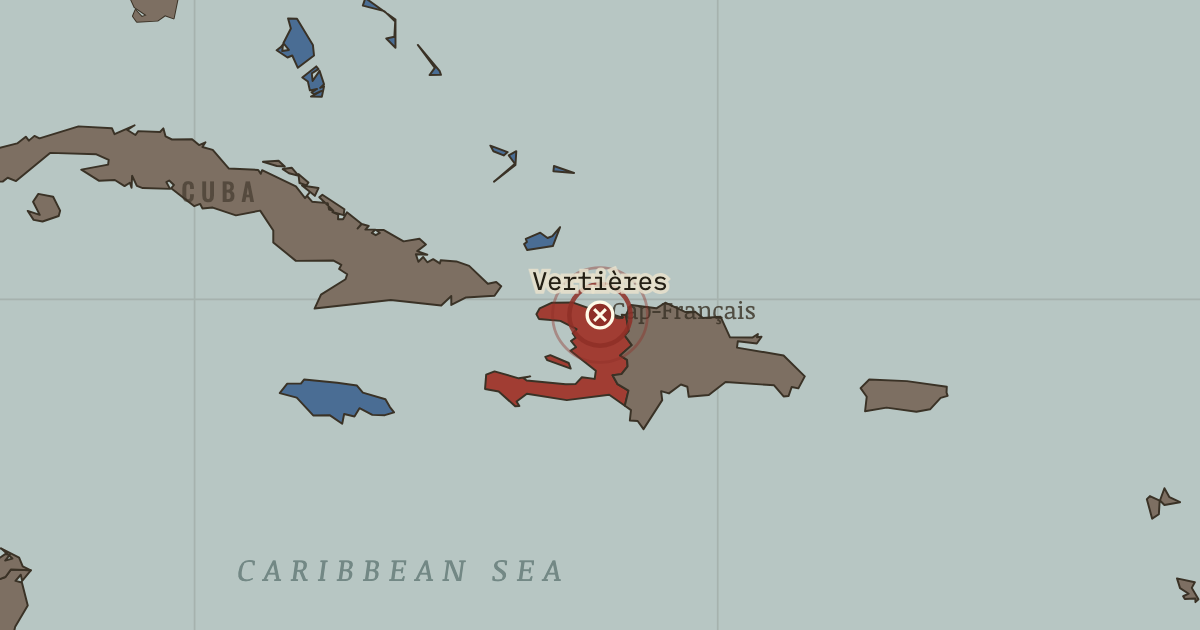
Battle of Vertières
18 Nov 1803 — Dessalines’ army storms the last French positions above Cap-Français. Six weeks later, Haiti declares independence.
WW2 is free — every chapter. Try chapters 1–2 of any 2 other atlases (3 with a free account). Opening a new atlas uses one of them. Membership opens all 21 — Join.
Free printable Age of Revolutions study guide, sent by email ↓
The moment in context
Saint-Domingue produced extraordinary sugar and coffee wealth through a labor regime with extreme mortality. The French Revolution split planters, poorer whites and free people of color over citizenship and authority. Enslaved organizers used that division. The August 1791 rising spread across the northern plain and made plantation rule impossible to restore without a major war.
From Haitian Revolution, chapter 5 of The Age of Revolutions, 1775–1848 (JAN 1804).
The place: Battle of Vertières — map and full story →
Teach this in 5 minutes
- Why it happened — The most concentrated tyranny produced the most total revolution. Saint-Domingue’s regime was demographically unlike North America’s: enslaved people outnumbered the free ten to one, most remembered African…
- The turn — Vertières, 18 November 1803. The only decisive battle in this atlas fought by former slaves against the army of the power that had freed and then re-enslaved them.…
- What it changed — Quarantined for the crime of succeeding. The US embargoes trade (1806); France demands, at gunboat-point in 1825, an “indemnity” of 150 million francs — compensation to the enslavers, paid…
Then ask the room: The American, French and Haitian revolutions all claimed universal rights. Why is only Haiti’s treated as the test case? The argued answer is on the chapter page →
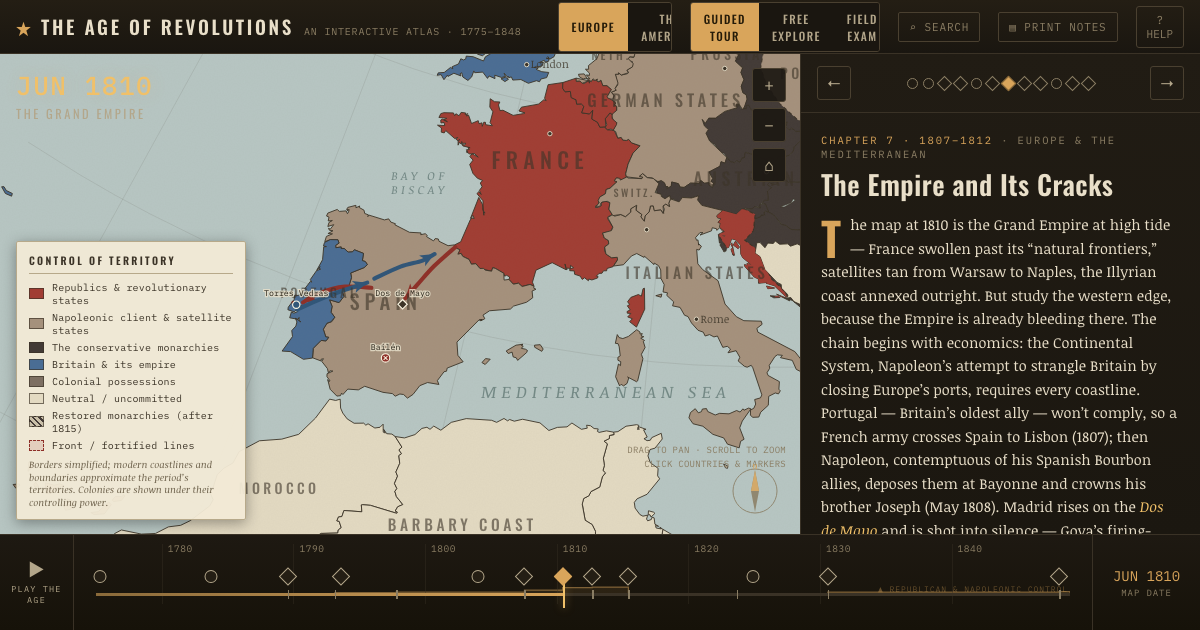
The atlas that shows it
THE FREE PRINTABLE STUDY GUIDE
Join the Dispatch — a short welcome series, then a letter when a new atlas opens — and the printable study guide for The Age of Revolutions is yours now, free.
NO TRACKING · YOUR ADDRESS IS USED FOR THE DISPATCH AND NOTHING ELSE · UNSUBSCRIBE ANYTIME