ON THIS DAY ·
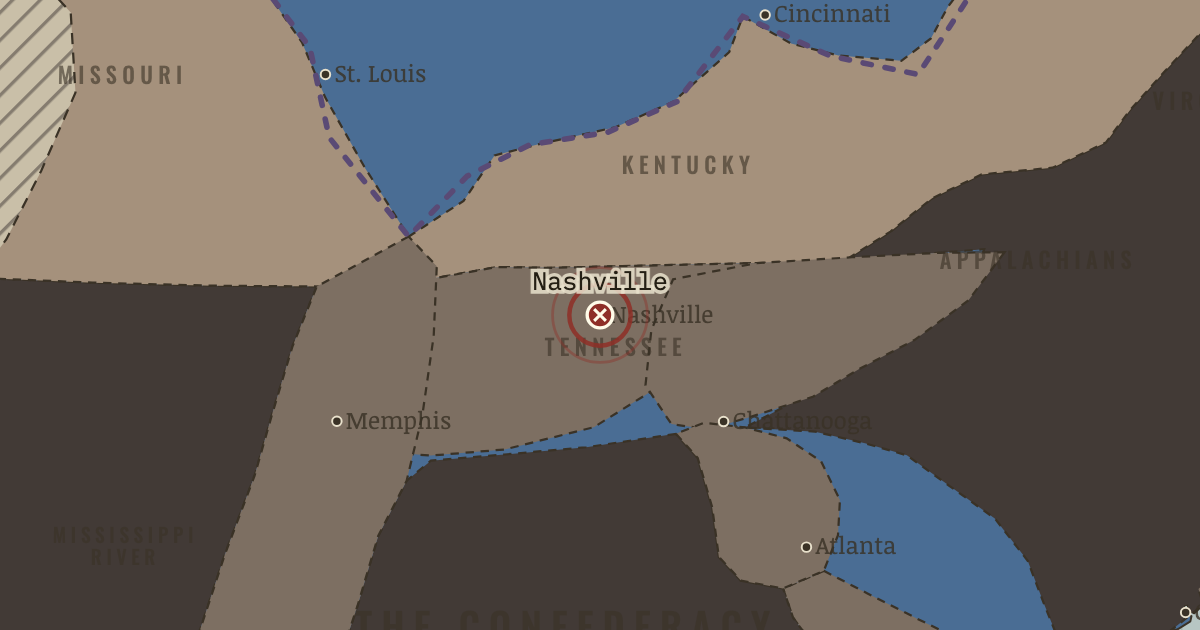
Battle of Nashville
15–16 Dec 1864 — Thomas comes out of his works and annihilates what Franklin left. The Confederacy’s second great army effectively ceases to exist; the West is decided.
WW2 is free — every chapter. Try chapters 1–2 of any 2 other atlases (3 with a free account). Opening a new atlas uses one of them. Membership opens all 21 — Join.
Free printable American Civil War study guide, sent by email ↓
The moment in context
The election of 1864 functioned as a strategic deadline for both sides. The Democratic platform called the war a failure and demanded an armistice, and although McClellan personally rejected parts of it, an armistice with Confederate armies intact would in practice have meant independence, so Confederate survival until November might produce victory through Northern politics. Atlanta’s fall on 2 September gave voters the evidence they needed that Union armies were making progress. Soldiers voting in the field, who would themselves have to keep fighting, supported Lincoln by a wide margin.
From 1864 election and March to the Sea, chapter 10 of The American Civil War, 1840–1877 (NOV 1864).
The place: Battle of Nashville — map and full story →
Teach this in 5 minutes
- Why it happened — Why the election was the real front. The Confederacy’s theory after Gettysburg was explicit in Richmond’s papers: hold everywhere until November, bleed every assault, and let Northern…
- The turn — 8 November 1864 — the Union votes. Had McClellan won, armistice talks. However he personally wavered. Would have stopped the armies with the Confederacy intact and slavery negotiable.…
- What it changed — The Confederacy’s interior collapses. After the march, Confederate soldiers’ letters change: desertion becomes an epidemic driven by letters FROM home. Armies can survive defeat, but not…
Then ask the room: Sherman’s march is still argued over: atrocity, or the most humane way to shorten a war? Set the terms of a fair verdict. The argued answer is on the chapter page →
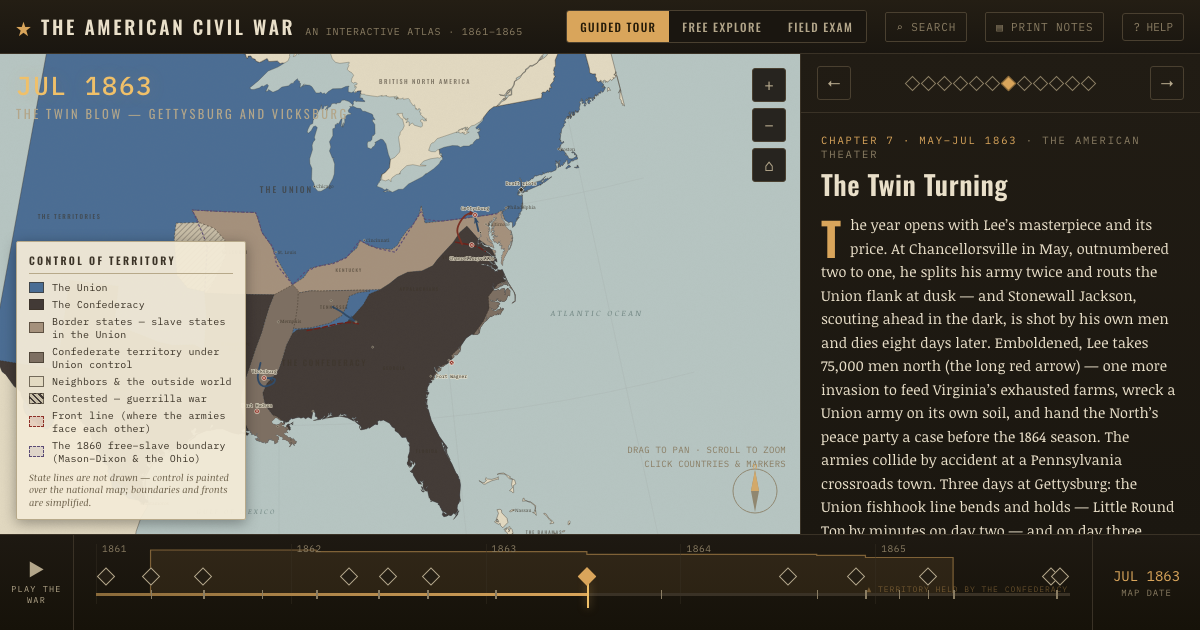
The atlas that shows it
THE FREE PRINTABLE STUDY GUIDE
Join the Dispatch — a short welcome series, then a letter when a new atlas opens — and the printable study guide for The American Civil War is yours now, free.
NO TRACKING · YOUR ADDRESS IS USED FOR THE DISPATCH AND NOTHING ELSE · UNSUBSCRIBE ANYTIME