ONE LAND · 7 ATLASES
History of Jamaica in maps
Jamaica as it appears in 7 interactive history atlases, from 1750 to 2015: Jamaica. Each era below lists who ruled the land and when control changed, linked to the dated map that shows it.
WW2 is free — every chapter. Try chapters 1–2 of any 2 other atlases (3 with a free account). Opening a new atlas uses one of them. Membership opens all 21 — Join.
Free printable Feminism and the Tunisian Revolution study guide, sent by email ↓
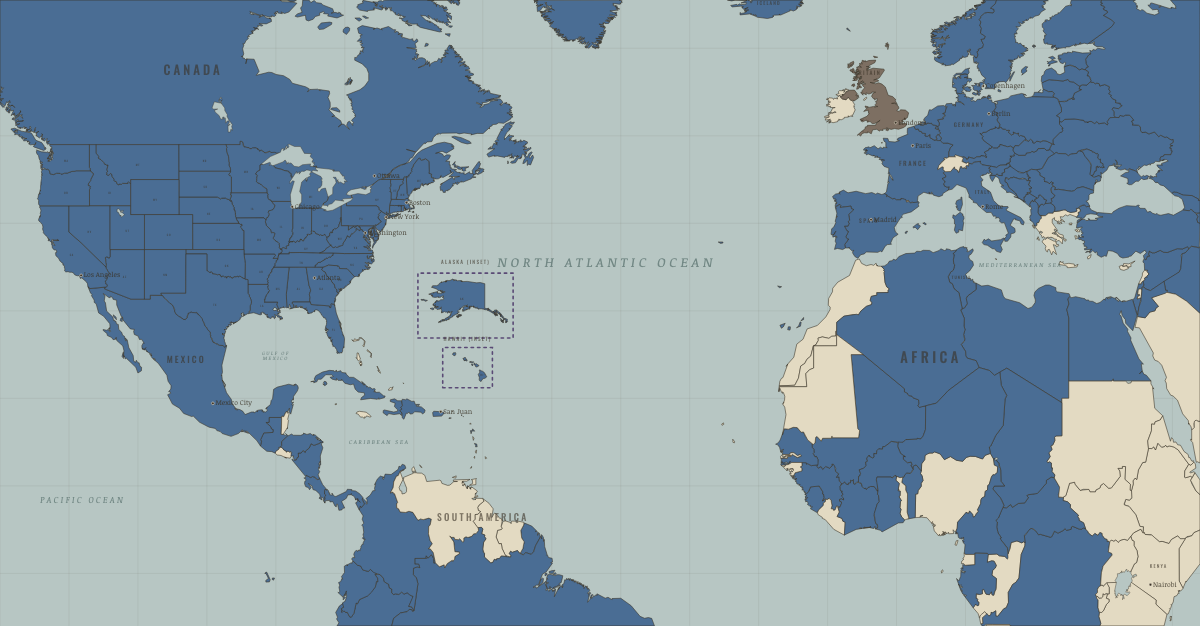
What was Jamaica before it was Jamaica? Below, every era of this land in the Maps of History atlases — who ruled it, what it was called, and when control changed — each line linked to the dated map that shows it. Modern borders stand in as an honest approximation; every atlas says so on the map itself.
Jamaica (British) · Industrial Revolution
Britain’s richest Caribbean colony in the eighteenth century, worked by enslaved Africans whose numbers reached about 300,000 by 1800. Its sugar enriched Bristol, Liverpool and London. Slavery ended in 1834–38, after the rebellion of 1831–32 led by Samuel Sharpe hastened abolition, and Britain paid compensation to the slave-owners and nothing to the people they had enslaved.
| Colony or dependency — the opening position |
INDUSTRIAL REVOLUTION: EVERY CHAPTER AND MAP →
Jamaica · Age of Revolutions
| Britain & its empire — the opening position |
AGE OF REVOLUTIONS: EVERY CHAPTER AND MAP →
Jamaica · Haiti and Kenya independence
Britain’s richest sugar island, Jamaica held a quarter of a million enslaved people in 1789 and launched the invasion of Saint-Domingue in 1793. Its governors watched Haiti closely; one sent home the printed declaration of 1804 that historians found two centuries later. Jamaica’s own enslaved rose in the great rebellion of 1831–32, slavery ended in 1834–38, and independence came on 6 August 1962, a year before Kenya’s.
| Under colonial rule — the opening position | |
| Other states and societies |
HAITI AND KENYA INDEPENDENCE: EVERY CHAPTER AND MAP →
British Jamaica · American Civil War
British Jamaica had been free since abolition in 1834–38 — the great precedent both American sides argued over (planters called it ruin; abolitionists called it proof). In October 1865, the Morant Bay rebellion — freedpeople protesting land and justice, put down by Governor Eyre with some 400 executions — split British opinion in a furious public controversy. The empire that lectured Washington on slavery faced its own reckoning over what freedom without land or votes was worth: the exact question Reconstruction was failing to answer.
| Neighbors & the outside world — the opening position |
AMERICAN CIVIL WAR: EVERY CHAPTER AND MAP →
Jamaica · WWI
| Entente-aligned & imperial territories — the opening position |
Jamaica · Cold War
| NATO & core Western allies — the opening position | |
| Non-aligned & neutral |
COLD WAR: EVERY CHAPTER AND MAP →
Jamaica · Feminism and the Tunisian Revolution
| Authoritarian, one-party or colonial rule — the opening position | |
| No reform yet / outside this story | |
| Right won in law |
FEMINISM AND THE TUNISIAN REVOLUTION: EVERY CHAPTER AND MAP →
Related
THE FREE PRINTABLE STUDY GUIDE
Join the Dispatch — a short welcome series, then a letter when a new atlas opens — and a printable atlas study guide of your choice is yours now, free.
NO TRACKING · YOUR ADDRESS IS USED FOR THE DISPATCH AND NOTHING ELSE · UNSUBSCRIBE ANYTIME