ON THIS DAY ·
February Revolution in Paris
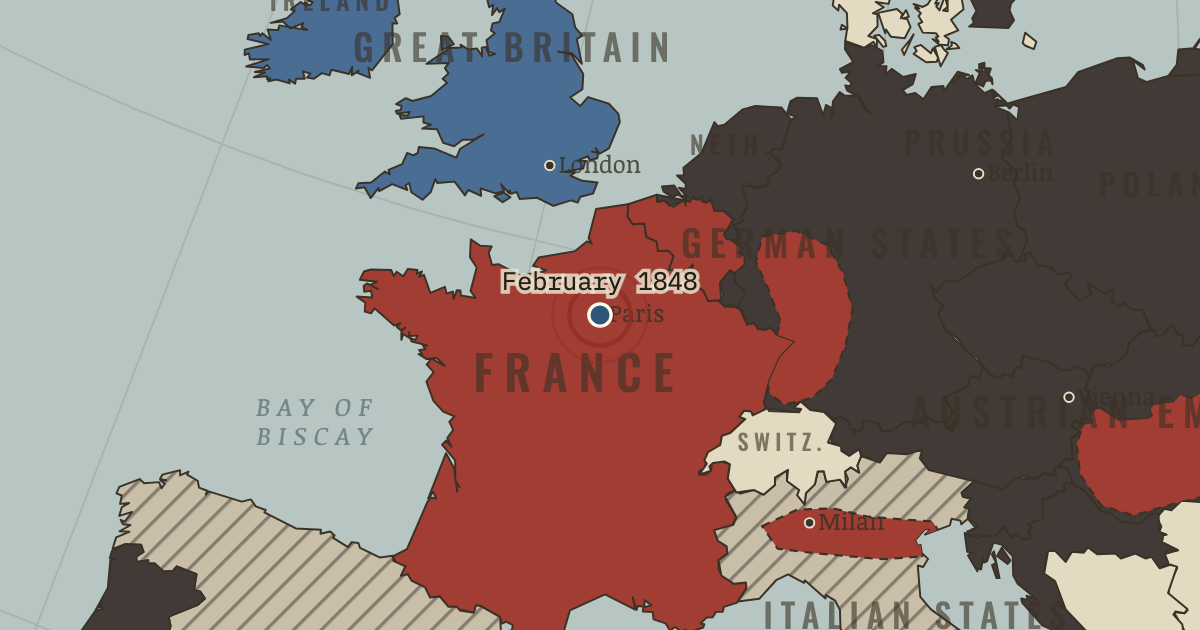
22–24 Feb 1848 — Paris rises again; Louis-Philippe abdicates; the Second Republic decrees universal male suffrage. The news sets a continent alight within weeks.
WW2 is free — every chapter. Try chapters 1–2 of any 2 other atlases (3 with a free account). Opening a new atlas uses one of them. Membership opens all 21 — Join.
Free printable Age of Revolutions study guide, sent by email ↓
The moment in context
The wave began in economic distress — failed harvests, high food prices, a credit crisis and urban unemployment. Paris’s rising in February overthrew the July Monarchy and established universal male suffrage, and the news moved so rapidly that within weeks Vienna had risen and Metternich had fled, Budapest had won the April Laws, Berlin’s king had conceded after street fighting, and Milan had driven out its Austrian garrison. Frankfurt’s delegates began writing a constitution for a Germany that did not yet exist. Habsburg authorities abolished serfdom, lifting obligations from more than forty million people.
From Revolutions of 1848, chapter 12 of The Age of Revolutions, 1775–1848 (MAR 1848).
The place: February Revolution in Paris — map and full story →
Teach this in 5 minutes
- Why it happened — Hunger, credit, and the last old-regime famine. The potato blight and failed harvests of 1845–47 doubled food prices, detonated a credit crash and mass urban unemployment — Europe’s last…
- The turn — Paris, 22–24 February 1848. A banned banquet, a volley on the Boulevard des Capucines, corpses paraded by torchlight, and by the third morning the July Monarchy — the…
- What it changed — What survived the defeat. The permanent ledger: serfdom abolished in Central Europe (40+ million people); constitutions retained in Piedmont, Prussia, Denmark, the…
Then ask the room: “1848: the turning point at which modern history failed to turn.” Is the famous verdict right? The argued answer is on the chapter page →
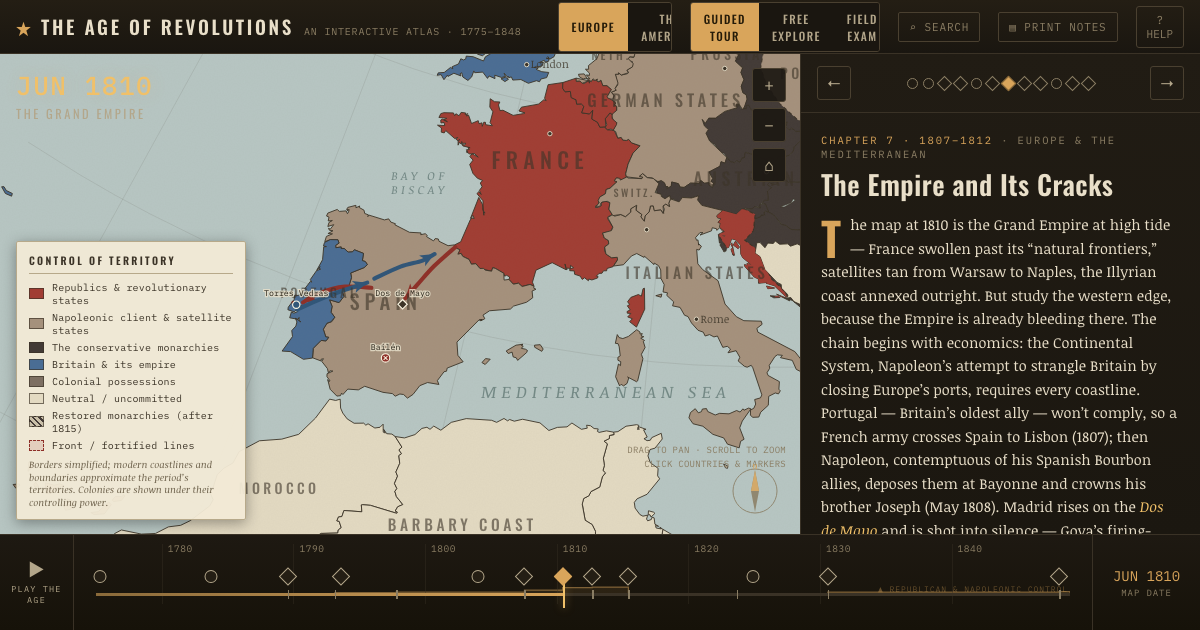
The atlas that shows it
THE FREE PRINTABLE STUDY GUIDE
Join the Dispatch — a short welcome series, then a letter when a new atlas opens — and the printable study guide for The Age of Revolutions is yours now, free.
NO TRACKING · YOUR ADDRESS IS USED FOR THE DISPATCH AND NOTHING ELSE · UNSUBSCRIBE ANYTIME