ON THIS DAY ·
Bread Peace with Ukraine
1 Mar 1918 — German troops enter Kyiv, propping a client government in exchange for a promised million tons of grain. A million men stay east to hold and strip the conquest — men Ludendorff will shortly need in France.
WW2 is free — every chapter. Try chapters 1–2 of any 2 other atlases (3 with a free account). Opening a new atlas uses one of them. Membership opens all 21 — Join.
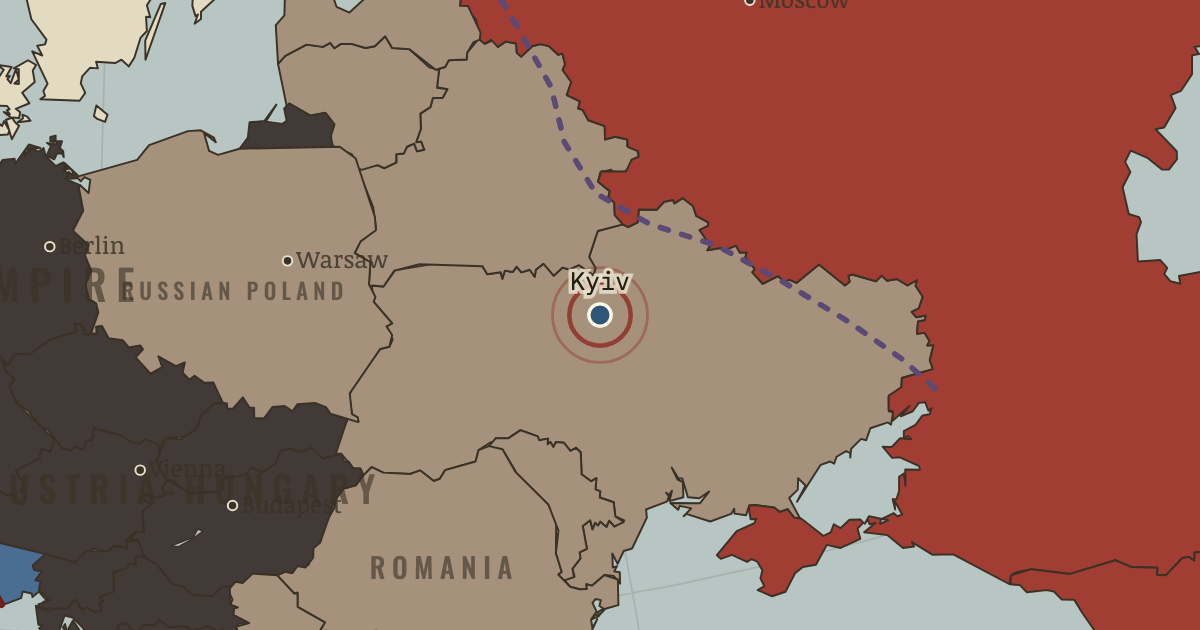
The moment in context
At Brest-Litovsk, the Bolshevik negotiator Trotsky tried to stop fighting without signing Germany’s terms, gambling that Germany would not attack a country that had already laid down its arms. Germany answered with Operation Faustschlag, and its troops advanced rapidly against almost no organized resistance. Lenin then forced the Bolshevik leadership to accept the treaty on 3 March 1918, over the fierce objections of much of his party.
From Treaty of Brest-Litovsk and WWI, chapter 11 of The Great War, 1871–1923 (APR 1918).
The place: Bread Peace with Ukraine — map and full story →
Teach this in 5 minutes
- Why it happened — Lenin’s cold arithmetic. Lenin forced the “obscene peace” through his own Central Committee on one argument: the revolution has no army, and space and time can be…
- The turn — The treaty signed, 3 March 1918. The moment the gamble locks in. With the stroke that wins Germany the east, the western clock starts: every week spent digesting the conquest is a…
- What it changed — The last race. 48 divisions west, a five-hour hurricane bombardment being rehearsed, Michael scheduled for 21 March: the entire war compresses into a six-month…
Then ask the room: Brest-Litovsk gave Germany everything it had wanted in the east. Why didn’t it save Germany? The argued answer is on the chapter page →
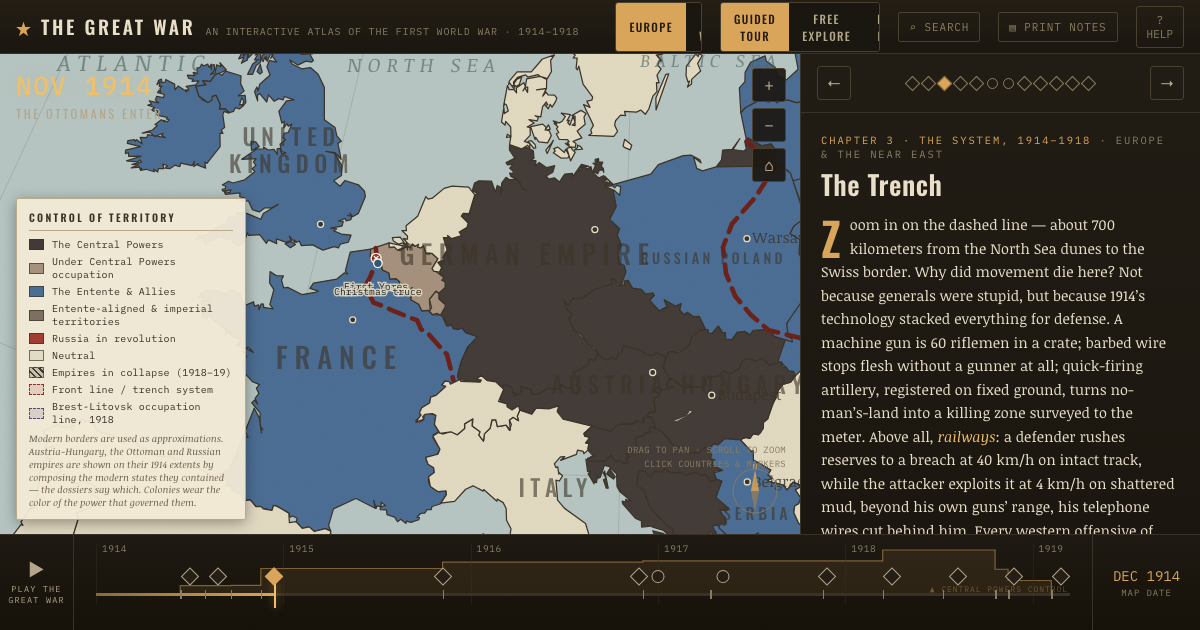
The atlas that shows it
THE FREE PRINTABLE STUDY GUIDE
Join the Dispatch — a short welcome series, then a letter when a new atlas opens — and the printable study guide for WWI is yours now, free.
NO TRACKING · YOUR ADDRESS IS USED FOR THE DISPATCH AND NOTHING ELSE · UNSUBSCRIBE ANYTIME