ON THIS DAY ·
Sharpeville massacre
21 Mar 1960 — South African police fire on a crowd protesting the pass laws, killing 69, most shot in the back. The ANC and PAC are banned and turn to armed struggle; the world can no longer quite look away. Remember them.
WW2 is free — every chapter. Try chapters 1–2 of any 2 other atlases (3 with a free account). Opening a new atlas uses one of them. Membership opens all 21 — Join.
Free printable Decolonization of Africa study guide, sent by email ↓
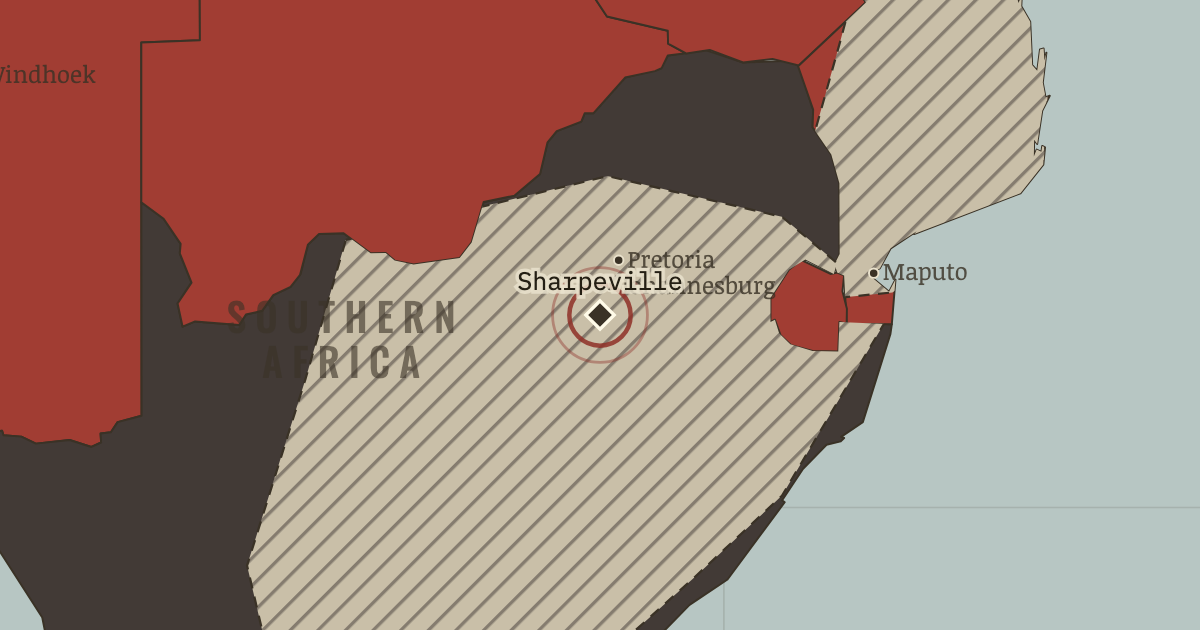
The moment in context
From 1948 the National Party expanded white-minority rule into apartheid, a system that reached into almost every part of life. Pass laws controlled where people could move, land policy reserved most of the country for the white minority, and the homeland policy assigned Black South Africans a nominal citizenship in fragmented territories so the state could deny them national political rights while still using their labour. After police killed sixty-nine people at Sharpeville in 1960, the banned ANC and PAC turned toward armed resistance, Mandela was imprisoned for twenty-seven years, and the 1976 Soweto uprising and Biko’s death in custody became further evidence of the system’s violence.
From Apartheid in South Africa, chapter 10 of The Decolonization of Africa, 1945–1994 (MAR 1990).
The place: Sharpeville massacre — map and full story →
Teach this in 5 minutes
- Why it happened — The architecture of apartheid — and why recap it here. From 1948 the National Party legislated total racial separation: the population classified by race, mixed marriage banned, land reserved (87% for…
- The turn — Mandela walks free, 11 February 1990. After twenty-seven years, Nelson Mandela leaves prison on foot, and a struggle that had run through massacre, exile and armed resistance enters its…
- What it changed — From resistance to transition. Unbanning the ANC and freeing Mandela converted a liberation struggle into a negotiation between a state and a movement, each able to destroy the…
Then ask the room: After decades of surviving protest, sanctions and armed struggle, why did the apartheid state finally choose to negotiate itself out of power around 1990? The argued answer is on the chapter page →
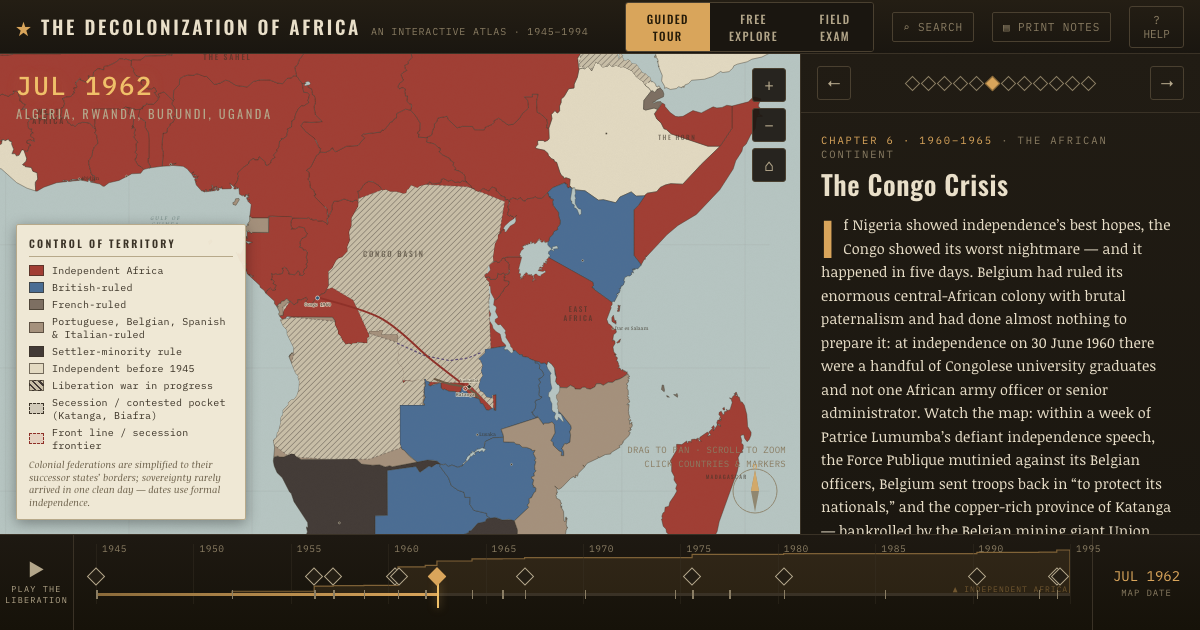
The atlas that shows it
THE FREE PRINTABLE STUDY GUIDE
Join the Dispatch — a short welcome series, then a letter when a new atlas opens — and the printable study guide for The Decolonization of Africa is yours now, free.
NO TRACKING · YOUR ADDRESS IS USED FOR THE DISPATCH AND NOTHING ELSE · UNSUBSCRIBE ANYTIME