ON THIS DAY ·
Juneteenth
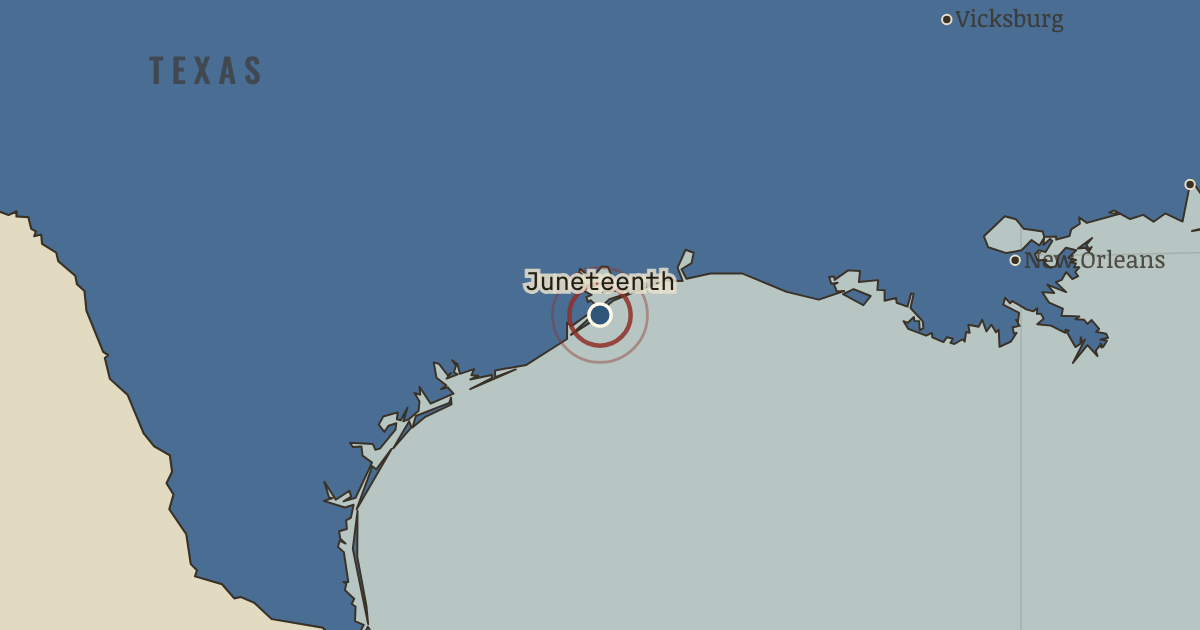
19 Jun 1865 — Union troops reach Galveston and proclaim that “all slaves are free” — two and a half years after the Proclamation. Freedom arrived where the army arrived; Juneteenth remembers exactly that.
WW2 is free — every chapter. Try chapters 1–2 of any 2 other atlases (3 with a free account). Opening a new atlas uses one of them. Membership opens all 21 — Join.
Free printable American Civil War study guide, sent by email ↓
The moment in context
The achievements of Reconstruction came first, and they were genuinely revolutionary. Constitutional amendments ended slavery, defined national citizenship, and protected voting against racial exclusion, and beneath that legal frame freedpeople legalized marriages, searched for relatives sold away, built churches and schools, and entered politics. About 2,000 Black men held office, while new state governments created the South’s first public school systems. These gains rested in large part on federal law and the presence of the army.
From Reconstruction era, chapter 12 of The American Civil War, 1840–1877 (NOV 1865).
The place: Juneteenth — map and full story →
Teach this in 5 minutes
- Why it happened — Land was the revolution not attempted. Freedom without property meant renting your old master’s fields. Sharecropping’s slide into debt peonage was visible by 1870. The alternatives were…
- The turn — Colfax, Easter Sunday 1873. A contested Louisiana election. Black citizens defending a courthouse. A white paramilitary force with a cannon. Between 60 and 150 dead, most after…
- What it changed — Jim Crow — but not immediately. Full disfranchisement and segregation statutes arrive mostly in the 1890s, a generation after 1877. Black men kept voting, and winning offices, in…
Then ask the room: Could Reconstruction have succeeded — or was failure structural once the war ended? The argued answer is on the chapter page →
The atlas that shows it
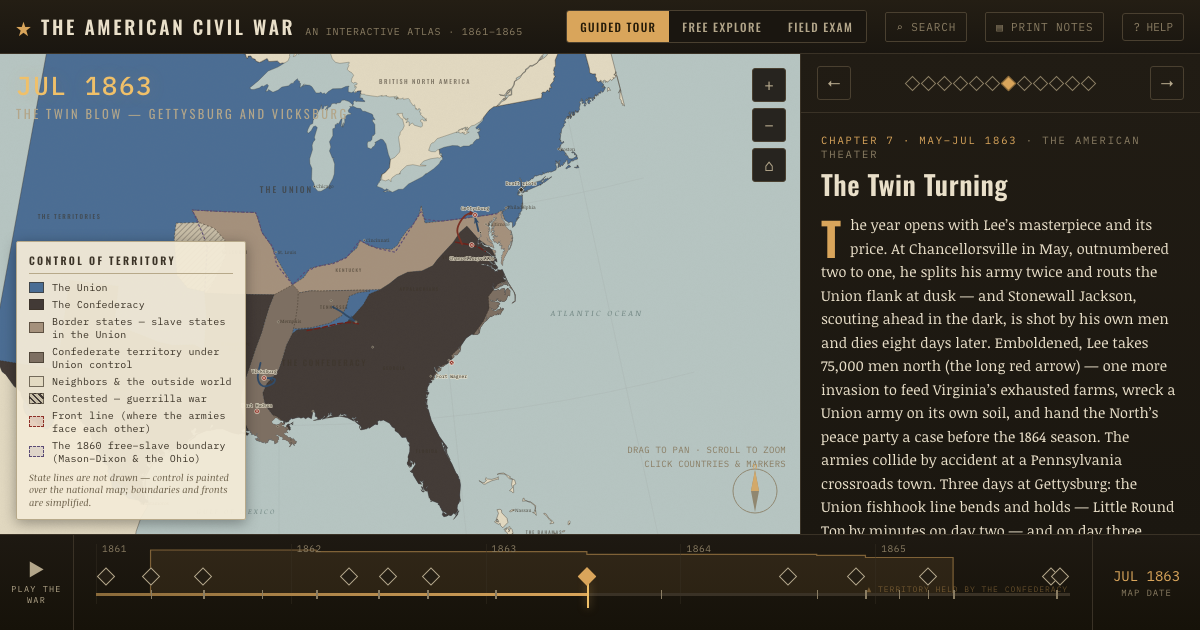
THE FREE PRINTABLE STUDY GUIDE
Join the Dispatch — a short welcome series, then a letter when a new atlas opens — and the printable study guide for The American Civil War is yours now, free.
NO TRACKING · YOUR ADDRESS IS USED FOR THE DISPATCH AND NOTHING ELSE · UNSUBSCRIBE ANYTIME