ON THIS DAY ·
Battle of Bailén
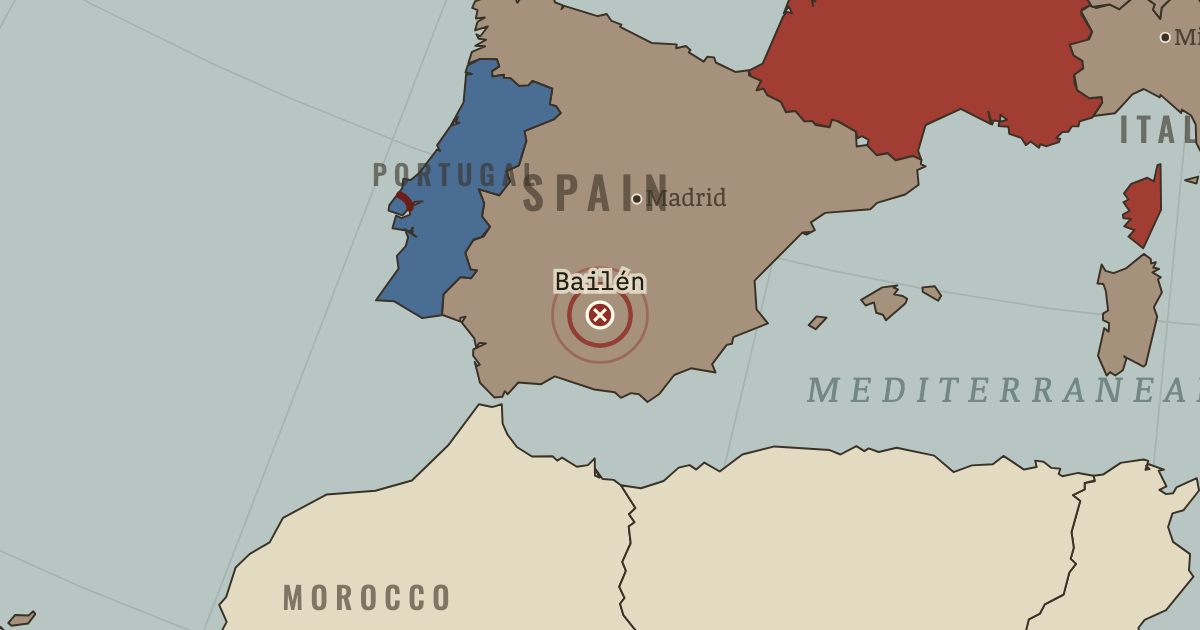
19 Jul 1808 — Spanish regulars and levies force 18,000 French troops to capitulate — the Empire’s first surrender in the open field. Europe takes note: they can be beaten.
WW2 is free — every chapter. Try chapters 1–2 of any 2 other atlases (3 with a free account). Opening a new atlas uses one of them. Membership opens all 21 — Join.
Free printable Age of Revolutions study guide, sent by email ↓
The moment in context
Napoleon could not invade Britain after Trafalgar, so he tried instead to close continental markets to British goods. Portugal refused to comply, so French troops crossed Spain in 1807, and Napoleon then forced the Spanish royal family to abdicate and installed his brother Joseph Bonaparte. Madrid rose on 2 May 1808 and was answered with severe reprisals. Local juntas, or emergency councils, then claimed authority in the absent king’s name.
From Peninsular War, chapter 7 of The Age of Revolutions, 1775–1848 (JUN 1810).
The place: Battle of Bailén — map and full story →
Teach this in 5 minutes
- Why it happened — Economic war without an exit. The Continental System hurt Britain (exports slumped, 1808 and 1811-12 were crisis years) but hurt the continent more — and made smuggling a…
- The turn — Bailén, 19 July 1808. Eighteen thousand imperial troops — admittedly second-line — surrender to Spanish regulars and levies in the Andalusian heat. Materially…
- What it changed — The veteran drain. Iberia became the Empire’s permanent second front: the men and horses lost there were precisely the professionals missing from the 1812 army, which…
Then ask the room: Why could Napoleon beat every army in Europe but not Spain? The argued answer is on the chapter page →
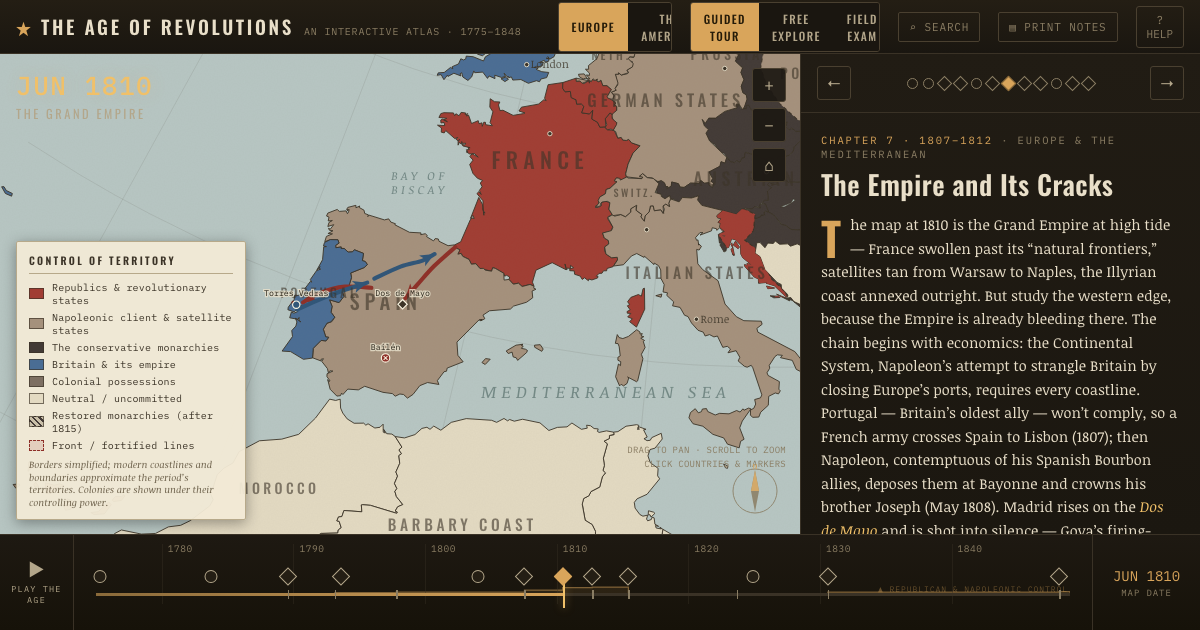
The atlas that shows it
THE FREE PRINTABLE STUDY GUIDE
Join the Dispatch — a short welcome series, then a letter when a new atlas opens — and the printable study guide for The Age of Revolutions is yours now, free.
NO TRACKING · YOUR ADDRESS IS USED FOR THE DISPATCH AND NOTHING ELSE · UNSUBSCRIBE ANYTIME