ON THIS DAY ·
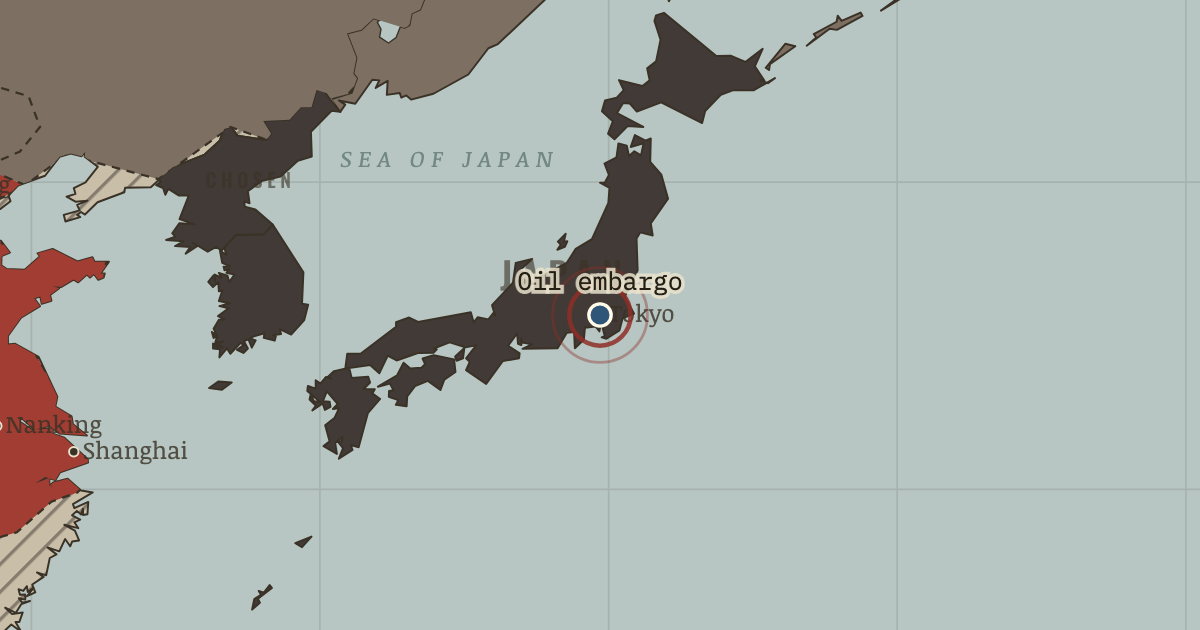
US oil embargo on Japan
26 Jul–1 Aug 1941 — Washington answers the seizure of southern Indochina by freezing Japan’s assets and cutting off its oil. The fleet burns its reserves from this day; the clock to war now runs in months.
WW2 is free — every chapter. Try chapters 1–2 of any 2 other atlases (3 with a free account). Opening a new atlas uses one of them. Membership opens all 21 — Join.
The moment in context
At Khalkhin Gol in 1939, Soviet forces under Zhukov defeated a Japanese army on the border between Manchukuo and Mongolia, and the defeat carried strategic weight far beyond the steppe. It undercut the case for expanding north against the Soviet Union and strengthened those who looked south instead. Japan’s unresolved war in China still consumed men and materials without result, so its leaders increasingly sought supply routes and resources in Southeast Asia.
From Japan’s road to Pearl Harbor, chapter 10 of The Road to War, 1931–1941 (1940).
The place: US oil embargo on Japan — map and full story →
Teach this in 5 minutes
- Why it happened — Khalkhin Gol re-priced the northern option. The Soviet Far Eastern army was supposed to be purge-gutted and brittle; instead it delivered Japan’s worst defeat since the modern army was founded…
- The turn — The freeze, 26 July – 1 August 1941. The oil embargo is the hinge on which “eventual war” became “war this winter.” Intriguingly, the total cutoff may not even have been Roosevelt’s…
- What it changed — The southern war is planned as one strike. Because the objective (Indies oil) required neutralizing the flanks (British Malaya, the American Philippines), Japan’s planners concluded the…
Then ask the room: Did American economic pressure prevent a war, provoke one, or merely date-stamp one that was coming anyway? The argued answer is on the chapter page →
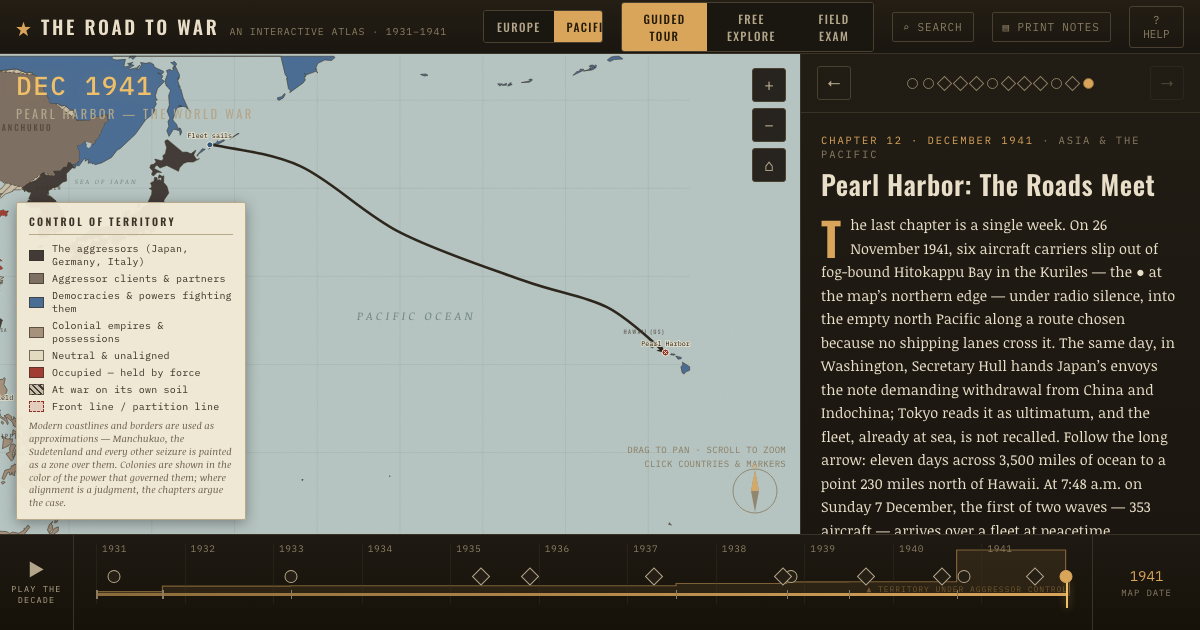
The atlas that shows it
THE FREE PRINTABLE STUDY GUIDE
Join the Dispatch — a short welcome series, then a letter when a new atlas opens — and the printable study guide for The Road to War is yours now, free.
NO TRACKING · YOUR ADDRESS IS USED FOR THE DISPATCH AND NOTHING ELSE · UNSUBSCRIBE ANYTIME