ON THIS DAY ·
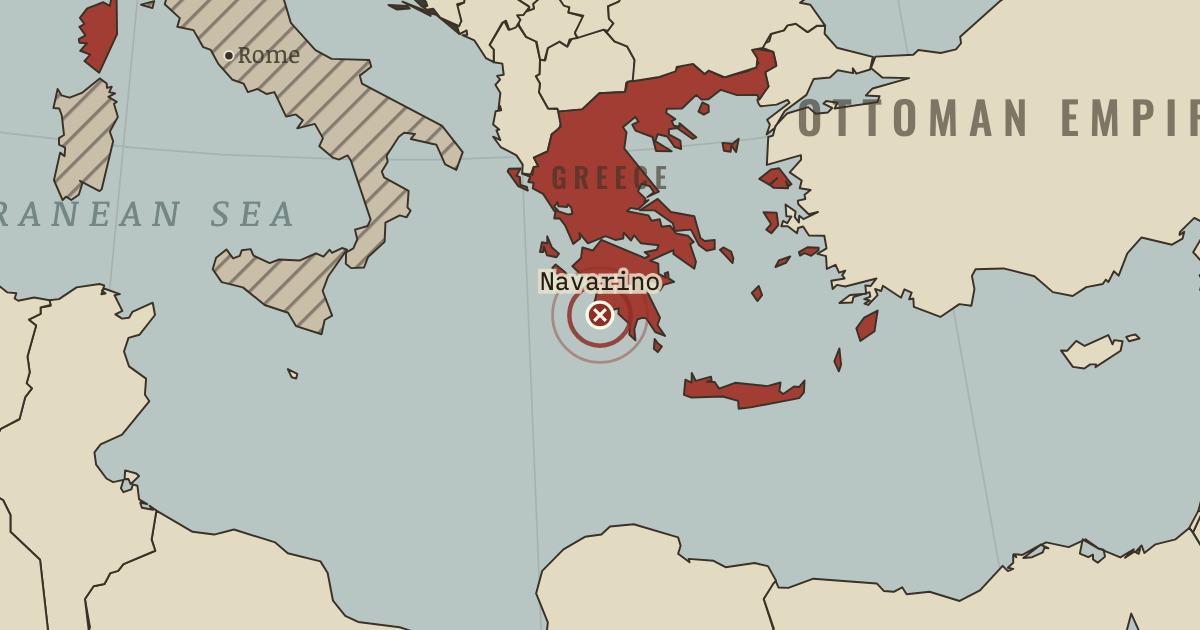
Battle of Navarino
20 Oct 1827 — A combined British-French-Russian fleet destroys the Ottoman-Egyptian navy at anchor — the last great battle under sail, and the powers’ backhanded gift of Greek independence.
WW2 is free — every chapter. Try chapters 1–2 of any 2 other atlases (3 with a free account). Opening a new atlas uses one of them. Membership opens all 21 — Join.
Free printable Age of Revolutions study guide, sent by email ↓
The moment in context
Metternich’s system treated revolution in one state as a threat to all. The Carlsbad Decrees censored German universities and newspapers after a political murder. Austria ended constitutional movements in Naples and Piedmont. France invaded Spain in 1823 to restore Ferdinand VII’s full power. Russia crushed the Decembrist officers in 1825. These measures protected regimes, but they also closed legal routes for moderate change.
From Age of Metternich, chapter 11 of The Age of Revolutions, 1775–1848 (AUG 1830).
The place: Battle of Navarino — map and full story →
Teach this in 5 minutes
- Why it happened — Order as trauma response. The men of Vienna had watched a lawyer’s revolution consume a million lives and every throne but Britain’s; to them, censorship was cheap compared…
- The turn — Paris, 27–29 July 1830. Charles X’s July Ordinances — muzzling the press, dissolving the chamber, shrinking the franchise — were absolutism’s test of whether 1815 had truly…
- What it changed — Two Europes, visibly. West of the Rhine: constitutional monarchies with narrow franchises (France’s “citizen king” enfranchises one man in 170 — the pays légal). East of…
Then ask the room: Metternich called his system the “repose” Europe needed, and it did prevent great-power war for a generation. Was repression the price of peace? The argued answer is on the chapter page →
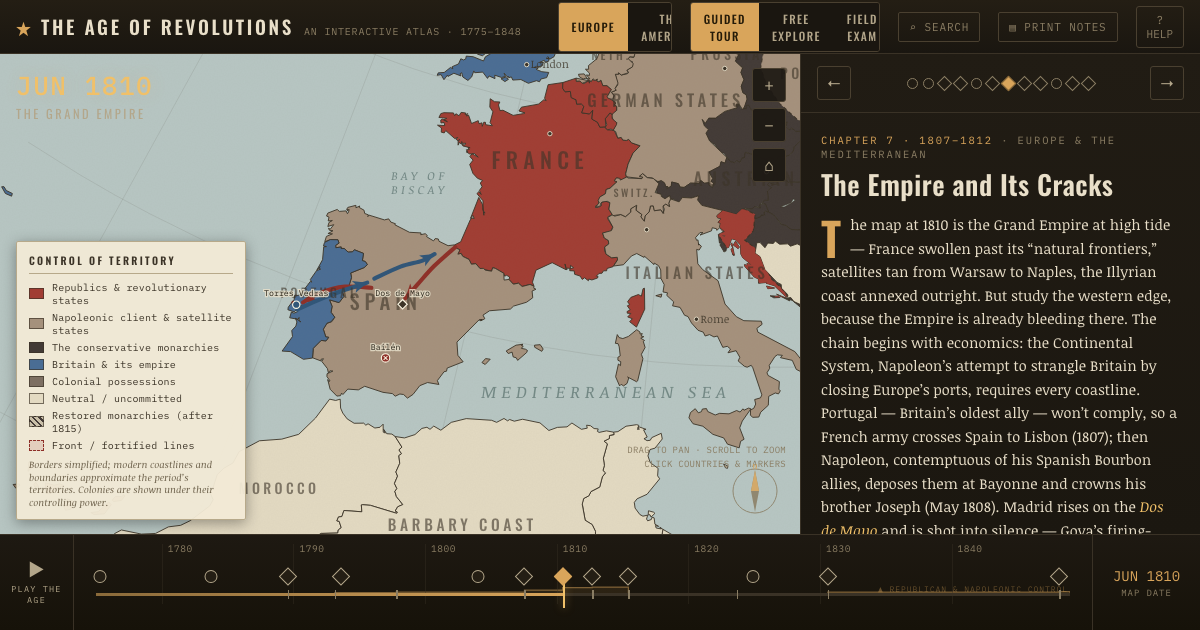
The atlas that shows it
THE FREE PRINTABLE STUDY GUIDE
Join the Dispatch — a short welcome series, then a letter when a new atlas opens — and the printable study guide for The Age of Revolutions is yours now, free.
NO TRACKING · YOUR ADDRESS IS USED FOR THE DISPATCH AND NOTHING ELSE · UNSUBSCRIBE ANYTIME