ON THIS DAY ·
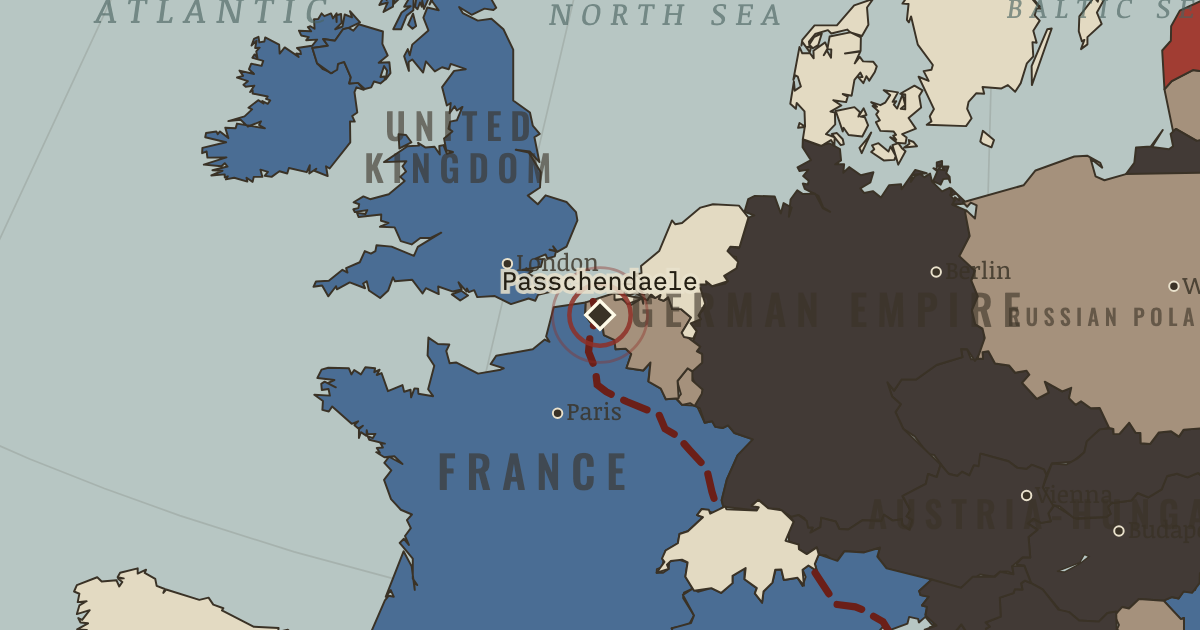
Battle of Passchendaele
31 Jul-10 Nov 1917 — Third Ypres: three months in liquid mud for eight kilometers and a quarter-million casualties on each side. Men and mules drown in shell craters. It stands here as memory as much as strategy. Remember.
WW2 is free — every chapter. Try chapters 1–2 of any 2 other atlases (3 with a free account). Opening a new atlas uses one of them. Membership opens all 21 — Join.
The moment in context
In Petrograd, food shortages and strikes turned into revolution when the soldiers of the garrison refused to fire on the crowds. The Tsar abdicated, and the Provisional Government that took his place chose to continue the war, but another failed offensive deepened desertion and distrust. In November the Bolsheviks seized power on a programme of peace, land and bread, and Russia began to leave the war.
From WWI in 1917, the year of crisis, chapter 10 of The Great War, 1871–1923 (NOV 1917).
The place: Battle of Passchendaele — map and full story →
Teach this in 5 minutes
- Why it happened — Russia: defeat metabolized as treason. The Tsar had taken personal command in 1915, so every failure was his; the court (Rasputin, a German-born Tsarina) made treason rumors respectable;…
- The turn — The October Revolution, 7 November 1917. A near-bloodless seizure in one city, by one determined minority, of a state nobody else would hold — and the war’s single greatest geopolitical…
- What it changed — Germany’s window opens. Russia’s exit will free some fifty divisions for the west — a one-spring-only superiority before American numbers land. The entire logic of 1918, on…
Then ask the room: Same year, similar exhaustion: why did Russia’s army dissolve while France’s recovered? The argued answer is on the chapter page →
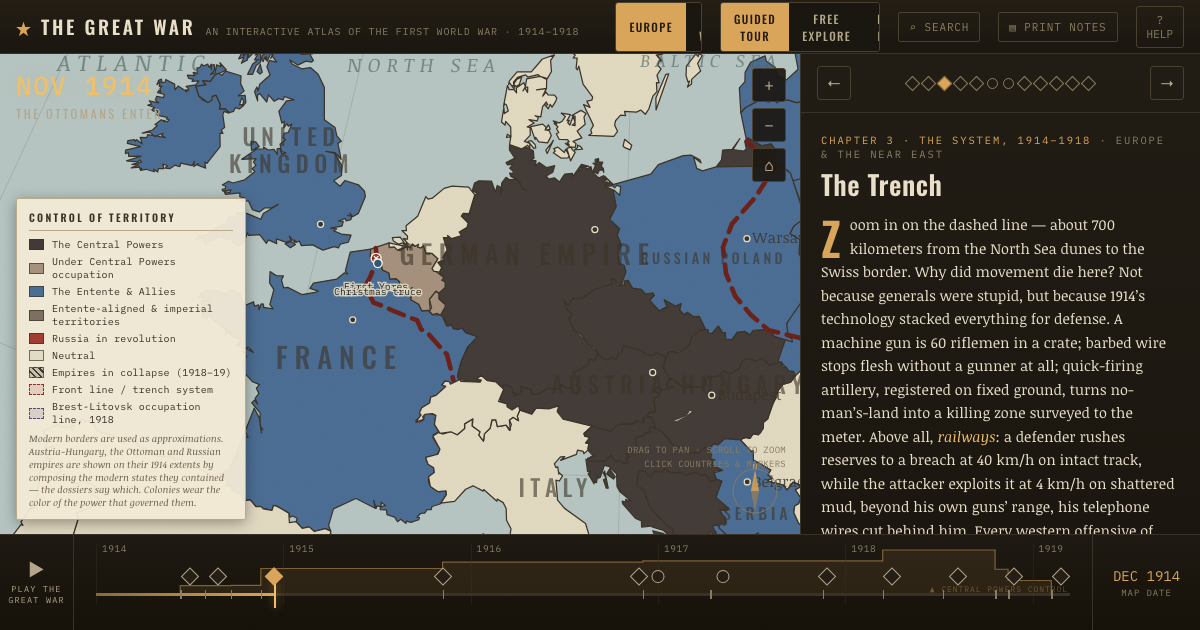
The atlas that shows it
THE FREE PRINTABLE STUDY GUIDE
Join the Dispatch — a short welcome series, then a letter when a new atlas opens — and the printable study guide for WWI is yours now, free.
NO TRACKING · YOUR ADDRESS IS USED FOR THE DISPATCH AND NOTHING ELSE · UNSUBSCRIBE ANYTIME