ON THIS DAY ·
USS Panay incident
12 Dec 1937 — Japanese aircraft sink an American gunboat evacuating civilians up the Yangtze, in plain daylight. Tokyo apologizes and pays; Washington accepts — and remembers.
WW2 is free — every chapter. Try chapters 1–2 of any 2 other atlases (3 with a free account). Opening a new atlas uses one of them. Membership opens all 21 — Join.
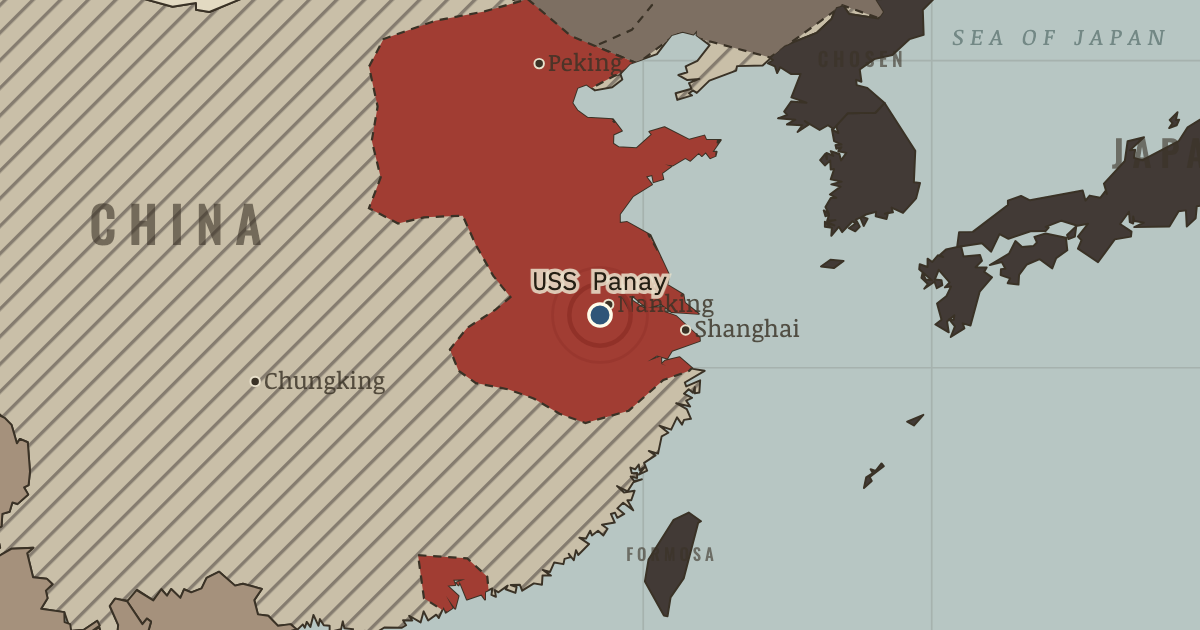
The moment in context
A clash near the Marco Polo Bridge on 7 July 1937 escalated into a general war that neither government had ordered, and the reason lies in the habits both sides had formed. Japanese field commanders reinforced first and reported afterward, confident of approval, while Chiang Kai-shek could no longer retreat without forfeiting his political authority. China then opened a major battle at Shanghai, choosing to resist on the one ground where foreign observers would be compelled to watch.
From Second Sino-Japanese War, chapter 6 of The Road to War, 1931–1941 (1938).
The place: USS Panay incident — map and full story →
Teach this in 5 minutes
- Why it happened — Xi’an closed China’s exit. Until December 1936, Tokyo could reasonably expect Chiang to keep appeasing — he had absorbed Manchuria, Jehol, and creeping “autonomy” in north…
- The turn — The Marco Polo Bridge, 7 July 1937. The bridge matters because it proves the era’s darkest mechanism: by 1937 the structures of aggression — an unaccountable field army, a national…
- What it changed — The quagmire turns Japan’s eyes south. A million Japanese troops sink into China; the resources the war consumes exceed the resources it yields. The strategic conclusion Tokyo reaches by…
Then ask the room: Chiang Kai-shek traded a third of China for time. Was “trading space for time” a strategy or an excuse? The argued answer is on the chapter page →
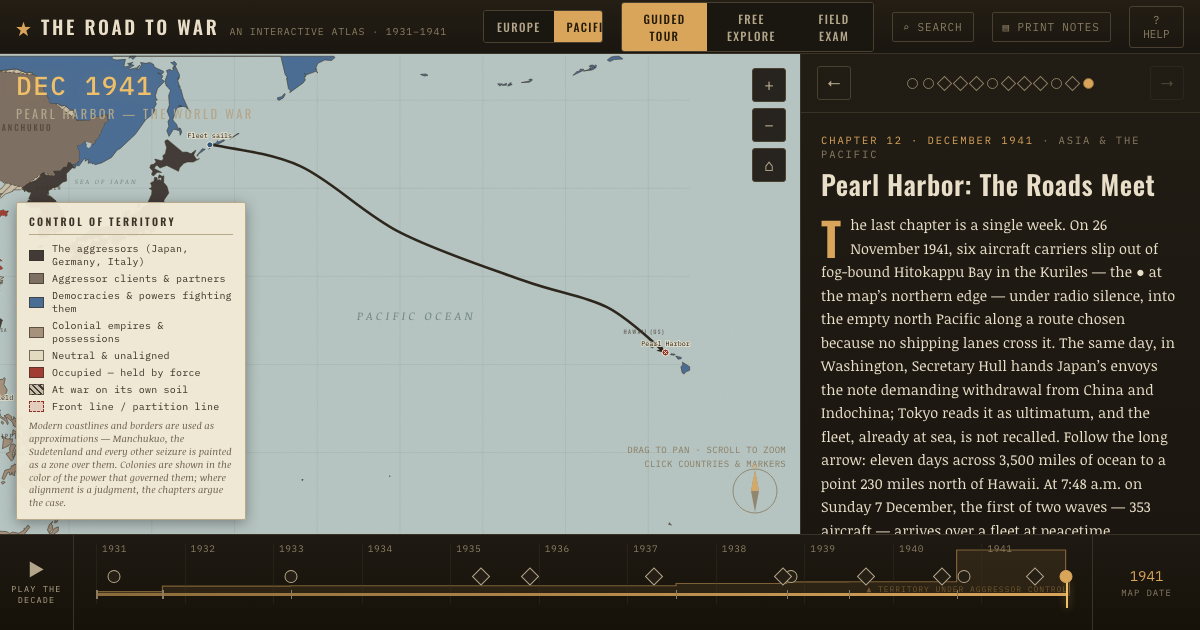
The atlas that shows it
THE FREE PRINTABLE STUDY GUIDE
Join the Dispatch — a short welcome series, then a letter when a new atlas opens — and the printable study guide for The Road to War is yours now, free.
NO TRACKING · YOUR ADDRESS IS USED FOR THE DISPATCH AND NOTHING ELSE · UNSUBSCRIBE ANYTIME