ON THIS DAY ·
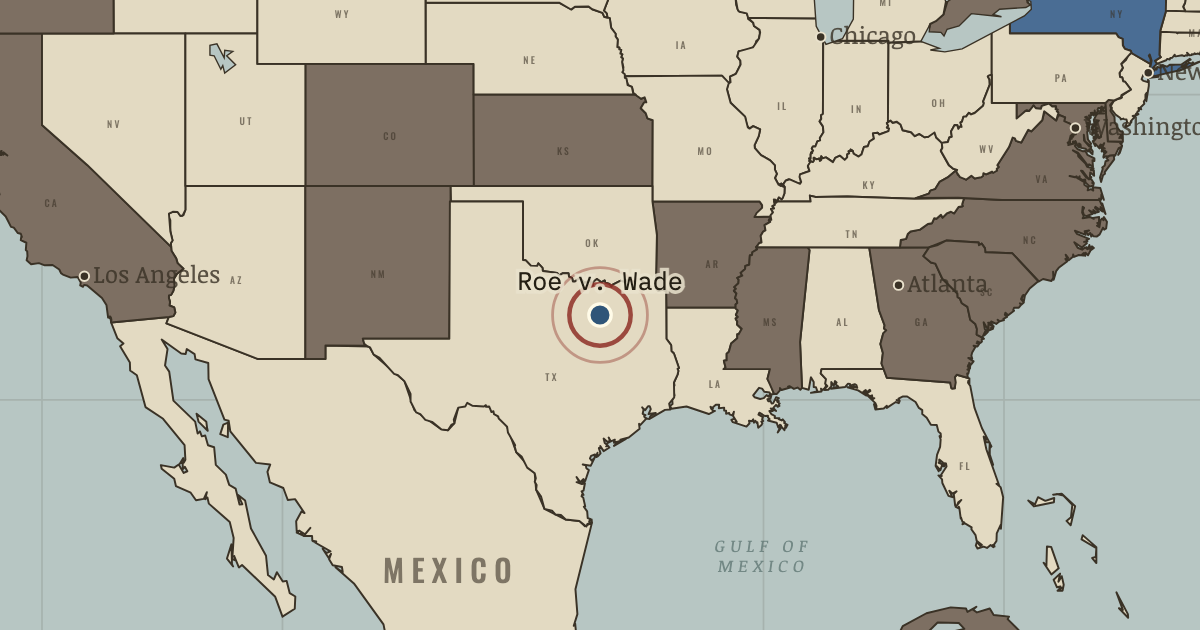
Roe v. Wade
22 Jan 1973 — The Supreme Court rules 7–2 in a case filed in Dallas in 1970 on behalf of Norma McCorvey (“Jane Roe”) that the constitutional right to privacy covers a woman’s decision to end a pregnancy, striking down most state bans.
WW2 is free — every chapter. Try chapters 1–2 of any 2 other atlases (3 with a free account). Opening a new atlas uses one of them. Membership opens all 21 — Join.
Free printable Feminism and the Tunisian Revolution study guide, sent by email ↓
The moment in context
Consciousness-raising, in which small groups of women compared their lives much as a support group does, turned complaint into analysis because it treated each woman’s experience as evidence. In 1968 Kathie Sarachild of New York Radical Women described the method: members answered one question at a time, about their mothers, jobs or first sexual experiences, and looked for the pattern. Carol Hanisch defended the practice in a 1969 paper that her editors titled “The Personal Is Political”, arguing that these groups were political action because they traced women’s unhappiness to the power men held in marriage, work and law. By the early 1970s tens of thousands of women had joined such groups. In February 1970 between 500 and 600 women met at Ruskin College, Oxford, for Britain’s first national women’s liberation conference and demanded equal pay, equal education, 24-hour nurseries and free contraception and abortion on demand. A method invented in small rooms became the grammar of a mass movement.
From The personal is political, chapter 3 of Protest and Change: Second-Wave Feminism and Tunisia, 1945–2015 (1972).
The place: Roe v. Wade — map and full story →
Teach this in 5 minutes
- Why it happened — A method that turned experience into evidence. Consciousness-raising groups gave women a way to see that their individual problems, from housework to sexual coercion, followed common patterns.…
- The turn — Roe v. Wade, 22 January 1973. Roe is the hinge because it converted a slow, uneven state-by-state campaign into a national right in a single day, erasing the patchwork on the…
- What it changed — A national right and a national opposition. After 1973 abortion was legal in early pregnancy everywhere in the United States, and the movement to reverse it became a national political force.…
Then ask the room: Was consciousness-raising a political method, or a form of therapy that distracted women from politics? The argued answer is on the chapter page →
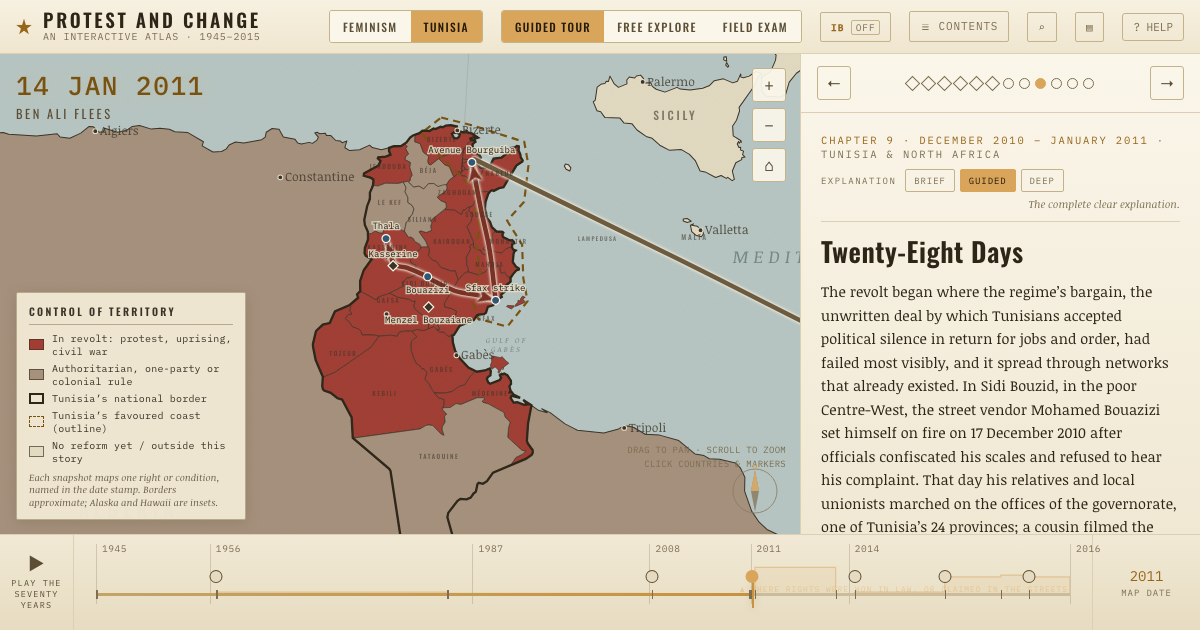
The atlas that shows it
THE FREE PRINTABLE STUDY GUIDE
Join the Dispatch — a short welcome series, then a letter when a new atlas opens — and the printable study guide for Protest and Change is yours now, free.
NO TRACKING · YOUR ADDRESS IS USED FOR THE DISPATCH AND NOTHING ELSE · UNSUBSCRIBE ANYTIME