ON THIS DAY ·
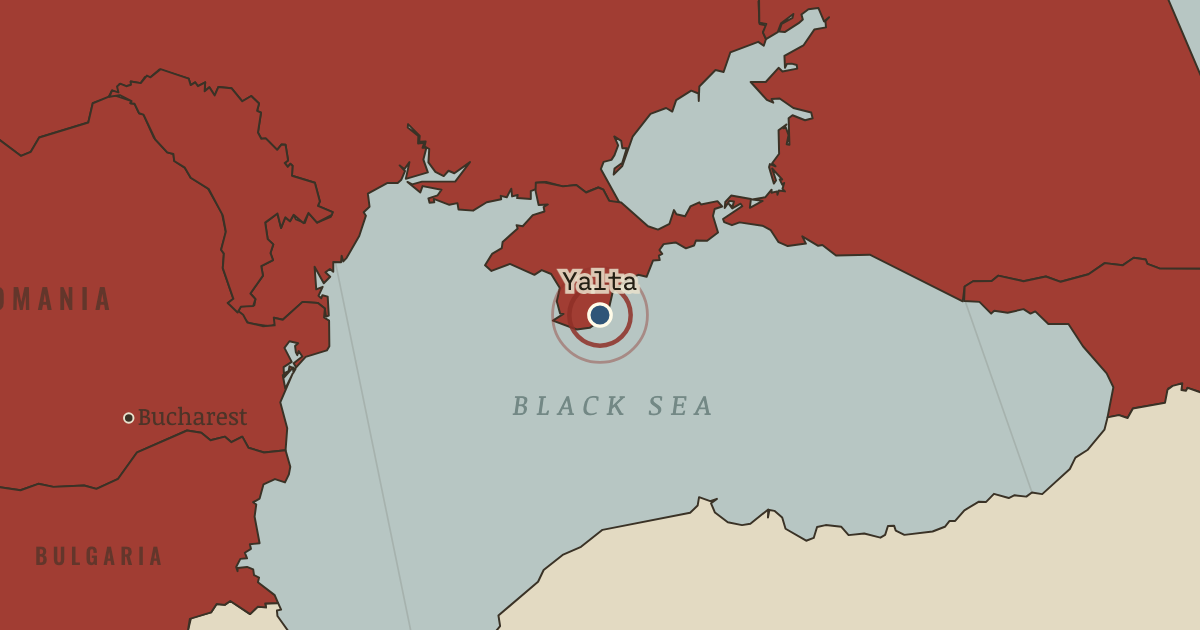
Yalta Conference
4–11 Feb 1945 — Roosevelt, Churchill and Stalin agree that Poland’s eastern border will follow roughly the Curzon Line, with compensation in the west, and sign accords to return each other’s liberated citizens. Both decisions would uproot millions once the fighting stopped.
WW2 is free — every chapter. Try chapters 1–2 of any 2 other atlases (3 with a free account). Opening a new atlas uses one of them. Membership opens all 21 — Join.
The moment in context
The largest group of uprooted people in May 1945 had been brought into Germany on purpose, which is why the problem the Allies inherited was a product of Nazi policy before it was a product of battle. By August 1944 the labour offices of the Reich, as Nazi Germany called itself, counted about 7.6 million foreign civilian workers and prisoners of war, more than a quarter of everyone working in the German economy, and some 2.8 million of them came from the Soviet Union. Most had been rounded up in occupied Poland, Ukraine and Belarus and set to work in mines, farms and arms factories such as those of the Ruhr, the marker in the west. When Allied armies overran Germany these workers were suddenly free, hungry and far from home. Allied planners grouped them under a new label, “displaced persons” or DPs, meaning civilians outside their own country because of the war, much as an aid agency today separates people stranded abroad from people uprooted inside their own state. The label turned a crime into a logistics problem, and that framing shaped what the Allies did next.
From Refugee crisis in Europe after WW2, chapter 1 of Uprooted: Refugees in Europe 1945–1960 and Indochina 1975–1990 (1945).
The place: Yalta Conference — map and full story →
Teach this in 5 minutes
- Why it happened — An economy run on foreign labour. Nazi Germany fought its war with workers taken from the countries it occupied. By August 1944 about 7.6 million foreign civilians and prisoners of…
- The turn — Berlin-Karlshorst, 8 May 1945. The surrender signed in a requisitioned officers’ mess in Karlshorst is the hinge of this chapter because it changed what millions of people were in…
- What it changed — Germans next in line. The Germans who had stayed in the eastern territories, and the German minorities of Czechoslovakia and Hungary, became the next population to be…
Then ask the room: Was Europe’s refugee crisis of 1945 created more by the war or by the peace that followed it? The argued answer is on the chapter page →
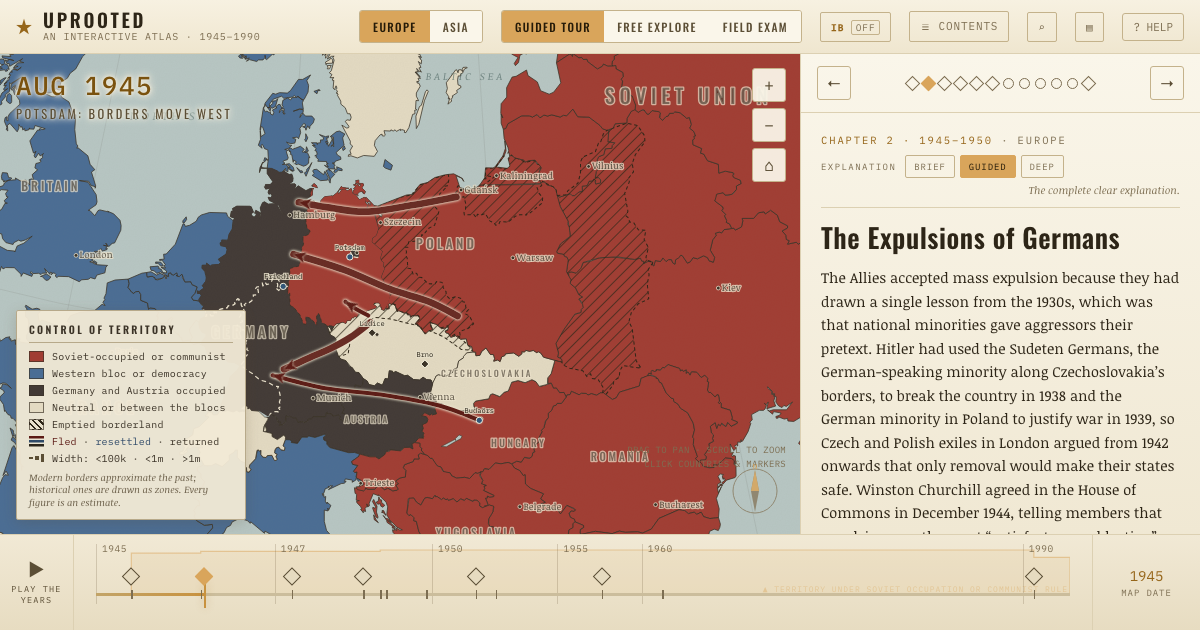
The atlas that shows it
THE FREE PRINTABLE STUDY GUIDE
Join the Dispatch — a short welcome series, then a letter when a new atlas opens — and the printable study guide for Uprooted is yours now, free.
NO TRACKING · YOUR ADDRESS IS USED FOR THE DISPATCH AND NOTHING ELSE · UNSUBSCRIBE ANYTIME