ON THIS DAY ·
Deportation of the Crimean Tatars
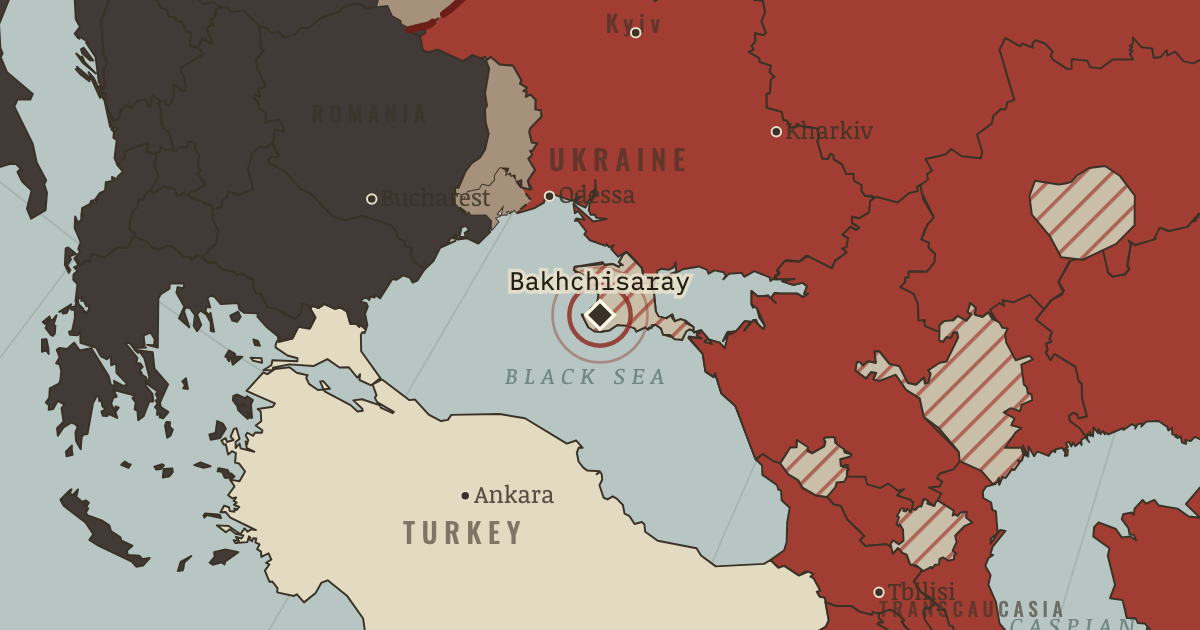
18–20 May 1944 — In three days the NKVD deported the Crimean Tatars, about 191,000 people, mostly to Uzbekistan. Estimates of the share who died in the first years range from about a fifth in NKVD records to almost half in Crimean Tatar surveys. They could not go home until 1989.
WW2 is free — every chapter. Try chapters 1–2 of any 2 other atlases (3 with a free account). Opening a new atlas uses one of them. Membership opens all 21 — Join.
Free printable Stalin’s Soviet Union study guide, sent by email ↓
The moment in context
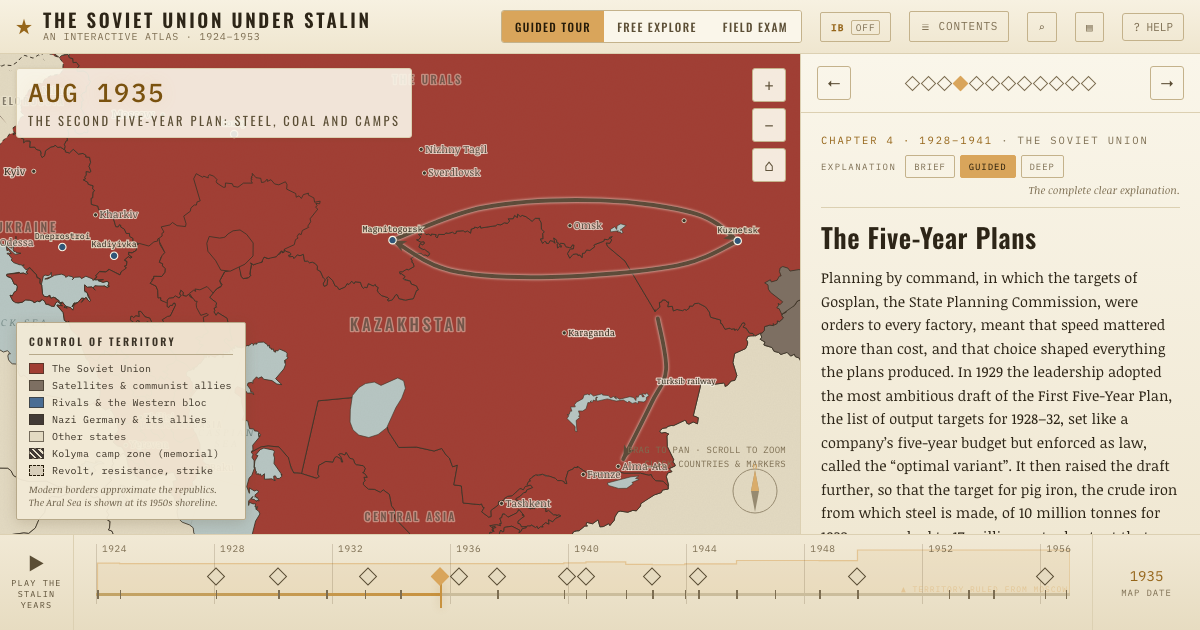
The shift from promoting nations to deporting them began on the borders, where nationality and foreign policy met. Soviet planners worried that minorities with homelands abroad, such as Poles, Germans, Finns and Koreans, could serve an enemy in war. In 1936 tens of thousands of Poles and Germans were moved from Ukraine’s western border zone to Kazakhstan. In August 1937 a decree ordered the removal of all Koreans from the Far East, where Japan threatened from Manchuria, and in September and October about 172,000 people were loaded onto trains for Kazakhstan and Uzbekistan, as the longest arrow on the map shows. The “national operations” of the Great Terror, the mass arrests and shootings of 1937–38, targeted minorities suspected of spying for a foreign state, and the Polish operation alone shot about 111,000 people. A whole people could now be treated as guilty by association, and that logic drove every deportation that followed.
From Stalin’s ethnic deportations, chapter 7 of The Soviet Union under Stalin, 1924–1953 (1944).
The place: Deportation of the Crimean Tatars — map and full story →
Teach this in 5 minutes
- Why it happened — Fear of foreign enemies on the borders. The Soviet Union faced Japan in Manchuria from 1931 and Nazi Germany in the west from 1933, and in 1936 the two powers signed the Anti-Comintern…
- The turn — The Korean deportation, September 1937. The removal of about 172,000 Koreans from the Far East in the autumn of 1937 is the hinge of the turn from promoting nations to deporting them. It…
- What it changed — Homelands abolished and resettled. The Volga German, Kalmyk and Chechen-Ingush republics and the Karachay region were abolished and their territory divided among neighbours, and the…
Then ask the room: Why did a state that promoted national cultures in the 1920s deport whole nations in the 1940s? The argued answer is on the chapter page →
The atlas that shows it
THE FREE PRINTABLE STUDY GUIDE
Join the Dispatch — a short welcome series, then a letter when a new atlas opens — and the printable study guide for The Soviet Union under Stalin is yours now, free.
NO TRACKING · YOUR ADDRESS IS USED FOR THE DISPATCH AND NOTHING ELSE · UNSUBSCRIBE ANYTIME