ON THIS DAY ·
Dunkirk evacuation
26 May–4 Jun 1940 — 338,000 Allied soldiers are lifted off the beaches. An army escapes; France falls.
WW2 is free — every chapter. No sign-up.
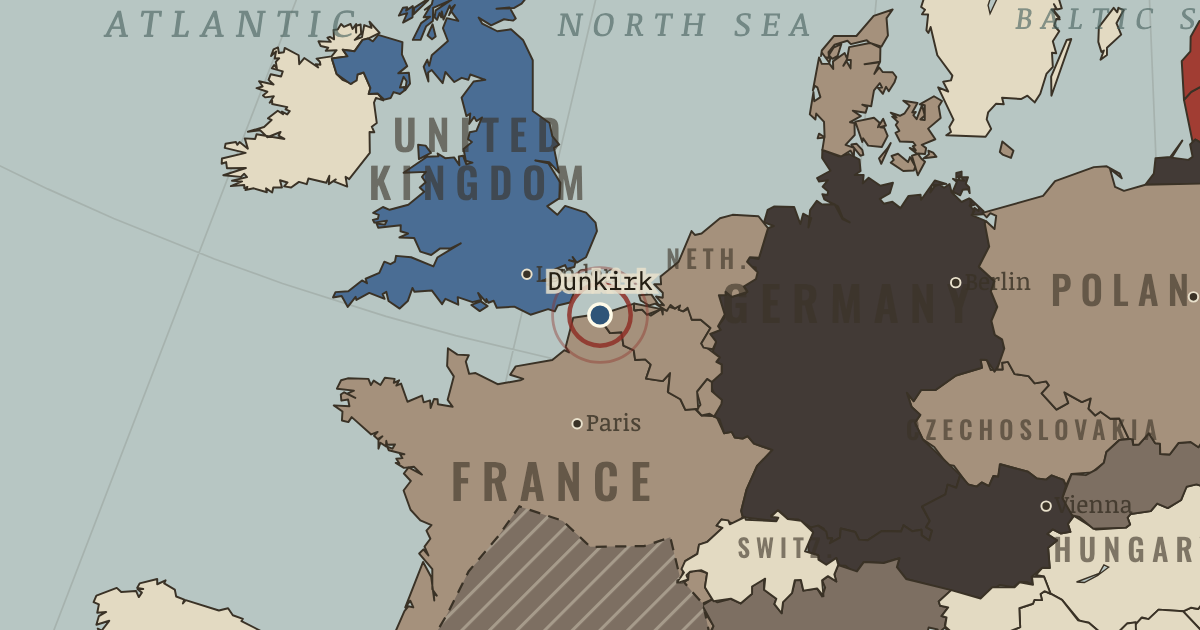
The moment in context
Germany opened the campaign by securing Scandinavia before turning west. Control of Norway protected the winter shipping route that carried Swedish iron ore through the port of Narvik, and it offered naval and air bases facing the Atlantic. The fighting cost the German navy heavily in warships, a loss that would later matter when Germany considered invading Britain. The main western offensive began on 10 May, and the Allies committed their best mobile formations to an advance into Belgium, confident that the decisive German thrust would come through the northern plains as it had a generation earlier.
From Fall of France, chapter 3 of The War Room — WW2, 1936–1945 (JUN 1940).
The place: Dunkirk evacuation — map and full story →
Teach this in 5 minutes
- Why it happened — Organization over equipment totals. France had many capable tanks but distributed much of its armor for infantry support. Germany concentrated combined-arms formations and connected…
- The turn — Sedan, 13–15 May. German forces crossed the Meuse under concentrated air attack. French command took too long to organize a counterattack, so the bridgehead expanded.…
- What it changed — Dunkirk preserves Britain’s army. The pause in the German advance and Luftwaffe failure helped 338,000 Allied troops escape. Britain lost equipment but retained trained personnel…
Then ask the room: France had more tanks, more artillery, and equal manpower. Why did it collapse in six weeks? The argued answer is on the chapter page →
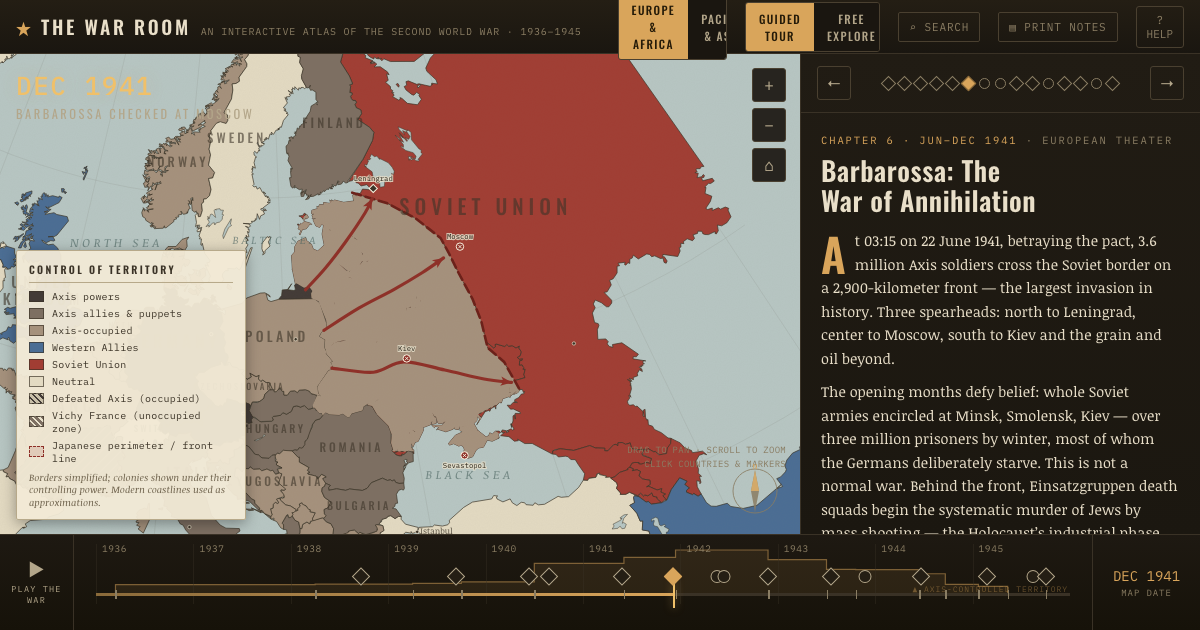
The atlas that shows it
THE FREE PRINTABLE STUDY GUIDE
Join the Dispatch — a short welcome series, then a letter when a new atlas opens — and the printable study guide for WW2 is yours now, free.
NO TRACKING · YOUR ADDRESS IS USED FOR THE DISPATCH AND NOTHING ELSE · UNSUBSCRIBE ANYTIME