ON THIS DAY ·
Carnegie steel and the Homestead strike
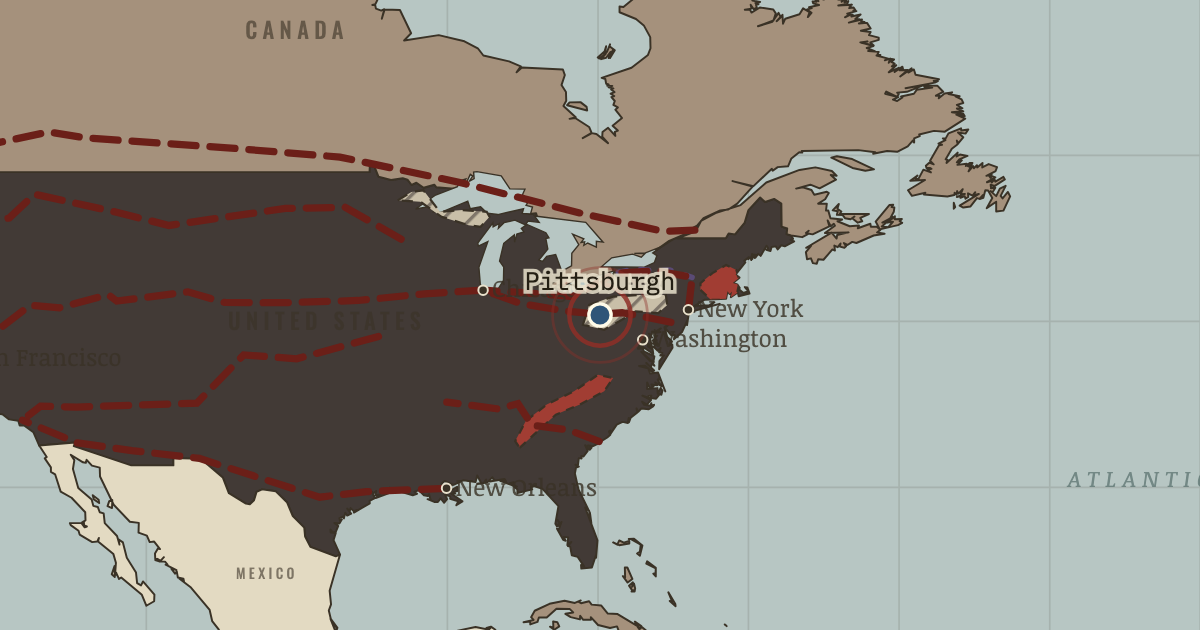
1875–1892 — Andrew Carnegie’s Bessemer steelworks at Braddock and Homestead. On 6 Jul 1892 a gun battle between strikers and Pinkerton guards kills seven workers and three guards; the union is broken.
WW2 is free — every chapter. Try chapters 1–2 of any 2 other atlases (3 with a free account). Opening a new atlas uses one of them. Membership opens all 21 — Join.
Free printable Industrial Revolution study guide, sent by email ↓
The moment in context
America’s industrial rise began before the Civil War, and its first stage was tied to slavery and to Britain. Samuel Slater, who had memorised the inventor Richard Arkwright’s spinning machines in England, began spinning cotton in Rhode Island in 1790, and in 1823 a group of Boston merchants began production at Lowell in Massachusetts, a planned factory town whose mills hired young women from New England farms, who struck against wage cuts in 1834 and 1836. The cotton these mills spun came from the slave South, where the enslaved population grew from about 700,000 in 1790 to almost four million in 1860. The Civil War of 1861–65 destroyed slavery and confirmed the power of the industrial North, because its factories and railways outproduced the South’s. Emancipation freed four million people, yet most of them remained poor farm workers and sharecroppers, tenants who paid their rent with a share of the crop, in a South kept poor and segregated.
From Industrial Revolution in America, chapter 9 of The Industrial Revolution, 1750–1914 (1890).
The place: Carnegie steel and the Homestead strike — map and full story →
Teach this in 5 minutes
- Why it happened — A continent of resources. The United States held some of the world’s largest deposits of coal, iron ore, copper and oil, as well as vast forests and farmland taken from…
- The turn — Promontory Summit, 10 May 1869. The meeting of the rails is the hinge because it joined the Atlantic and Pacific economies of the United States into one continental market. Goods,…
- What it changed — America overtakes Britain. By about 1886 the United States made more steel than Britain, and by 1913 about a third of the world’s manufactured goods. American methods, from…
Then ask the room: Was America’s industrial success built more on its resources or on its people? The argued answer is on the chapter page →
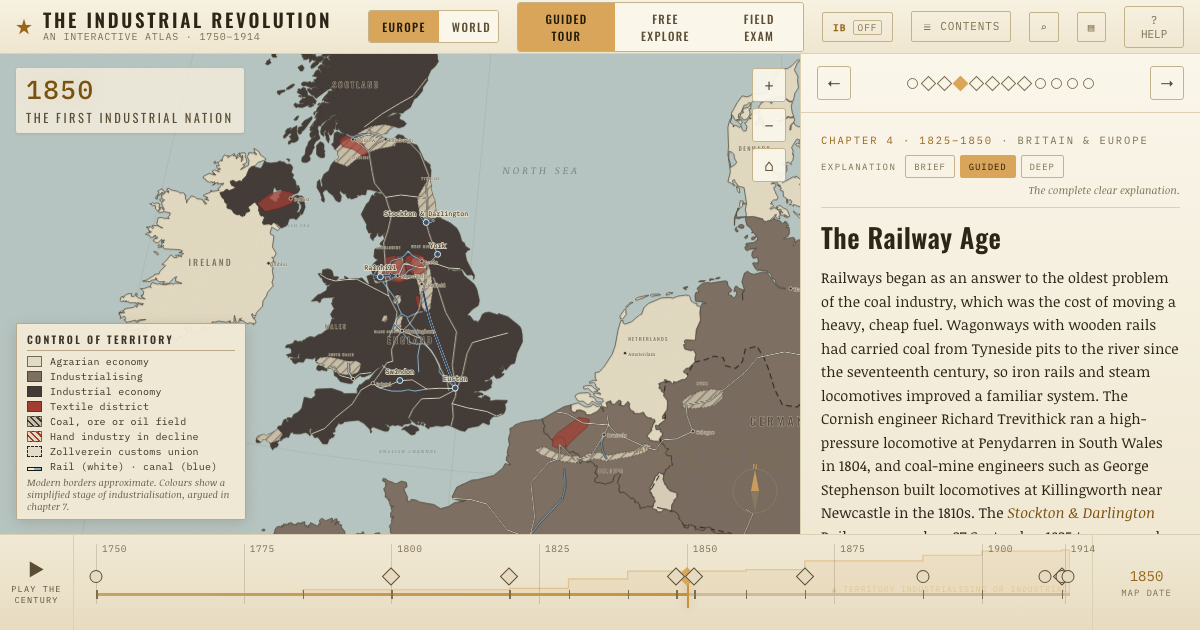
The atlas that shows it
THE FREE PRINTABLE STUDY GUIDE
Join the Dispatch — a short welcome series, then a letter when a new atlas opens — and the printable study guide for The Industrial Revolution is yours now, free.
NO TRACKING · YOUR ADDRESS IS USED FOR THE DISPATCH AND NOTHING ELSE · UNSUBSCRIBE ANYTIME