ON THIS DAY ·
Battle of Otumba
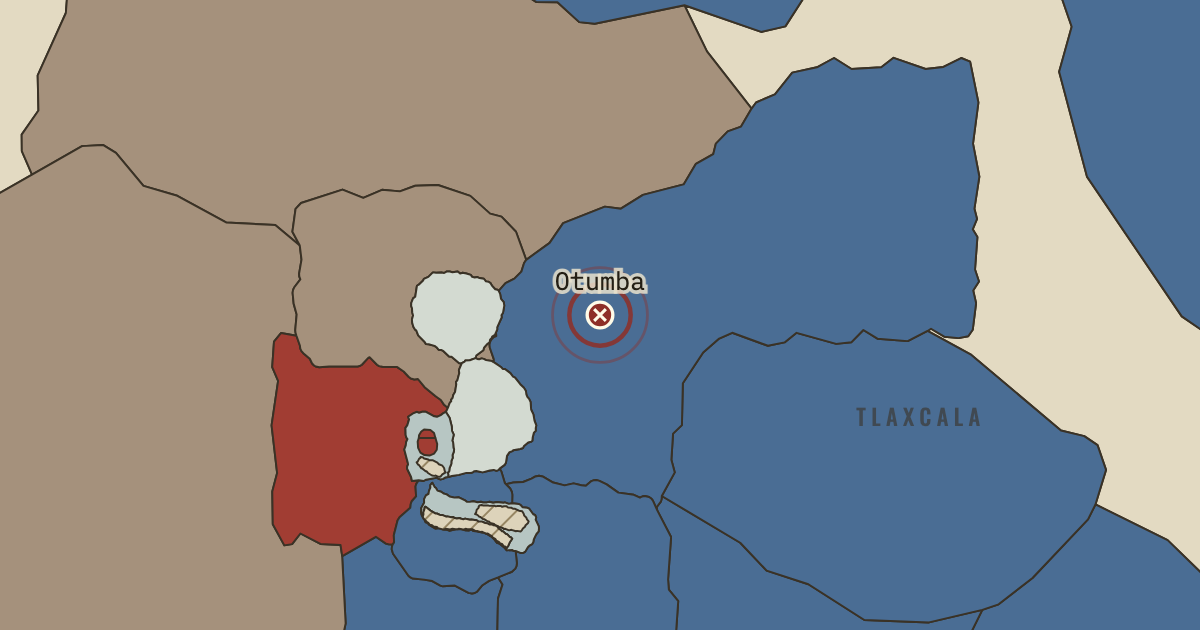
7 July 1520 — Days after their flight from Tenochtitlan, the battered Spaniards and their allies fought a Mexica army in the plain of Otumba and broke through, reportedly by striking at its commanders. They reached the safety of Tlaxcala soon after.
WW2 is free — every chapter. Try chapters 1–2 of any 2 other atlases (3 with a free account). Opening a new atlas uses one of them. Membership opens all 21 — Join.
Free printable Norse and Aztecs study guide, sent by email ↓
The moment in context
The flower wars, ritualised battles fought by agreement to take captives, somewhat like scheduled tournaments with lethal stakes, show how the empire managed enemies it could not, or chose not to, conquer. According to the Texcocan chronicler Fernando de Alva Ixtlilxochitl, the Alliance agreed in 1454, in the last year of the great famine, to fight Tlaxcala, Huexotzinco and Cholula on agreed fields, usually near Atlixco, to take captives for sacrifice while leaving each other’s lands untouched. Diego Durán credits the Mexica adviser Tlacaelel with the idea. Ross Hassig argues that these were deliberate wars of attrition, cheap ways to wear down strong enemies, while Barry Isaac argues that the ritual explanation was invented later to hide a failure to conquer. Meanwhile the Alliance encircled Tlaxcala with tributary provinces, conquered regions that paid regular tribute like a tax, and, according to Tlaxcalan complaints recorded by the Spaniards, cut off its salt and cotton. Exclusion created a neighbour with every reason to seek revenge.
From Fall of the Aztec Empire, chapter 11 of Climate and Innovation: The Norse and the Aztecs, c. 790–1521 (1521).
The place: Battle of Otumba — map and full story →
Teach this in 5 minutes
- Why it happened — Tribute and encirclement created enemies. The empire that fed Tenochtitlan rested on tribute from conquered peoples who kept their own rulers and resented the burden, and on the encirclement…
- The turn — Tlaxcala chooses alliance, September 1519. The decision of Tlaxcala’s rulers to ally with Cortés in September 1519, after defeating and then negotiating with his small force, is the hinge of…
- What it changed — The fall of Tenochtitlan. The city fell on 13 August 1521 when Cuauhtemoc, the last ruler, was captured on the lake. Tens of thousands of people had died of hunger, thirst,…
Then ask the room: Why did the Mexica system, so effective against the environment, prove so vulnerable to its human enemies? The argued answer is on the chapter page →
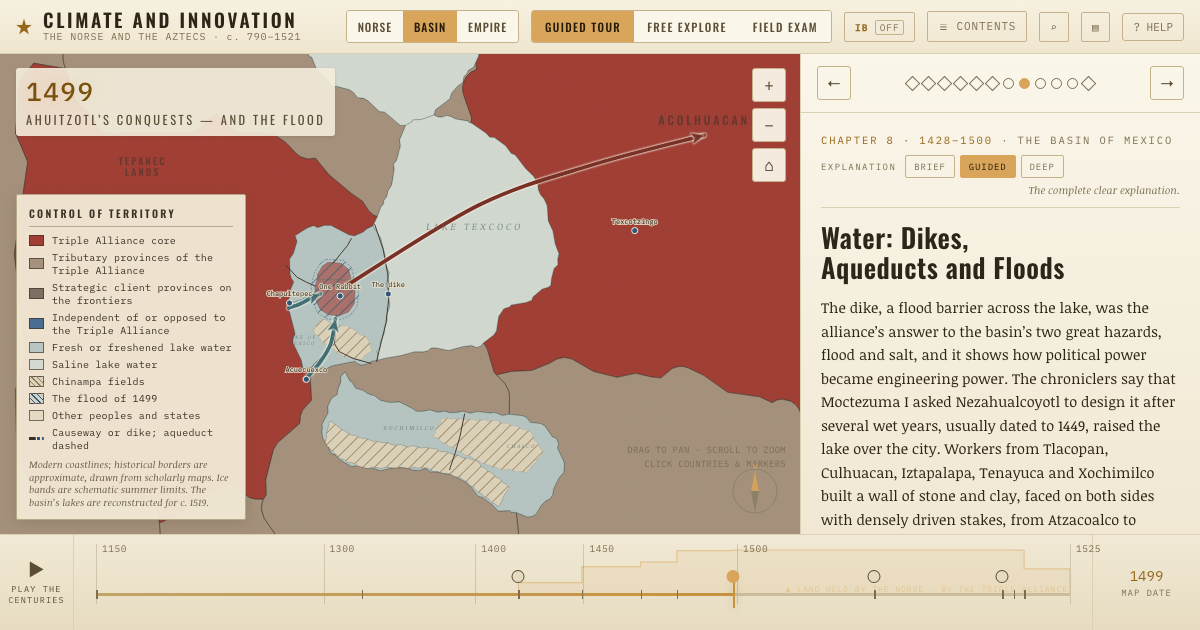
The atlas that shows it
THE FREE PRINTABLE STUDY GUIDE
Join the Dispatch — a short welcome series, then a letter when a new atlas opens — and the printable study guide for Climate and Innovation is yours now, free.
NO TRACKING · YOUR ADDRESS IS USED FOR THE DISPATCH AND NOTHING ELSE · UNSUBSCRIBE ANYTIME