ON THIS DAY ·
Buchlau bargain
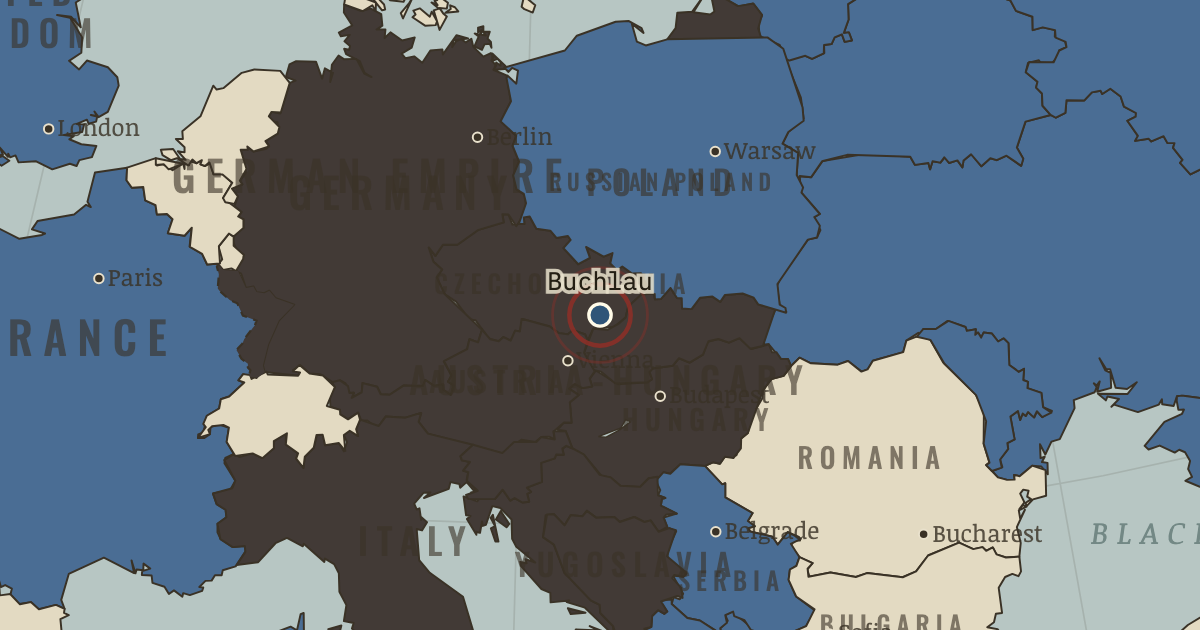
16 Sep 1908 — At Buchlau castle in Moravia the foreign ministers Aehrenthal and Izvolsky strike a secret deal: Russia will accept Austria-Hungary’s annexation of Bosnia in return for help opening the Straits to Russian warships. Vienna annexes three weeks later, and Russia never gets the Straits.
WW2 is free — every chapter. Try chapters 1–2 of any 2 other atlases (3 with a free account). Opening a new atlas uses one of them. Membership opens all 21 — Join.
The moment in context
The Bosnian crisis began as a secret bargain and ended as a public humiliation, and its course explains why Russia behaved as it did in 1914. In July 1908 the Young Turks, reforming officers who forced the sultan, the Ottoman emperor, to restore a constitution, much like a military coup that promises democracy, raised the prospect that a revived Ottoman state might reclaim Bosnia-Herzegovina. Austria-Hungary had run the province since 1878 while it remained formally Ottoman, an arrangement like a long lease. Its foreign minister, Alois von Aehrenthal, met his Russian counterpart, Alexander Izvolsky, at Buchlau castle in September and won his consent to annexation. In return Austria-Hungary would support opening the Straits, the narrow waters between the Black Sea and the Mediterranean, to Russian warships. Austria-Hungary annexed Bosnia in October before Russia had gained anything, and in March 1909 Germany demanded that Russia recognise the annexation, which Russia, unready for war, did. On the map Bosnia turns from tan to charcoal, and Russia’s leaders concluded that retreat only invited further humiliation.
From Bosnian crisis and the Balkan Wars, chapter 2 of The Great War, 1871–1923 (AUG 1913).
The place: Buchlau bargain — map and full story →
Teach this in 5 minutes
- Why it happened — The Ottoman retreat. The Ottoman Empire had been losing Balkan land since the Congress of Berlin, and the Young Turk revolution of 1908 and the Italian war of 1911–12…
- The turn — The Bosnian crisis, September 1908 – March 1909. The Bosnian crisis is the hinge of this chapter because it cast the main powers in the parts they would play in 1914. A private bargain at Buchlau…
- What it changed — The July Crisis follows the script. The crises of 1908–13 wrote the script of July 1914. The assassination of June 1914 took place in Sarajevo, capital of the very province whose…
Then ask the room: Which of the three crises of 1908–1913 did most to make a general European war likely in 1914? The argued answer is on the chapter page →
The atlas that shows it
THE FREE PRINTABLE STUDY GUIDE
Join the Dispatch — a short welcome series, then a letter when a new atlas opens — and the printable study guide for WWI is yours now, free.
NO TRACKING · YOUR ADDRESS IS USED FOR THE DISPATCH AND NOTHING ELSE · UNSUBSCRIBE ANYTIME