ON THIS DAY ·
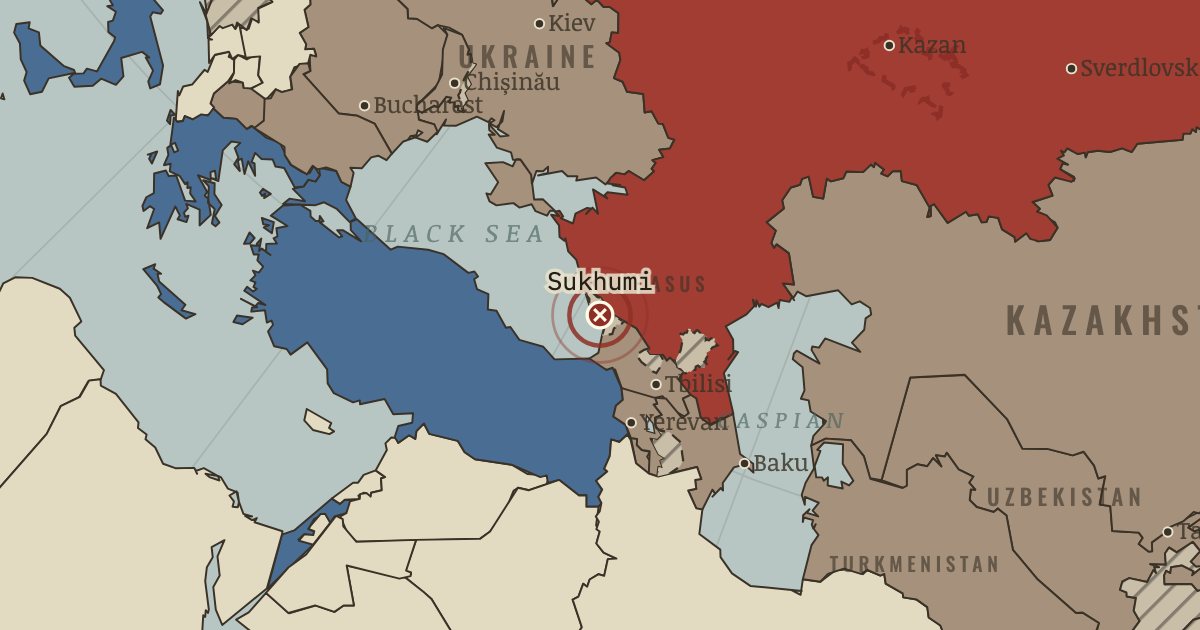
Fall of Sukhumi
27 Sep 1993 — Abkhaz forces, helped by volunteers from the North Caucasus and by Russian military units, capture Abkhazia’s capital. Most of the region’s Georgian population, more than 200,000 people, flee or are driven out.
WW2 is free — every chapter. Try chapters 1–2 of any 2 other atlases (3 with a free account). Opening a new atlas uses one of them. Membership opens all 21 — Join.
Free printable Meiji Japan and post-Soviet Russia study guide, sent by email ↓
The moment in context
Shock therapy, the plan to bring in market prices and private ownership in one sharp move as a surgeon prefers one operation to many, was chosen because the alternatives looked worse to the men who had to decide. By late 1991 the Soviet state had spent its reserves of gold and foreign currency, shops were nearly empty, and people held far more money than there were goods to buy at fixed prices. Gaidar, aged 35, and colleagues such as Anatoly Chubais, advised by Western economists such as Jeffrey Sachs, argued that only free prices could bring goods back and that reform had to move before the old bureaucracy could regroup. On 2 January 1992 most prices were freed, although energy and some staples stayed controlled. Goods reappeared at prices most people could barely afford, and inflation reached about 2,500% for the year because the central bank kept lending cheaply to failing enterprises. Prices had been freed without control of the money supply, so stabilisation came only years later.
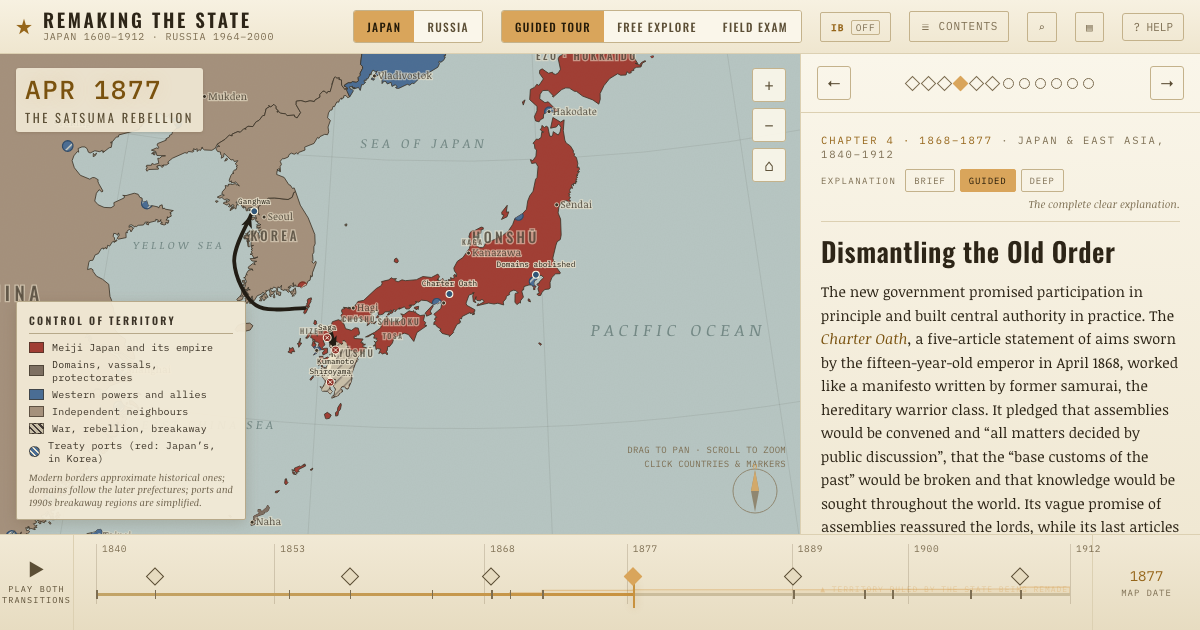
From Shock therapy in Russia, chapter 10 of Remaking the State: Meiji Japan 1600–1912 and Post-Soviet Russia 1964–2000 (1993).
The place: Fall of Sukhumi — map and full story →
Teach this in 5 minutes
- Why it happened — The Soviet economy left too much money and too few goods. Perestroika had left a huge overhang of savings, a budget financed by printing money and an empty network of state shops. Holding prices down only…
- The turn — Prices freed, 2 January 1992. The freeing of prices is the hinge of Russia’s economic transition because it ended the planned economy in a single day, 2 January 1992. From that…
- What it changed — A new owning class took shape. Privatisation created millions of nominal shareholders and a much smaller group of managers, bankers and traders who gained real control. The…
Then ask the room: Did shock therapy cause Russia’s economic collapse in the 1990s, or was it a response to a collapse that had already begun? The argued answer is on the chapter page →
The atlas that shows it
THE FREE PRINTABLE STUDY GUIDE
Join the Dispatch — a short welcome series, then a letter when a new atlas opens — and the printable study guide for Remaking the State is yours now, free.
NO TRACKING · YOUR ADDRESS IS USED FOR THE DISPATCH AND NOTHING ELSE · UNSUBSCRIBE ANYTIME