ON THIS DAY ·
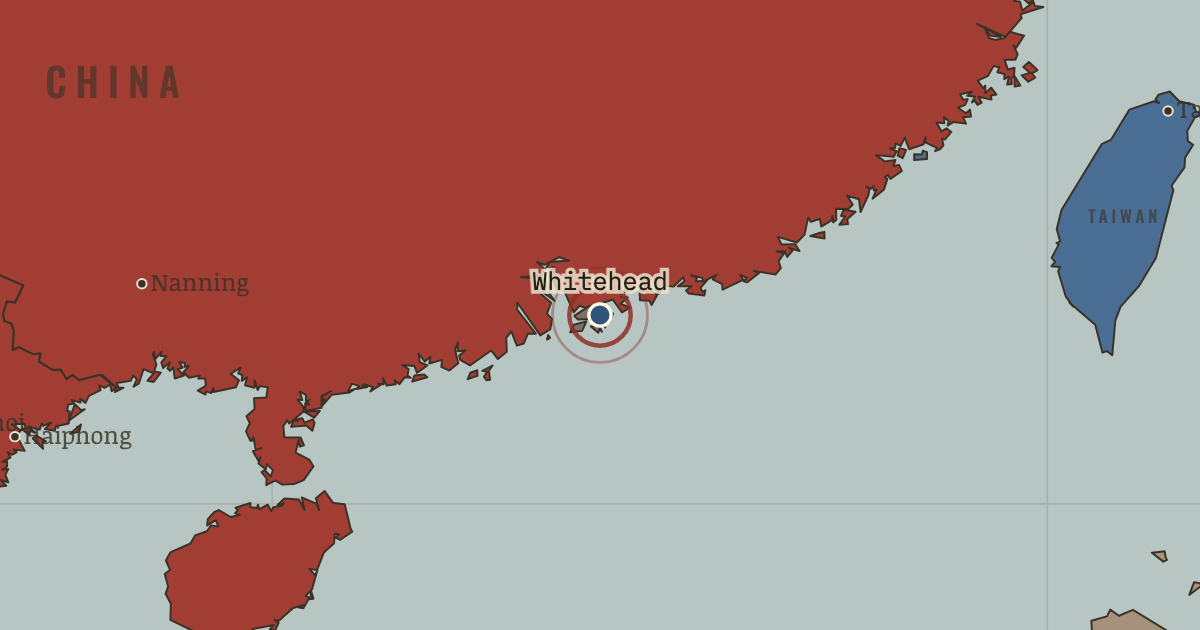
Whitehead Detention Centre
1989–97 — Hong Kong holds “screened-out” Vietnamese, those judged not to be refugees, in a fenced camp at Ma On Shan. Riots, hunger strikes and the dawn deportation flight of 12 December 1989 made it the symbol of the end of automatic asylum.
WW2 is free — every chapter. Try chapters 1–2 of any 2 other atlases (3 with a free account). Opening a new atlas uses one of them. Membership opens all 21 — Join.
The moment in context
Deterrence grew from the belief that generous resettlement, permanent admission to third countries, was drawing more people out of Vietnam. Departures continued after the July 1979 Geneva conference, and by the early 1980s Western governments were taking fewer people while officials in the region spoke of a “pull factor”, the idea that each resettled family encouraged others to follow. In January 1981 Thailand began holding new boat arrivals in austere camps such as Na Pho with no right to interviews for resettlement, a policy it called humane deterrence. From 2 July 1982 Hong Kong detained all new arrivals in closed camps, ending the open camps where refugees had worked in the colony’s factories. In the processing centres, where refugees prepared for resettlement, a group of “long-stayers” formed, people refused by every resettlement country who could neither move on nor go home. On the map the tan of 1979 fades to grey-tan in Thailand and Hong Kong: the shore stayed open only behind fences.
From Comprehensive Plan of Action, chapter 11 of Uprooted: Refugees in Europe 1945–1960 and Indochina 1975–1990 (1989).
The place: Whitehead Detention Centre — map and full story →
Teach this in 5 minutes
- Why it happened — Compassion fatigue. Compassion fatigue set in once the crisis left the news. By the mid-1980s resettlement countries had taken more than a million Indochinese, and…
- The turn — Geneva, 14 June 1989, and the Whitehead camp. The adoption of the Comprehensive Plan of Action is the hinge because it ended the presumption, in place since 1975, that every person leaving…
- What it changed — Screening becomes the norm. The CPA’s individual screening became the model for asylum systems across the world in the 1990s, as Europe faced refugees from Yugoslavia and…
Then ask the room: Was the Comprehensive Plan of Action a humanitarian solution to the boat-people crisis or a retreat from the principle of asylum? The argued answer is on the chapter page →
The atlas that shows it
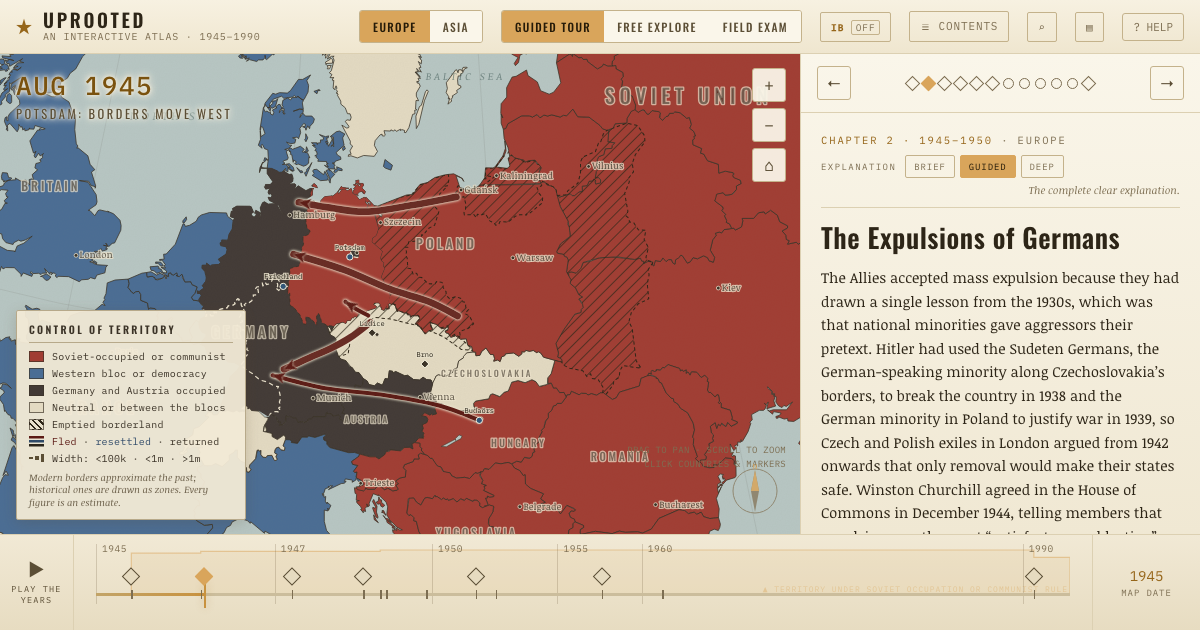
THE FREE PRINTABLE STUDY GUIDE
Join the Dispatch — a short welcome series, then a letter when a new atlas opens — and the printable study guide for Uprooted is yours now, free.
NO TRACKING · YOUR ADDRESS IS USED FOR THE DISPATCH AND NOTHING ELSE · UNSUBSCRIBE ANYTIME