ON THIS DAY ·
The Feminine Mystique
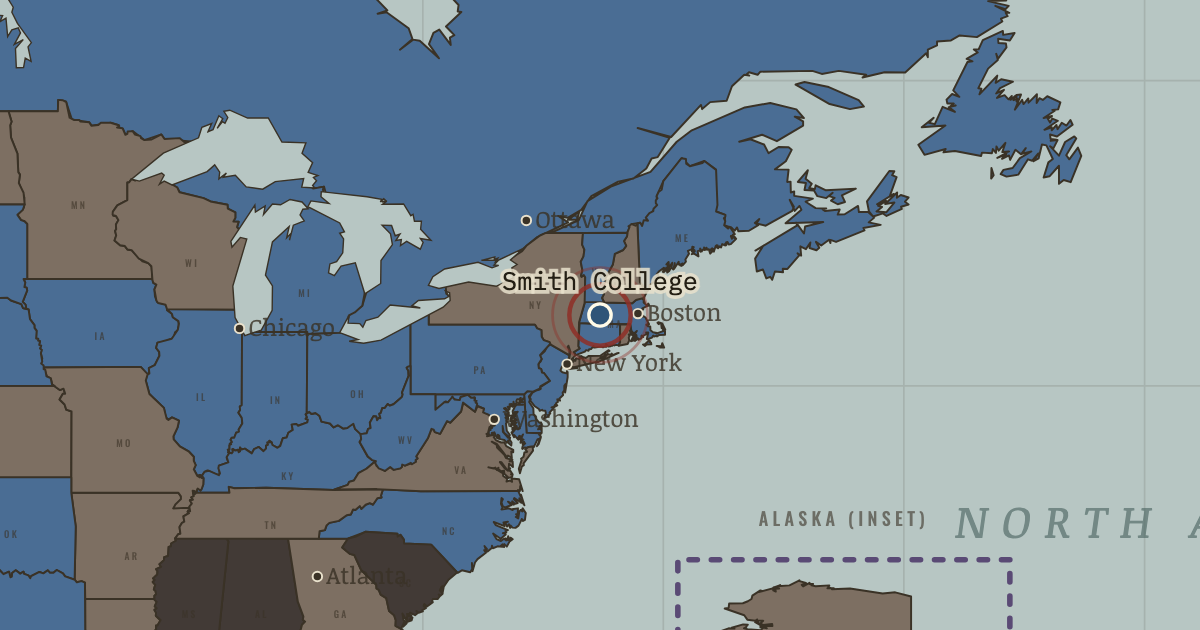
1957–63 — Asked to survey her Smith College classmates fifteen years after graduation, Betty Friedan finds educated wives unhappy in ways they could not name. The questionnaire grows into The Feminine Mystique, published on 19 February 1963.
WW2 is free — every chapter. Try chapters 1–2 of any 2 other atlases (3 with a free account). Opening a new atlas uses one of them. Membership opens all 21 — Join.
Free printable Feminism and the Tunisian Revolution study guide, sent by email ↓
The moment in context
Winning the vote had changed less than its campaigners hoped, because the law still treated a woman first as a wife and mother and only second as an individual citizen. The clearest test was the jury. In 1957 Gwendolyn Hoyt of Tampa, Florida, struck her husband with a baseball bat during a quarrel, and he died. An all-male jury convicted her of murder, because Florida placed women on jury lists only if they registered to serve, and few ever did. In Hoyt v. Florida (1961) the Supreme Court upheld the rule, reasoning that woman was “still regarded as the center of home and family life.” On the map Alabama, Mississippi and South Carolina are charcoal because they excluded women altogether; the grey-tan states exempted women for their sex alone, so that their juries stayed overwhelmingly male. A duty that only volunteers performed turned out to be a right that most women never exercised.
From Origins of second-wave feminism, chapter 1 of Protest and Change: Second-Wave Feminism and Tunisia, 1945–2015 (1963).
The place: The Feminine Mystique — map and full story →
Teach this in 5 minutes
- Why it happened — The vote without equality. The first wave had concentrated its energy on the ballot, on the assumption that political power would bring legal equality with it. It did not,…
- The turn — The Feminine Mystique, 19 February 1963. Friedan’s book is the hinge of this chapter because it turned thousands of private disappointments into a public argument with a name. It began as a…
- What it changed — A language for consciousness-raising. Friedan’s idea that individual unhappiness had social causes became the starting point of the small “consciousness-raising” groups of the late…
Then ask the room: Was The Feminine Mystique a cause of second-wave feminism, or a symptom of changes that were already under way? The argued answer is on the chapter page →
The atlas that shows it
THE FREE PRINTABLE STUDY GUIDE
Join the Dispatch — a short welcome series, then a letter when a new atlas opens — and the printable study guide for Protest and Change is yours now, free.
NO TRACKING · YOUR ADDRESS IS USED FOR THE DISPATCH AND NOTHING ELSE · UNSUBSCRIBE ANYTIME