ON THIS DAY ·
Stalin publishes “Dizzy with Success”
Stalin’s article “Dizzy with Success” blames local officials for forcing peasants into collective farms — and millions walk out of them within weeks.
WW2 is free — every chapter. Try chapters 1–2 of any 2 other atlases (3 with a free account). Opening a new atlas uses one of them. Membership opens all 21 — Join.
Free printable Stalin’s Soviet Union study guide, sent by email ↓
The moment in context
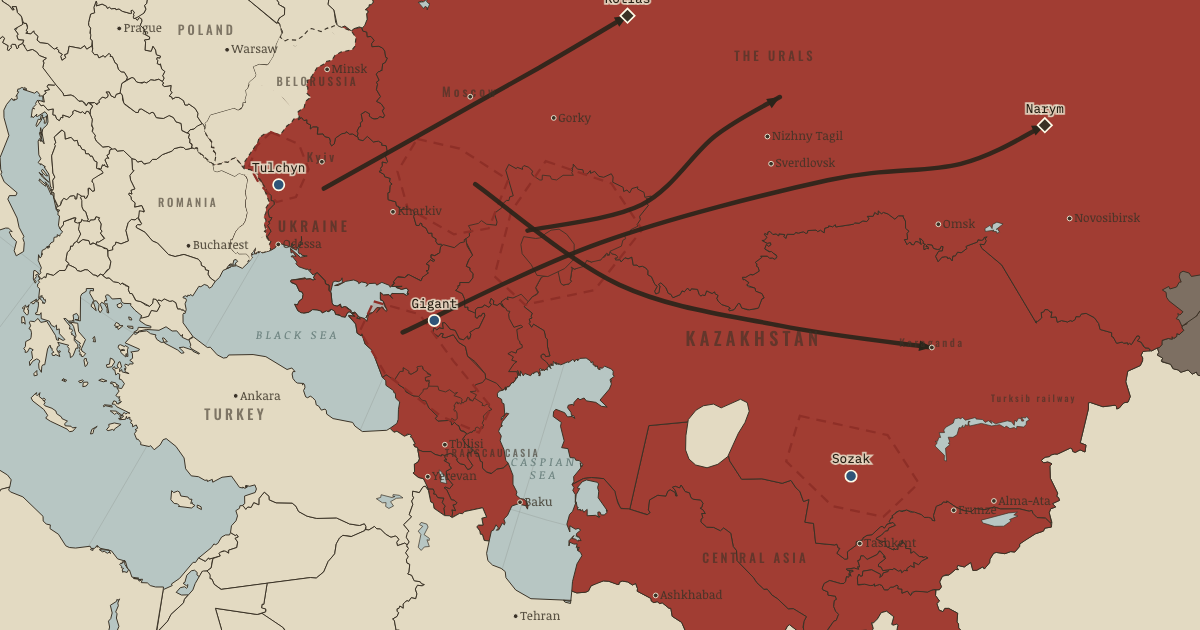
Stalin turned against the New Economic Policy (NEP), Lenin’s 1921 compromise that let peasants sell their grain on a free market, because it left the state dependent on peasants who could choose whether to sell. The grain crisis of 1927–28 convinced him that the market could not feed rapid industrialisation, and his speech of 27 December 1929 announced the “liquidation of the kulaks as a class”, meaning the better-off peasants whom the party saw as rural capitalists. The Politburo, the party’s small ruling committee that worked like a cabinet, set the method. Its resolution of 30 January 1930 divided kulaks into three categories: “counter-revolutionary activists” for the camps or execution, wealthier families for deportation to remote regions, and the rest for resettlement on poor land nearby. Local officials, given quotas and little time, branded anyone who resisted as a kulak, including poor peasants who spoke up. The category was political as much as economic, which meant that it could be stretched to fit whoever stood in the way.
From Collectivisation in the USSR, chapter 2 of The Soviet Union under Stalin, 1924–1953 (1930).
Teach this in 5 minutes
- Why it happened — The grain crisis convinced Stalin the market had failed. State grain purchases fell sharply in the winter of 1927–28 because fixed prices were low and goods to buy were scarce, so peasants held back grain…
- The turn — Tulchyn and “Dizzy with Success”, March 1930. The revolts of February and March 1930, worst in the Ukrainian border districts around Tulchyn, are the hinge of collectivisation because they…
- What it changed — The famines of 1930–33. Compulsory delivery quotas fixed in Moscow took grain regardless of how much had been harvested, and the slaughter of livestock removed the…
Then ask the room: Was collectivisation above all an economic policy or a political one? The argued answer is on the chapter page →
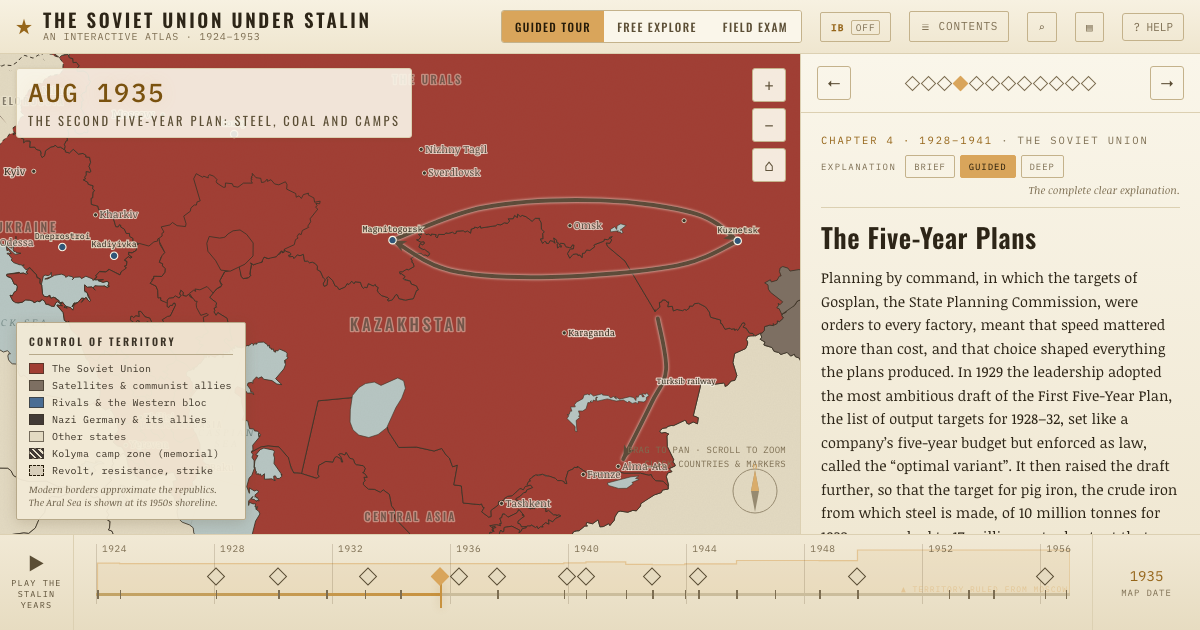
The atlas that shows it
THE FREE PRINTABLE STUDY GUIDE
Join the Dispatch — a short welcome series, then a letter when a new atlas opens — and the printable study guide for The Soviet Union under Stalin is yours now, free.
NO TRACKING · YOUR ADDRESS IS USED FOR THE DISPATCH AND NOTHING ELSE · UNSUBSCRIBE ANYTIME