ON THIS DAY ·
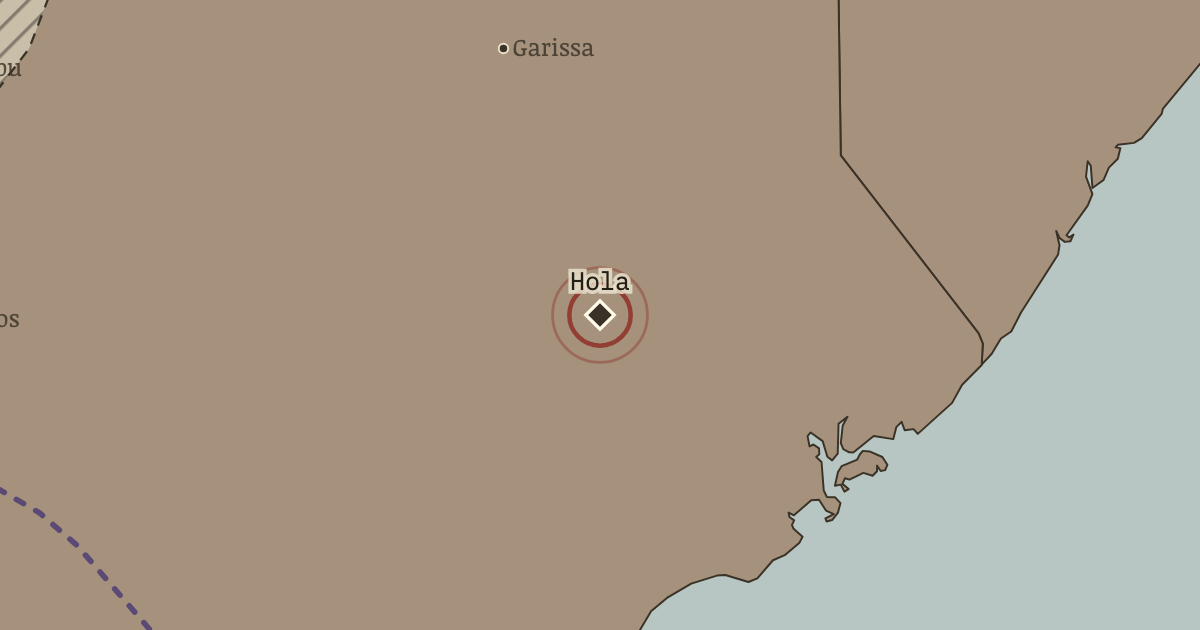
Hola massacre
3 Mar 1959 — Eleven detainees are beaten to death by guards for refusing forced labour; dozens more are badly injured. The cover-up fails, and the killings shake the British Parliament. Remember them.
WW2 is free — every chapter. Try chapters 1–2 of any 2 other atlases (3 with a free account). Opening a new atlas uses one of them. Membership opens all 21 — Join.
Free printable Haiti and Kenya independence study guide, sent by email ↓
The moment in context
The rebellion was fought by poorly armed fighters with deep local support, and the first colonial response aimed at the leaders and the forests. Kenyatta and five KAU leaders were tried at Kapenguria, a remote schoolhouse chosen to keep crowds away, from December 1952 to April 1953, and sentenced to seven years’ hard labour on evidence that a key witness later swore he had been bribed to give. In the forests, fighters under Dedan Kimathi in the Aberdares and Waruhiu Itote on Mount Kenya, with women such as Muthoni wa Kirima among their commanders, ambushed patrols and drew food through networks of women in the reserves. On 26 March 1953 fighters killed 74 people at Lari, most of them families of loyalists, Kikuyu who sided with the colonial government, and security forces killed at least twice as many in reprisal. Lari drove thousands into the Home Guard, a loyalist militia of more than 25,000 men by 1954, and made the civil war inside the rebellion impossible to ignore.
From Mau Mau uprising and the Emergency, chapter 9 of Two Roads to Independence: Haiti 1789–1838 and Kenya 1895–1978 (1954).
The place: Hola massacre — map and full story →
Teach this in 5 minutes
- Why it happened — An insurgency rooted in land. The forest armies drew their strength from the land crisis of the 1940s: squatters pushed off the farms, young men without plots in crowded…
- The turn — Hola camp, 3 March 1959. Hola is the hinge because it turned the Emergency from a military success into a political liability. The eleven men killed that day were detainees…
- What it changed — The Emergency ends and the talks begin. With the forest war over and the camps discredited, Britain lifted the Emergency on 12 January 1960, days before the first Lancaster House…
Then ask the room: Did Mau Mau win Kenya’s independence? The argued answer is on the chapter page →
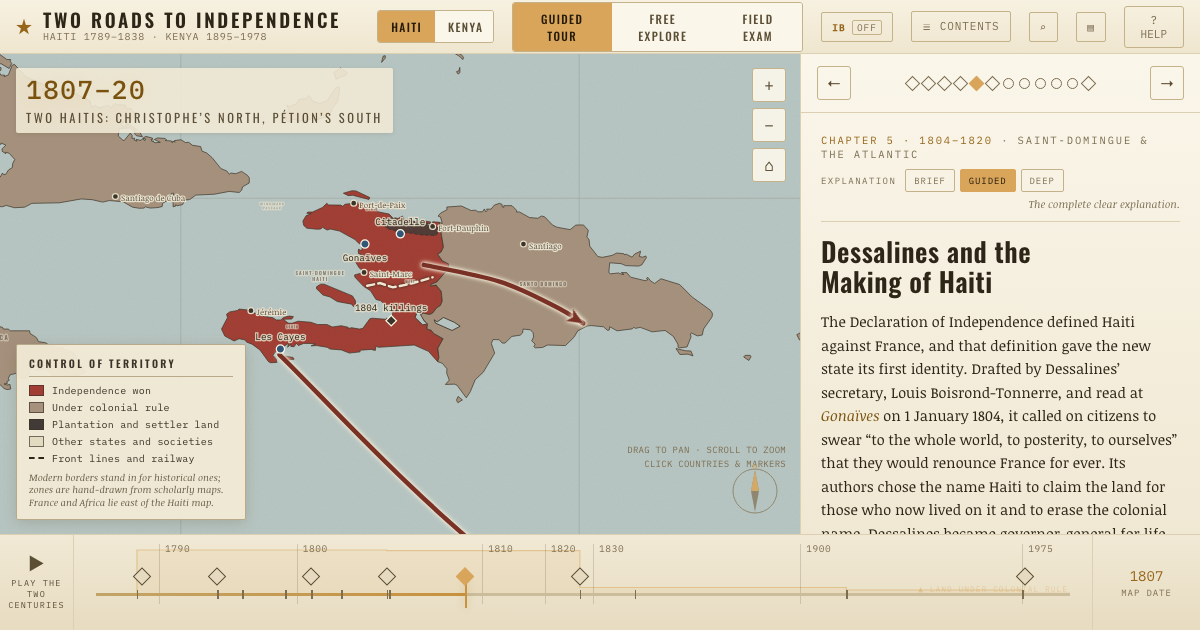
The atlas that shows it
THE FREE PRINTABLE STUDY GUIDE
Join the Dispatch — a short welcome series, then a letter when a new atlas opens — and the printable study guide for Two Roads to Independence is yours now, free.
NO TRACKING · YOUR ADDRESS IS USED FOR THE DISPATCH AND NOTHING ELSE · UNSUBSCRIBE ANYTIME