ON THIS DAY ·
Tsaritsyn renamed Stalingrad
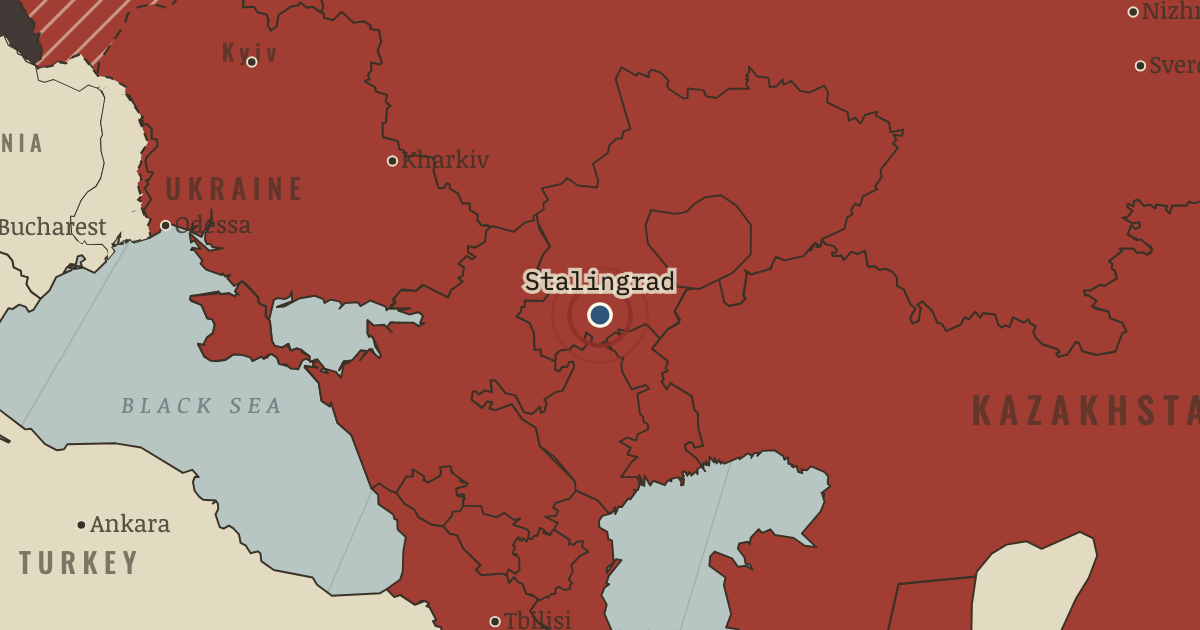
10 Apr 1925 — Tsaritsyn on the Volga was renamed Stalingrad to honour Stalin’s inflated part in defending it during the civil war, the first city to bear his name. In 1942–43 the battle for it turned the war, as The War Room shows; it became Volgograd in 1961.
WW2 is free — every chapter. Try chapters 1–2 of any 2 other atlases (3 with a free account). Opening a new atlas uses one of them. Membership opens all 21 — Join.
Free printable Stalin’s Soviet Union study guide, sent by email ↓
The moment in context
The cult was manufactured deliberately, and its starting point is precise. For Stalin’s fiftieth birthday on 21 December 1929, Pravda (“Truth”), the party’s daily newspaper, printed page after page of tributes from his colleagues, at the very moment the forced collectivisation of the Great Turn began. From then on, his image was linked to the “revolution from above”, the transformation of the country by state command: speeches ended with ovations, letters thanked him personally, and his name was attached to cities, factories, collective farms and the Union’s highest peak. Stalingrad had been named in 1925, and in the 1930s Stalino, Stalinabad, Stalinsk and Stalinogorsk followed, as the markers show. Stalin corrected drafts of his own praise and sometimes toned it down, presenting himself as a modest servant of the party. The cult worked because it attached a human face to an abstract and often frightening state.
From Stalin’s cult of personality, chapter 8 of The Soviet Union under Stalin, 1924–1953 (1939).
The place: Tsaritsyn renamed Stalingrad — map and full story →
Teach this in 5 minutes
- Why it happened — A leader without rivals needed a public image. Stalin had defeated every rival by 1929, yet he lacked Lenin’s authority and Trotsky’s fame. The cult gave him a legitimacy based on wisdom and…
- The turn — Pravda, 21 December 1929. The birthday issue of Pravda in December 1929 marks the turn because it launched the public cult at exactly the moment Stalin began the revolution…
- What it changed — Loyalty to one man became loyalty to the state. Because propaganda presented every achievement as Stalin’s, any doubt about policy became a political crime under Article 58 on “anti-Soviet…
Then ask the room: Did most Soviet citizens believe the propaganda of the Stalin era? The argued answer is on the chapter page →
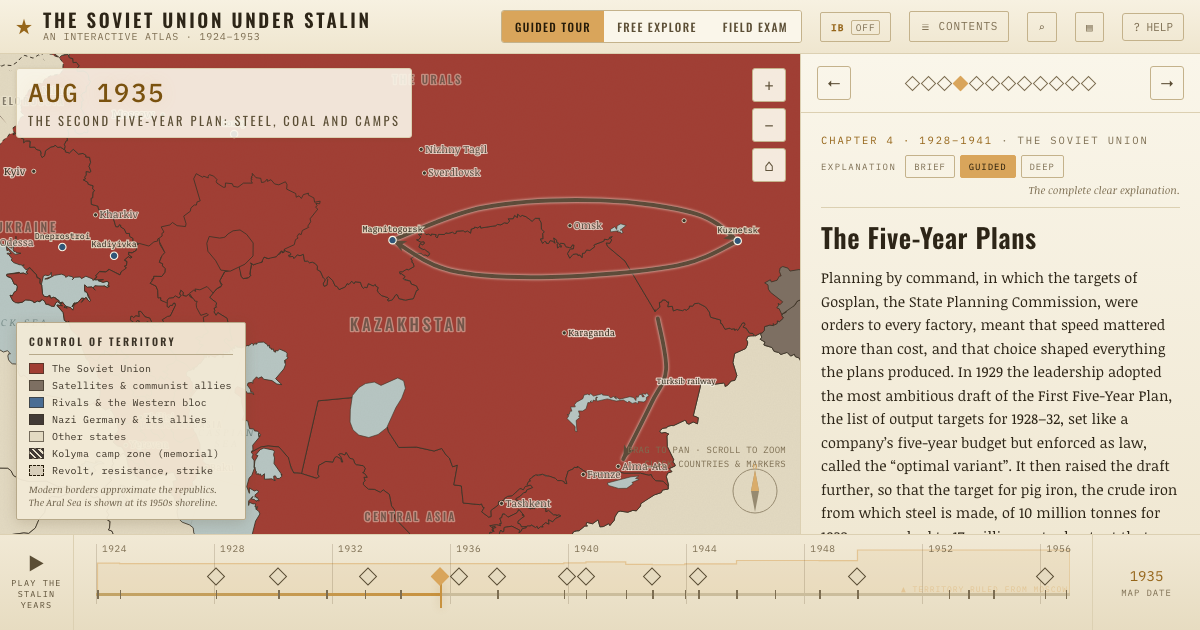
The atlas that shows it
THE FREE PRINTABLE STUDY GUIDE
Join the Dispatch — a short welcome series, then a letter when a new atlas opens — and the printable study guide for The Soviet Union under Stalin is yours now, free.
NO TRACKING · YOUR ADDRESS IS USED FOR THE DISPATCH AND NOTHING ELSE · UNSUBSCRIBE ANYTIME