ON THIS DAY ·
9th National Congress of the CCP
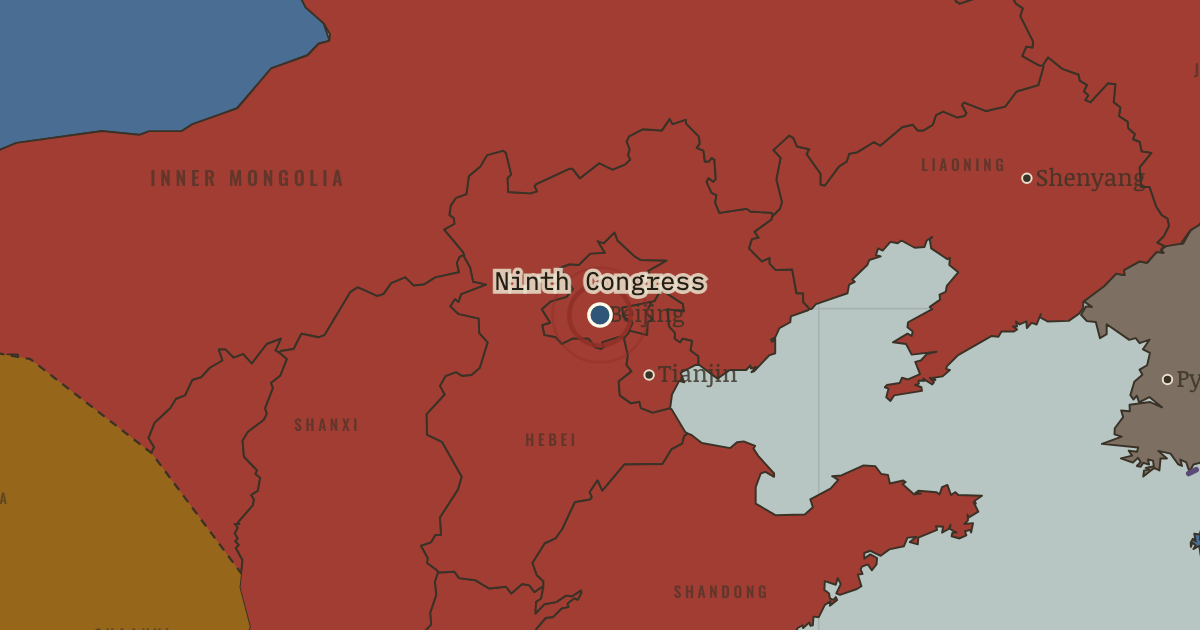
1–24 Apr 1969 — The congress that closes the Cultural Revolution’s first phase writes Lin Biao into the Party constitution as Mao’s “close comrade-in-arms and successor”. Nearly half of the new Central Committee wears uniform. The army had become the government.
WW2 is free — every chapter. Try chapters 1–2 of any 2 other atlases (3 with a free account). Opening a new atlas uses one of them. Membership opens all 21 — Join.
The moment in context
Sending urban youth to the countryside served several purposes at once, which explains its scale. Mao’s directive of 22 December 1968 turned an old, small policy into a mass movement. Schools had been closed since 1966, so three years of graduates had nowhere to go in the cities. Moving them out ended the Red Guards, the student militants who had fought in Mao’s name since 1966, as a political force and relieved the cities of mouths to feed. Mao also believed that the young had to be toughened by labour and taught the peasants’ values, as his own generation had been in the Communists’ wartime base at Yan’an. Some volunteers went with real enthusiasm. Most went because refusing meant losing their household registration, the internal residence permit that tied each person to one place much like a passport valid in one town, and with it their ration book. Among those sent to a cave village in northern Shaanxi in January 1969 was fifteen-year-old Xi Jinping, a reminder that the generation sent down in these years went on to rule China.
From Down to the Countryside Movement, chapter 10 of The People’s Republic under Mao, 1949–1976 (1971).
The place: 9th National Congress of the CCP — map and full story →
Teach this in 5 minutes
- Why it happened — The Red Guards had served their purpose. Mao sent the Red Guards away because they had become a problem. By 1968 the student factions were fighting each other with guns, universities such…
- The turn — Öndörkhaan, 13 September 1971. The crash at Öndörkhaan is the hinge because it destroyed the cult’s claim that Mao was always right. Lin Biao had been the cult’s chief architect…
- What it changed — Washington becomes the answer. With Lin gone and the Soviet threat on the northern border, Mao and Zhou Enlai accelerated the secret approach to the United States. Within months…
Then ask the room: How far did the movement to send urban youth “up to the mountains and down to the villages” achieve Mao’s aims? The argued answer is on the chapter page →
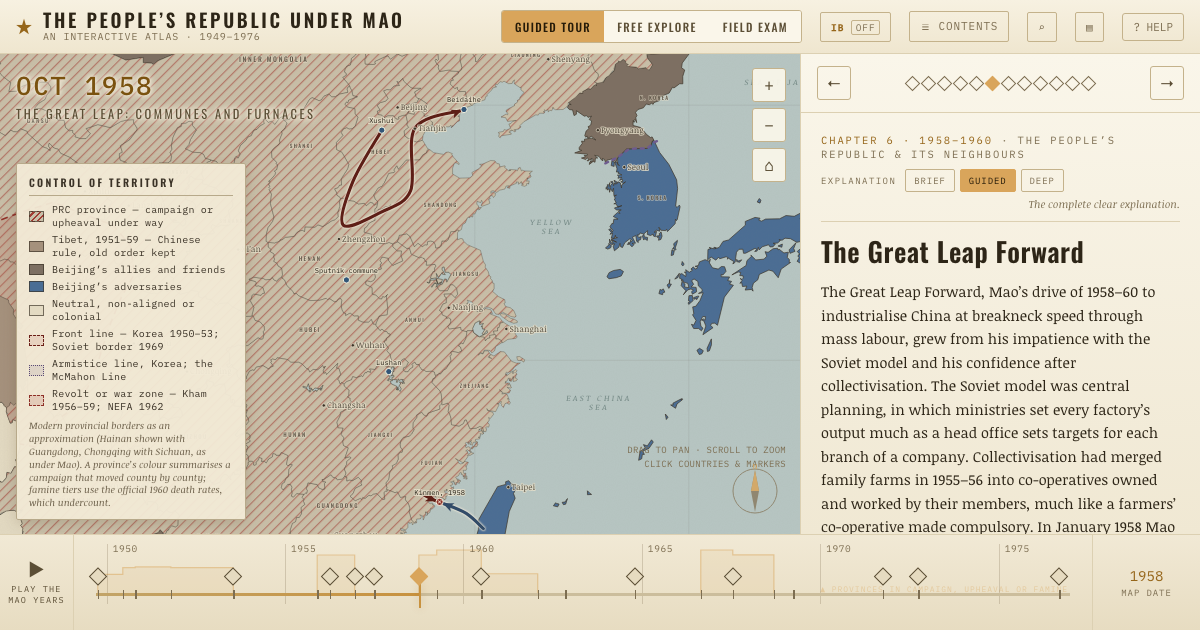
The atlas that shows it
THE FREE PRINTABLE STUDY GUIDE
Join the Dispatch — a short welcome series, then a letter when a new atlas opens — and the printable study guide for The People’s Republic under Mao is yours now, free.
NO TRACKING · YOUR ADDRESS IS USED FOR THE DISPATCH AND NOTHING ELSE · UNSUBSCRIBE ANYTIME