ON THIS DAY ·
La Conferencia de Mujeres por la Raza
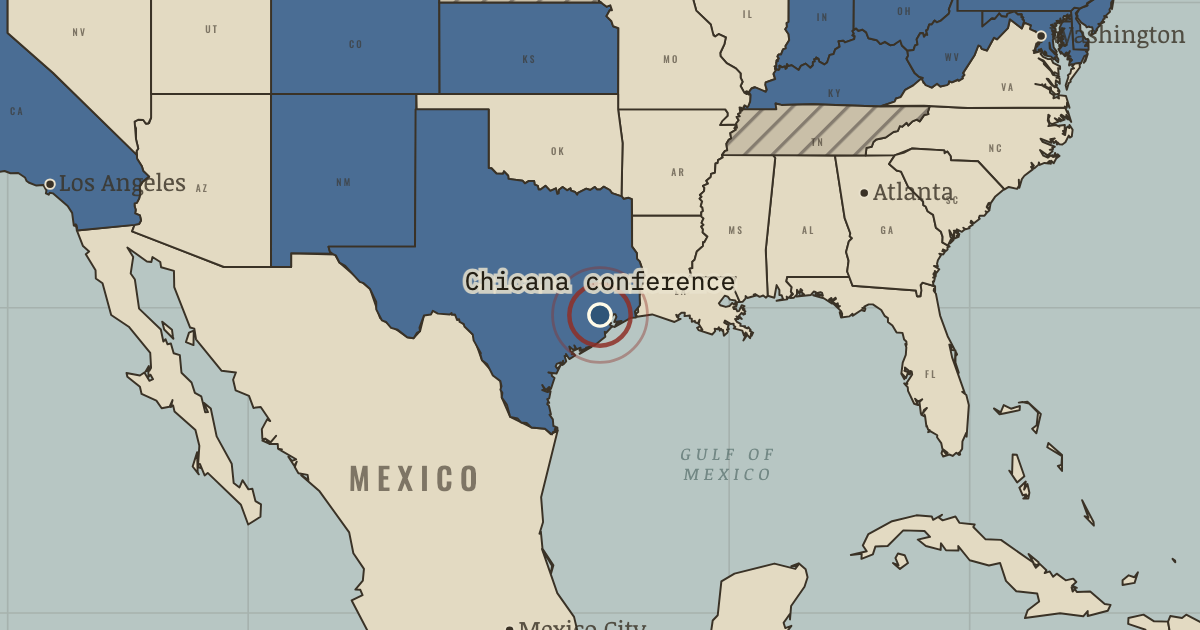
28–30 May 1971 — More than 600 Chicanas meet at the Magnolia Park YWCA in Houston, the first national Chicana conference. Its resolutions demand free abortion and 24-hour childcare, and the meeting divides over whether feminism weakens the Chicano movement.
WW2 is free — every chapter. Try chapters 1–2 of any 2 other atlases (3 with a free account). Opening a new atlas uses one of them. Membership opens all 21 — Join.
Free printable Feminism and the Tunisian Revolution study guide, sent by email ↓
The moment in context
The mainstream spoke of a universal sisterhood, but its priorities followed the experiences of the women who led it. Frances Beal, a veteran of the student civil-rights group SNCC, argued in her 1969 essay “Double Jeopardy” that Black women faced racism and sexism together, and that treating housework as women’s prison ignored Black women who had always cleaned other people’s houses for wages. When her Third World Women’s Alliance, named for the formerly colonised peoples, marched in August 1970 with placards defending the Black activist Angela Davis, an organiser told them her case had nothing to do with women’s liberation. In May 1971 more than 600 Chicanas, Mexican-American women, met in Houston at La Conferencia de Mujeres por la Raza (“the Conference of Women for the People”), where the meeting divided over whether feminism weakened the Mexican-American civil-rights movement. In May 1970 lesbians calling themselves the “Lavender Menace” seized a feminist congress to protest being kept out of sight. In each case the women most affected found that “universal” sisterhood had an unspoken membership list, which is why they began to organise apart.
From Black and Chicana feminism, chapter 4 of Protest and Change: Second-Wave Feminism and Tunisia, 1945–2015 (1977).
The place: La Conferencia de Mujeres por la Raza — map and full story →
Teach this in 5 minutes
- Why it happened — A movement built in the image of its founders. The first texts and organisations of the second wave were created by educated white women, and they naturally began from their own experience of…
- The turn — The Combahee River Collective Statement, April 1977. The statement is the hinge of this chapter because it turned a set of grievances into a theory that outlived every organisation of the decade. Its…
- What it changed — From reproductive rights to reproductive justice. Campaigns by groups such as the Committee to End Sterilization Abuse won federal rules in 1978 requiring a 30-day waiting period, consent in the…
Then ask the room: Were Black, Chicana and working-class women “left out” of second-wave feminism, or did they build a different feminism of their own? The argued answer is on the chapter page →
The atlas that shows it
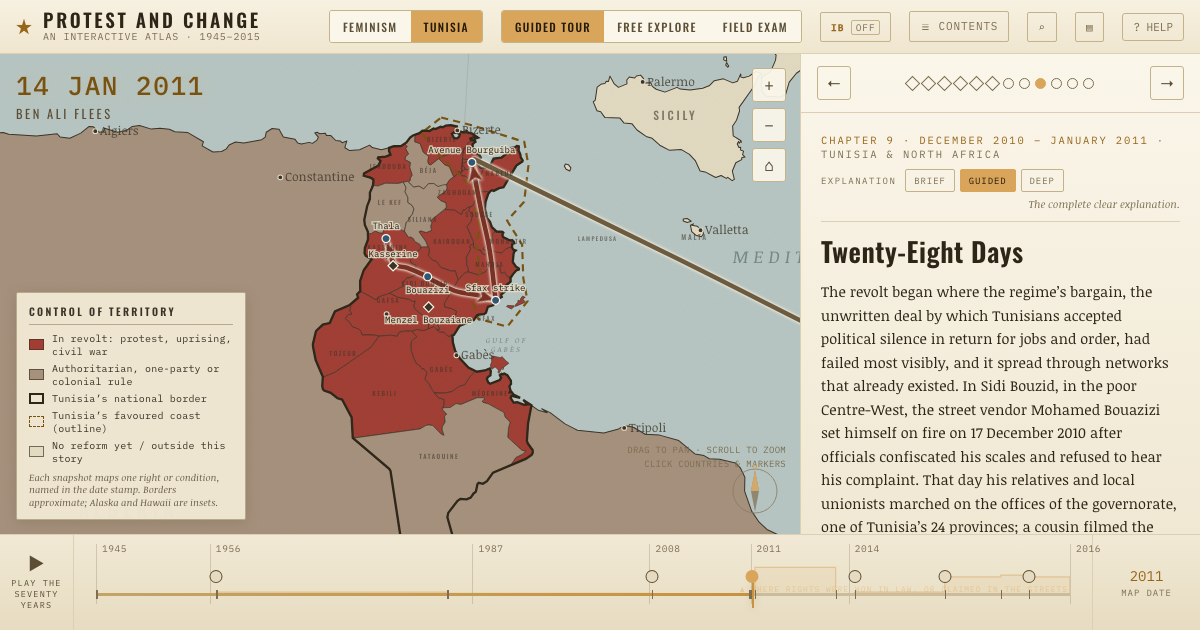
THE FREE PRINTABLE STUDY GUIDE
Join the Dispatch — a short welcome series, then a letter when a new atlas opens — and the printable study guide for Protest and Change is yours now, free.
NO TRACKING · YOUR ADDRESS IS USED FOR THE DISPATCH AND NOTHING ELSE · UNSUBSCRIBE ANYTIME