ON THIS DAY ·
Tito–Stalin split
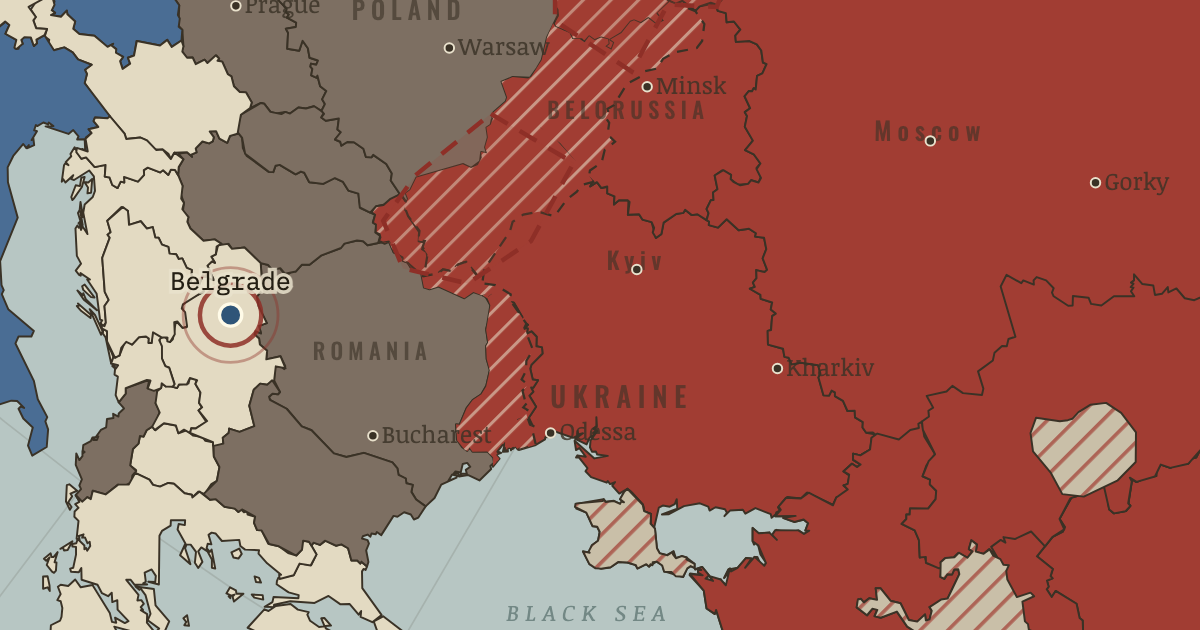
28 Jun 1948 — The Cominform expelled Yugoslavia, the most independent of the new communist states, after Tito refused Moscow’s direction. Yugoslavia survived Soviet pressure, and Stalin answered by purging alleged “Titoists” across the bloc.
WW2 is free — every chapter. Try chapters 1–2 of any 2 other atlases (3 with a free account). Opening a new atlas uses one of them. Membership opens all 21 — Join.
Free printable Stalin’s Soviet Union study guide, sent by email ↓
The moment in context
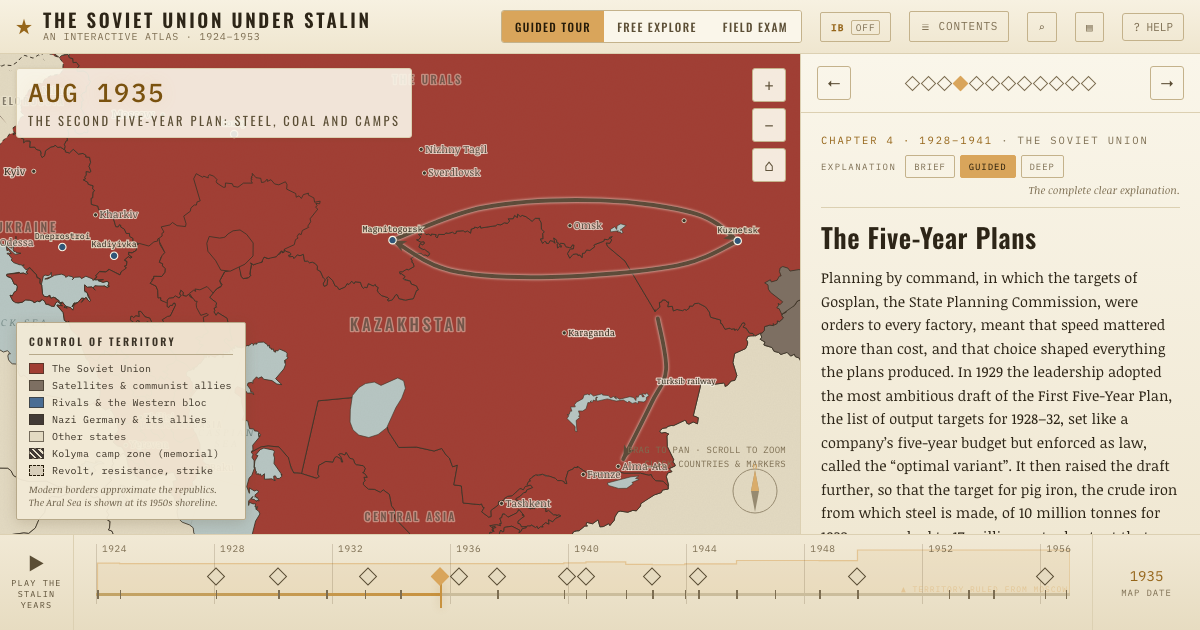
At home the regime put reconstruction before relief, and the famine of 1946–47 shows the cost. A drought in 1946 hit Ukraine, Moldavia and the Volga, yet the state kept high procurement quotas, the grain each farm had to deliver, held large grain reserves and kept exporting grain to Eastern Europe. Estimates of the dead run from under 1 million to about 2 million, many of them in Moldavia, annexed only in 1940. New laws of June 1947 punished theft of state property with up to 25 years in camps, and the Gulag, the forced-labour camp system, reached its peak of about 2.5 million prisoners. The state rebuilt Ukraine’s mines and the Dnieper dam within a few years, while millions still lived in dugouts, which shows what the regime valued.
From High Stalinism (1945–53), chapter 11 of The Soviet Union under Stalin, 1924–1953 (1949).
The place: Tito–Stalin split — map and full story →
Teach this in 5 minutes
- Why it happened — Victory confirmed Stalin’s methods. The war appeared to prove that the collective farms, the plans and the purges had made the country strong enough to survive. Stalin had no reason to…
- The turn — Tito’s expulsion, 28 June 1948. The expulsion of Yugoslavia from the Cominform is the hinge of High Stalinism because it was the first successful defiance of Stalin from within the…
- What it changed — An empire held by force. The satellite states of Eastern Europe remained under Soviet control until 1989, but the methods used to install them, rigged elections, purges and…
Then ask the room: Was High Stalinism a continuation of the terror of the 1930s, or a different kind of dictatorship? The argued answer is on the chapter page →
The atlas that shows it
THE FREE PRINTABLE STUDY GUIDE
Join the Dispatch — a short welcome series, then a letter when a new atlas opens — and the printable study guide for The Soviet Union under Stalin is yours now, free.
NO TRACKING · YOUR ADDRESS IS USED FOR THE DISPATCH AND NOTHING ELSE · UNSUBSCRIBE ANYTIME