ON THIS DAY ·
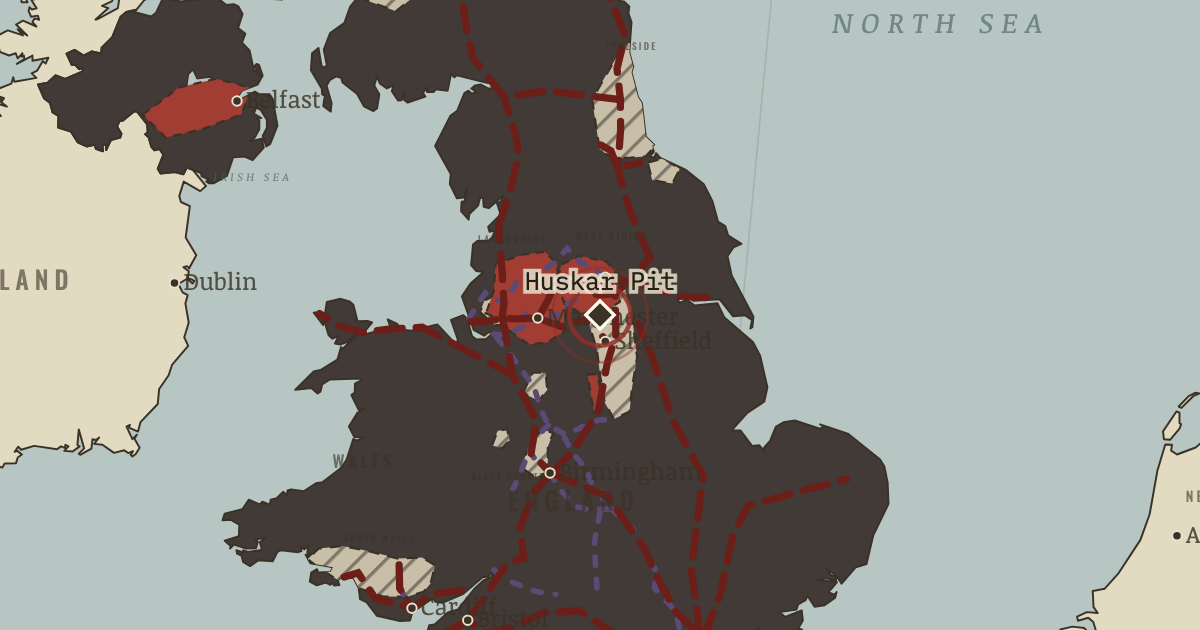
Huskar Pit disaster
4 Jul 1838 — A storm floods the ventilation drift of this South Yorkshire colliery and drowns 26 children, the youngest seven years old. The outcry helps produce the Mines Act of 1842.
WW2 is free — every chapter. Try chapters 1–2 of any 2 other atlases (3 with a free account). Opening a new atlas uses one of them. Membership opens all 21 — Join.
Free printable Industrial Revolution study guide, sent by email ↓
The moment in context
The industrial town was the new environment of the age, and the speed of its growth explains most of its problems. Factories needed workers close by, and workers poured in from the countryside, from Scotland and from Ireland, especially after the Great Famine of 1845–52, when the potato crop failed, killed about a million people and drove many more abroad; the map’s arrows trace them into Liverpool, Manchester and Glasgow. Builders put up the cheapest housing they could: back-to-back terraces sharing a rear wall and therefore without through-draughts, courts of houses crowded around small yards and reached by narrow passages, and cellars that flooded. In Little Ireland, a slum beside the River Medlock in Manchester, Friedrich Engels, a young German working for his family’s cotton firm, found families living in cellars, a single outdoor toilet shared by dozens of people and a river black with dye and sewage. Towns had no authority responsible for drains, water or rubbish, so disease filled the gap.
From Urbanisation and the Factory Acts, chapter 5 of The Industrial Revolution, 1750–1914 (1851).
The place: Huskar Pit disaster — map and full story →
Teach this in 5 minutes
- Why it happened — Factories pulled workers into towns. Steam power let mills and works gather where coal, canals and railways met, and the jobs they offered drew people from a countryside where…
- The turn — The Factory Act, Westminster, 1833. The Factory Act of 1833 is the hinge because it was the first law to regulate industrial employers that a government actually enforced. Earlier acts…
- What it changed — Protest grows from hardship. Low wages, hunger and the loss of skilled trades fed the protest movements of the same decades, from machine-breaking to Chartism, a mass movement…
Then ask the room: Did the first industrial generations gain or lose from industrialisation? The argued answer is on the chapter page →
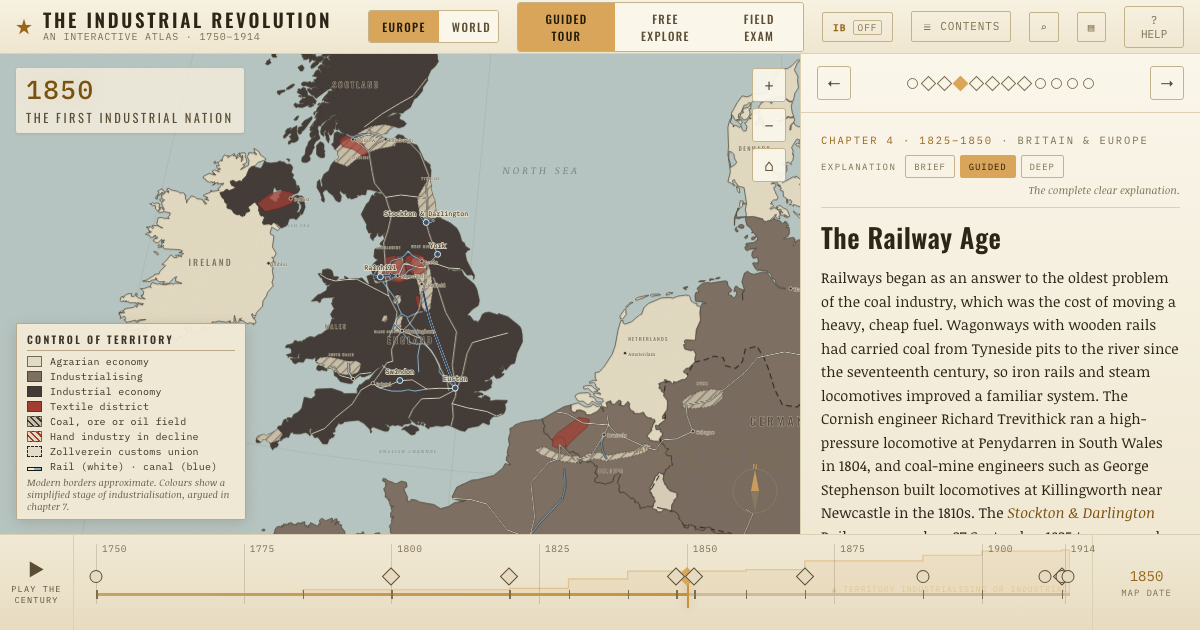
The atlas that shows it
THE FREE PRINTABLE STUDY GUIDE
Join the Dispatch — a short welcome series, then a letter when a new atlas opens — and the printable study guide for The Industrial Revolution is yours now, free.
NO TRACKING · YOUR ADDRESS IS USED FOR THE DISPATCH AND NOTHING ELSE · UNSUBSCRIBE ANYTIME