ON THIS DAY ·
Second International
14 Jul 1889 — Socialist and labour parties from twenty countries found the Second International and call for an eight-hour day, marked every 1 May. Organised labour is now an international force.
WW2 is free — every chapter. Try chapters 1–2 of any 2 other atlases (3 with a free account). Opening a new atlas uses one of them. Membership opens all 21 — Join.
Free printable Industrial Revolution study guide, sent by email ↓
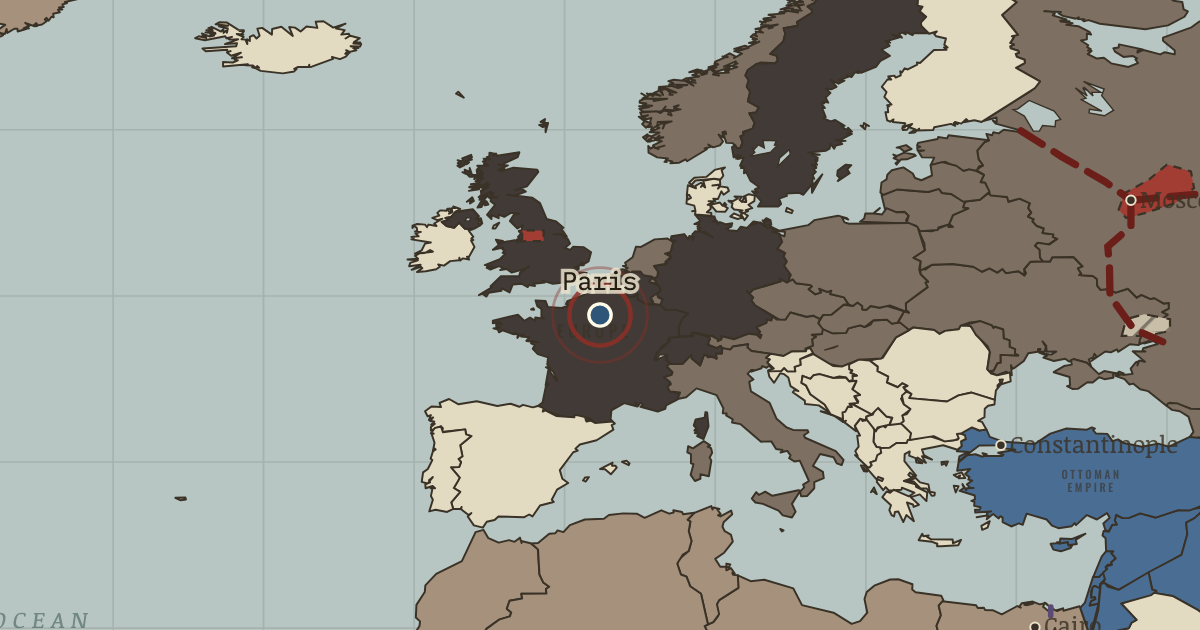
The moment in context
Measured by output, the Industrial Revolution produced a small group of clear winners. In 1750, by the economic historian Paul Bairoch’s estimates, Europe and the United States made under a quarter of the world’s manufactured goods, and China and India together about 57 per cent; by 1900 they made about 85 per cent, while China’s share fell to about six per cent and India’s to under two. Britain, the pioneer, had become the world’s banker: by 1914 the City of London, its financial district, had invested about £4 billion abroad, in railways, mines and loans to foreign governments. Within the industrial countries the gains spread slowly but widely after 1850, as real wages, pay measured by what it could buy, rose and working hours fell. The Panama Canal, opened in August 1914, was that confident world’s last great work. The lead fed on itself, because the profits of industry paid for the loans, railways and fleets that extended it across the globe.
From Impact of the Industrial Revolution, chapter 12 of The Industrial Revolution, 1750–1914 (1914).
The place: Second International — map and full story →
Teach this in 5 minutes
- Why it happened — Coal-powered productivity. The industrial countries’ wealth rested on machines driven by coal, which multiplied what each worker could produce. Britain mined about 287 million…
- The turn — The City of London, 1914. The City of London, the capital’s financial district, is the hinge of the epilogue because it shows what the first industrial nation had become. By…
- What it changed — An industrial war. The industrial powers’ greatest new capacity in 1914 was for total war, waged with a nation’s whole economy, and in August they turned their steel,…
Then ask the room: Who gained most from the Industrial Revolution by 1914, and was the price worth paying? The argued answer is on the chapter page →
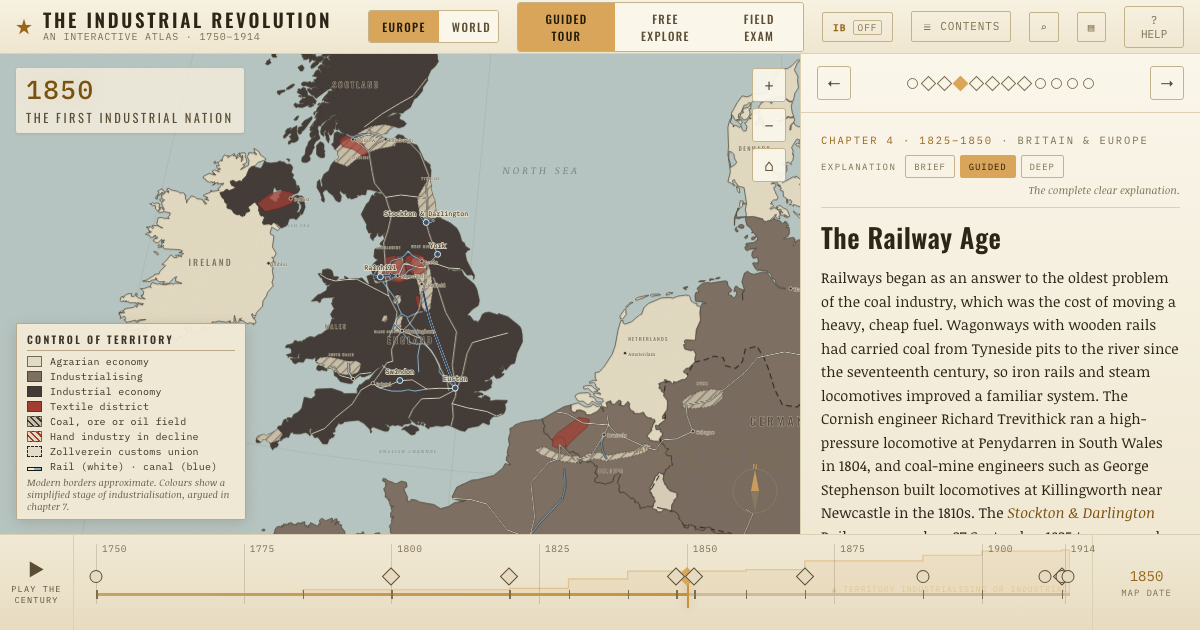
The atlas that shows it
THE FREE PRINTABLE STUDY GUIDE
Join the Dispatch — a short welcome series, then a letter when a new atlas opens — and the printable study guide for The Industrial Revolution is yours now, free.
NO TRACKING · YOUR ADDRESS IS USED FOR THE DISPATCH AND NOTHING ELSE · UNSUBSCRIBE ANYTIME