ON THIS DAY ·
Fall of Rostov and Order No. 227
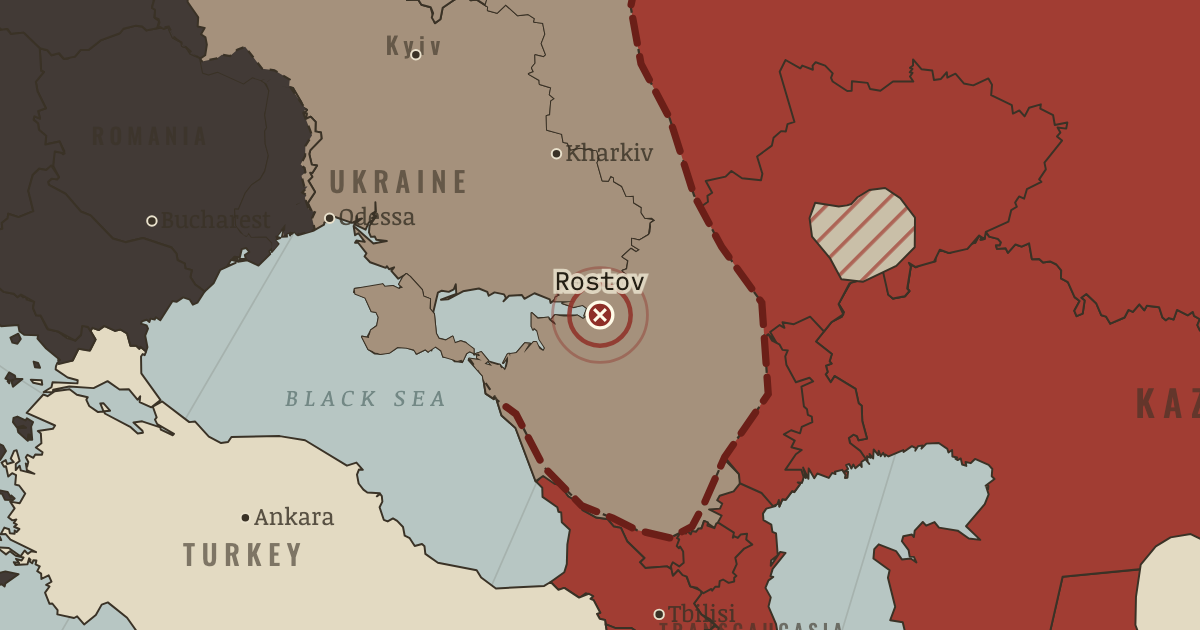
24–28 Jul 1942 — The loss of Rostov-on-Don opened the road to the Caucasus. Four days later Stalin issued Order No. 227, “Not one step back!”, which created penal battalions and blocking detachments behind the front.
WW2 is free — every chapter. Try chapters 1–2 of any 2 other atlases (3 with a free account). Opening a new atlas uses one of them. Membership opens all 21 — Join.
Free printable Stalin’s Soviet Union study guide, sent by email ↓
The moment in context
The disaster of June 1941 grew partly from Stalin’s own decisions, and his recovery shows how the system worked under pressure. He had trusted the Nazi–Soviet Pact, the 1939 non-aggression treaty with Hitler, dismissed intelligence warnings as British provocations and forbidden actions that might provoke Hitler, so the Red Army, the Soviet armed forces, was caught unprepared along a new and unfortified border. In the first week German forces took Minsk, and witnesses describe Stalin withdrawing to his dacha, his country house outside Moscow. His colleagues came to him there on 30 June to propose a State Defence Committee, known as the GKO, a small war cabinet with power over every institution, with Stalin at its head. On 3 July he spoke to the country by radio, addressing listeners as “brothers and sisters”. Order No. 270 of August 1941 branded soldiers who surrendered as traitors and made their families liable to arrest. The state that had terrorised its people now asked them to save it, and combined that appeal with threats.
From Stalin in World War II, chapter 10 of The Soviet Union under Stalin, 1924–1953 (1942).
The place: Fall of Rostov and Order No. 227 — map and full story →
Teach this in 5 minutes
- Why it happened — Stalin misjudged Hitler’s intentions. Stalin believed Germany would not attack while fighting Britain and treated warnings from his spies, from Churchill and from his own border…
- The turn — Kuibyshev and Moscow, October 1941. The decision of mid-October 1941 is the home front’s hinge because it settled whether the regime would survive its worst crisis. On 15 October the…
- What it changed — Victory as the regime’s new legitimacy. The war became the strongest justification for Stalinism after 1945: collectivisation, the plans and even the purges were presented as harsh but…
Then ask the room: How far was Stalin’s leadership responsible for the Soviet victory in 1945? The argued answer is on the chapter page →
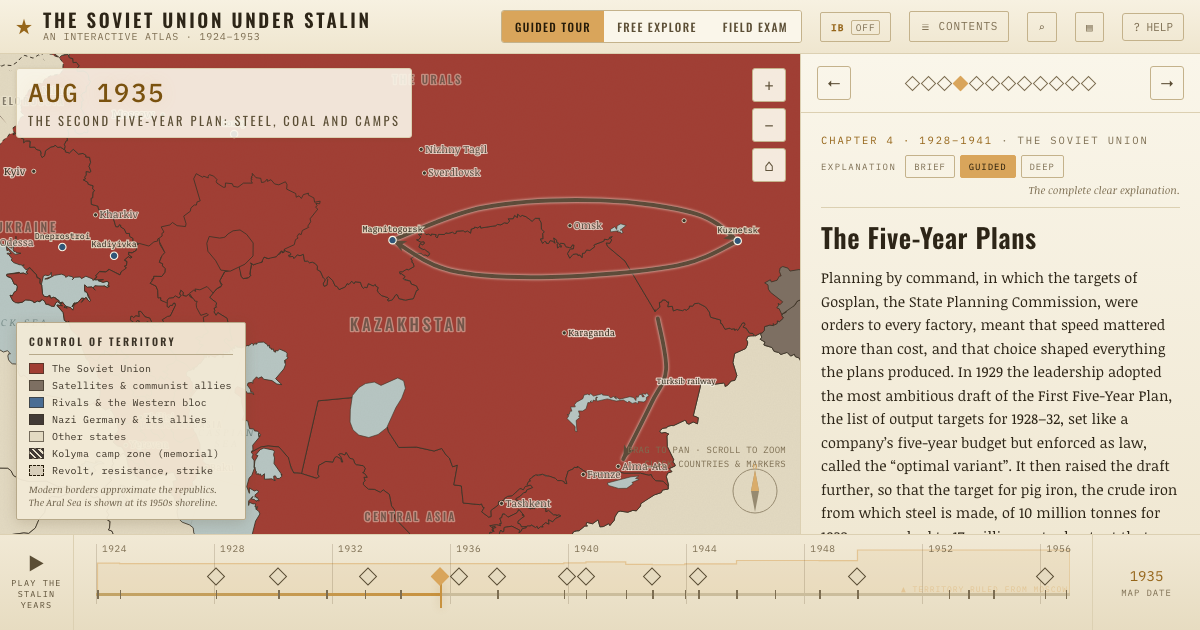
The atlas that shows it
THE FREE PRINTABLE STUDY GUIDE
Join the Dispatch — a short welcome series, then a letter when a new atlas opens — and the printable study guide for The Soviet Union under Stalin is yours now, free.
NO TRACKING · YOUR ADDRESS IS USED FOR THE DISPATCH AND NOTHING ELSE · UNSUBSCRIBE ANYTIME