ON THIS DAY ·
Nanchang Uprising
1 Aug 1927 — Communist-led regiments seize Nanchang for three days — the party’s first army of its own. Driven out and broken, the survivors under Zhu De trickle to the hills. The People’s Liberation Army still dates its founding to this morning.
WW2 is free — every chapter. Try chapters 1–2 of any 2 other atlases (3 with a free account). Opening a new atlas uses one of them. Membership opens all 21 — Join.
Free printable Chinese Revolution study guide, sent by email ↓
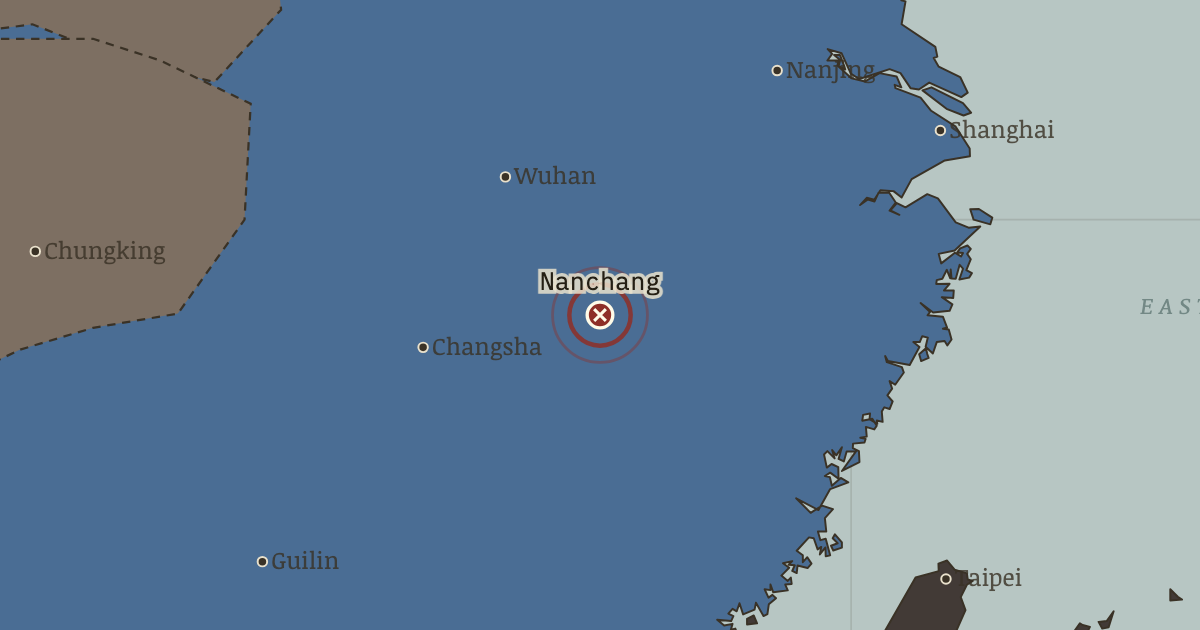
The moment in context
The Nanjing Decade is the name given to the Nationalist government’s main period of state-building, from 1927 to 1937, and it opened with a betrayal that fixed the shape of everything after. On 12 April 1927, in Shanghai (the ◆ there), Chiang turned on his own allies. Green Gang enforcers and NRA soldiers killed hundreds of unionists and Communists in a single morning, and thousands more across the south in the following weeks, so that the First United Front died in its own moment of victory. The Communist answer came in August at Nanchang (the ✕), where Communist-led regiments seized the city for three days, an action from which the People’s Liberation Army still dates its founding. They failed, and the survivors under Zhu De trickled into the hills where Chapter 6 will find them. The consequence is the point to hold, because the purge drove the CCP out of the coastal cities where it had been born and into the countryside. There, after years of catastrophe, it would eventually discover the strategy that wins this atlas. None of the men who carried out the purge understood the favour they were doing their enemies.
From Shanghai purge and Nanjing decade, chapter 5 of China in Revolution, 1911–1949 (1929).
The place: Nanchang Uprising — map and full story →
Teach this in 5 minutes
- Why it happened — Class war inside the alliance. The peasant associations and Shanghai unions were not embarrassing excesses of the United Front — they were its left wing doing what it existed to…
- The turn — Shanghai, 12 April 1927. Everything after 1927 follows from this morning: it fixed the civil war as the axis of Chinese politics for twenty-two years, expelled the CCP into…
- What it changed — The revolution goes rural. Driven from the cities, the Communist remnants converge on the mountainous borderlands where provincial authority runs out — Jinggangshan first,…
Then ask the room: Was the Nanjing decade a real modernization interrupted — or a façade that Japan merely exposed? The argued answer is on the chapter page →
The atlas that shows it
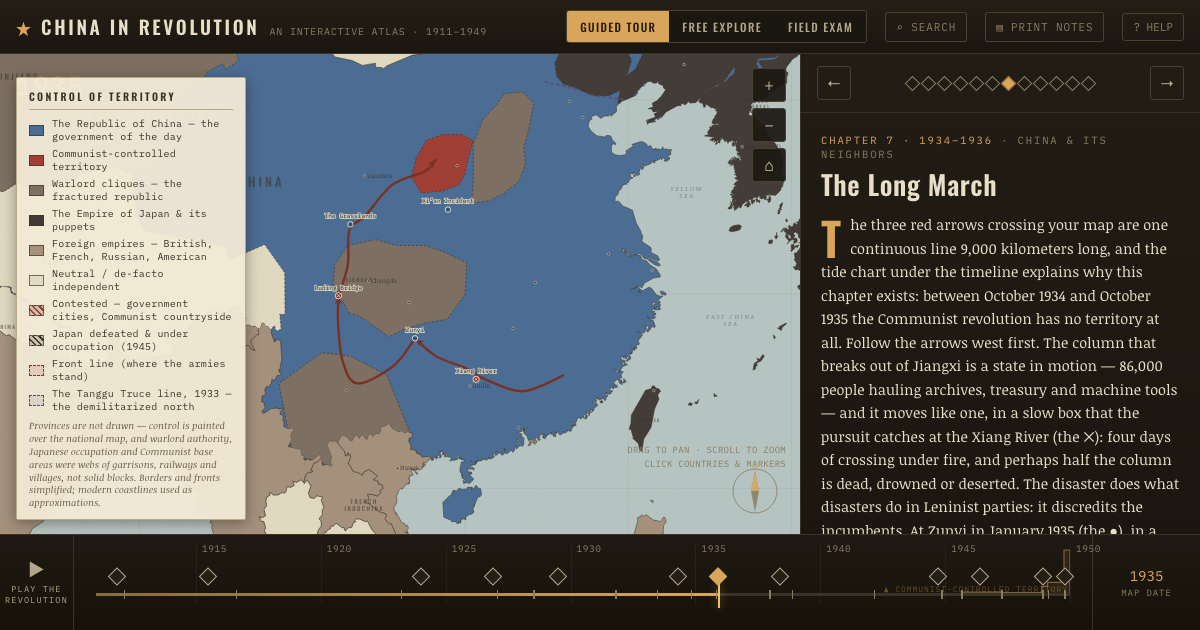
THE FREE PRINTABLE STUDY GUIDE
Join the Dispatch — a short welcome series, then a letter when a new atlas opens — and the printable study guide for China in Revolution is yours now, free.
NO TRACKING · YOUR ADDRESS IS USED FOR THE DISPATCH AND NOTHING ELSE · UNSUBSCRIBE ANYTIME