ON THIS DAY ·
German–Polish Border Treaty
14 Nov 1990 — In Warsaw the foreign ministers of united Germany and Poland sign a treaty confirming the Oder–Neisse line as their permanent border. Forty-five years after Potsdam, the frontier that had uprooted millions became final in international law.
WW2 is free — every chapter. Try chapters 1–2 of any 2 other atlases (3 with a free account). Opening a new atlas uses one of them. Membership opens all 21 — Join.
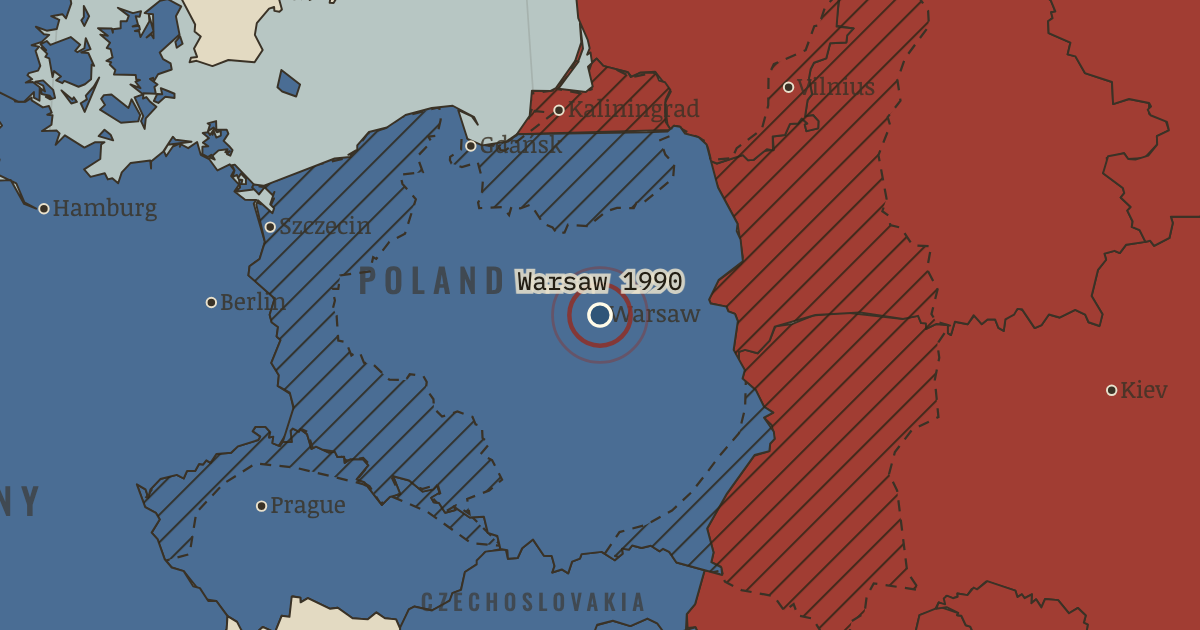
The moment in context
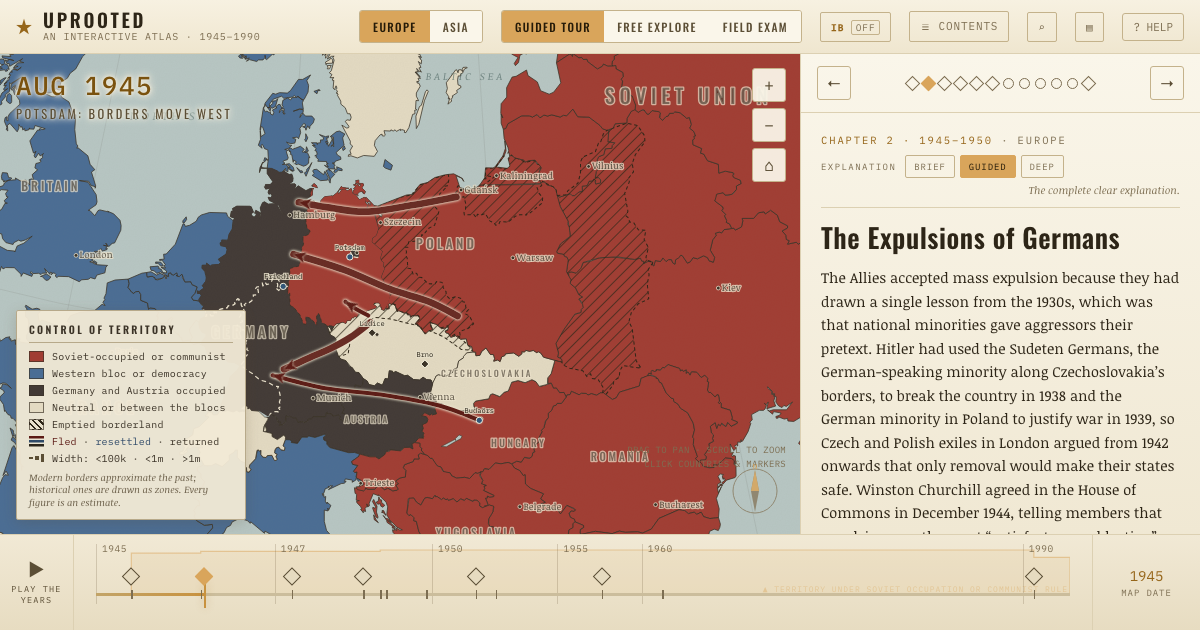
The causes of displacement were alike in mechanism and different in kind. In both regions victorious powers acted on plans for the societies they now controlled, and those plans decided who had to leave. In Europe the plan was territorial and national: Poland was moved west, Germany was cut back, and states removed minorities to make borders and nations match, a project Nazi Germany had begun with its own expulsions and the Allies endorsed at Potsdam, their conference of 1945. In Indochina, Vietnam, Cambodia and Laos, the plan was social and revolutionary: re-education camps, collectivised trade and the emptying of cities targeted classes and political enemies, and the break with China turned the Hoa, Vietnam’s ethnic Chinese, into a suspect minority. Ethnicity ran through both, as the expulsion of Germans and the departures of the Hoa show, and so did the Cold War, the rivalry of the American-led West and the Soviet bloc, which turned people fleeing communism into evidence for the West. The European case moved far more people, and in both the dead of the journey can be counted only as contested ranges.
From Europe and Indochina refugee crises, chapter 12 of Uprooted: Refugees in Europe 1945–1960 and Indochina 1975–1990 (1990).
The place: German–Polish Border Treaty — map and full story →
Teach this in 5 minutes
- Why it happened — Victors with plans. In both regions the end of a war handed power to victors with programmes for remaking the land and its people: the Allies’ new map of central Europe…
- The turn — Warsaw, 14 November 1990. The German–Polish Border Treaty is the hinge of the epilogue because it formally closed the European story at the moment the Indochinese one was…
- What it changed — A global refugee regime. The institutions born in Europe’s crisis, UNHCR and the 1951 Convention with its 1967 Protocol, now operate worldwide, and the Indochinese…
Then ask the room: Compare and contrast the responses of states and international organisations to displacement in Europe between 1945 and 1960 and in Indochina between 1975 and 1990. The argued answer is on the chapter page →
The atlas that shows it
THE FREE PRINTABLE STUDY GUIDE
Join the Dispatch — a short welcome series, then a letter when a new atlas opens — and the printable study guide for Uprooted is yours now, free.
NO TRACKING · YOUR ADDRESS IS USED FOR THE DISPATCH AND NOTHING ELSE · UNSUBSCRIBE ANYTIME