ON THIS DAY ·
Jeltoqsan protests in Alma-Ata
16–18 Dec 1986 — When Moscow replaces Kazakhstan’s long-serving Kazakh party chief with a Russian from outside the republic, students protest in the capital’s main square and are broken up by troops. It was the first sign that glasnost would release national grievances.
WW2 is free — every chapter. Try chapters 1–2 of any 2 other atlases (3 with a free account). Opening a new atlas uses one of them. Membership opens all 21 — Join.
Free printable Meiji Japan and post-Soviet Russia study guide, sent by email ↓
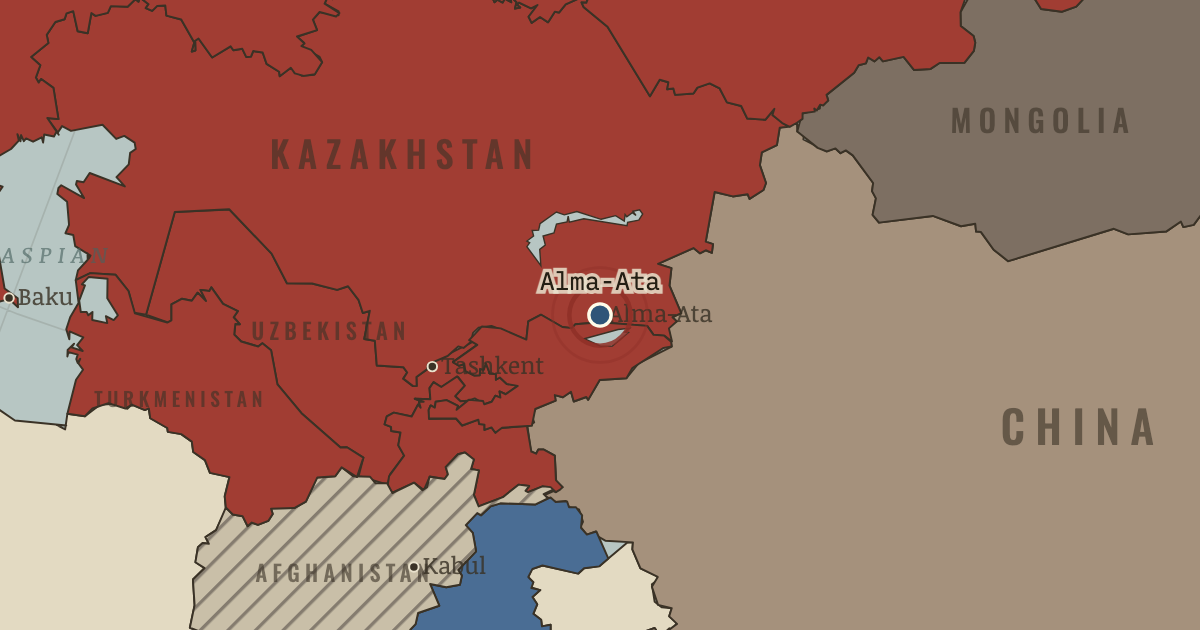
The moment in context
Gorbachev’s early reforms tried to make the old system run faster, and they collided with an economic shock. As general secretary, the party’s leader and so the country’s, he promised “acceleration” through investment in machine-building and tighter discipline, and in May 1985 he launched a campaign against drinking that cut vodka production and raised prices. Alcohol taxes had been one of the budget’s largest sources of income, and the campaign removed tens of billions of roubles over three years while moonshine replaced state vodka. At the same moment world oil prices fell from about 27 dollars a barrel in 1985 to around 14 in 1986, cutting the export earnings on which grain imports depended. The government covered the gap by printing money, and by 1989 the budget deficit, the gap between spending and revenue, reached about a tenth of national output by Western estimates. In December 1986 the replacement of Kazakhstan’s Kazakh party chief by a Russian outsider brought students onto the streets of Alma-Ata. A reformer who needed money and calm began his work with neither.
From Perestroika and glasnost, chapter 8 of Remaking the State: Meiji Japan 1600–1912 and Post-Soviet Russia 1964–2000 (1988).
The place: Jeltoqsan protests in Alma-Ata — map and full story →
Teach this in 5 minutes
- Why it happened — A generational change at the top. Between November 1982 and March 1985 three general secretaries died in office, and the old guard finally gave way to a younger man who had risen…
- The turn — The elections of 26 March 1989. These elections are the hinge because they created a source of authority outside the party. For the first time since 1917 most voters had a choice…
- What it changed — An elected opposition gained a national stage. Inside the new Congress, Yeltsin, Sakharov and several hundred allies formed the Inter-Regional Group of deputies, the first organised opposition…
Then ask the room: Should Gorbachev be judged a failure for losing the system he set out to save, or credited for ending it without a major war? The argued answer is on the chapter page →
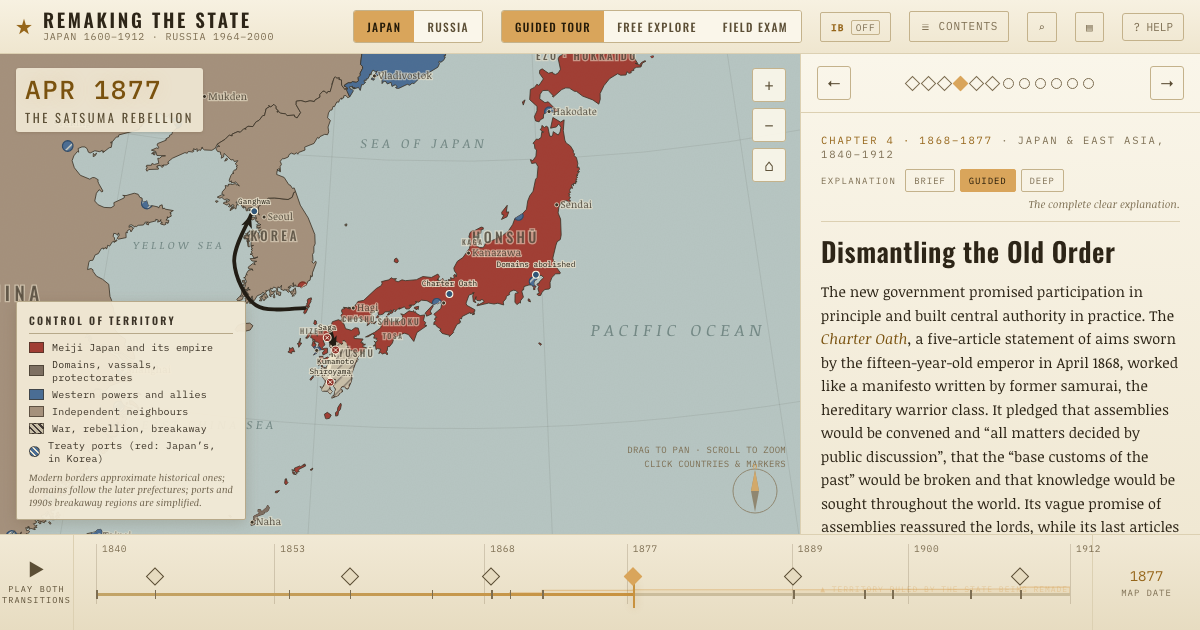
The atlas that shows it
THE FREE PRINTABLE STUDY GUIDE
Join the Dispatch — a short welcome series, then a letter when a new atlas opens — and the printable study guide for Remaking the State is yours now, free.
NO TRACKING · YOUR ADDRESS IS USED FOR THE DISPATCH AND NOTHING ELSE · UNSUBSCRIBE ANYTIME