ON THIS DAY ·
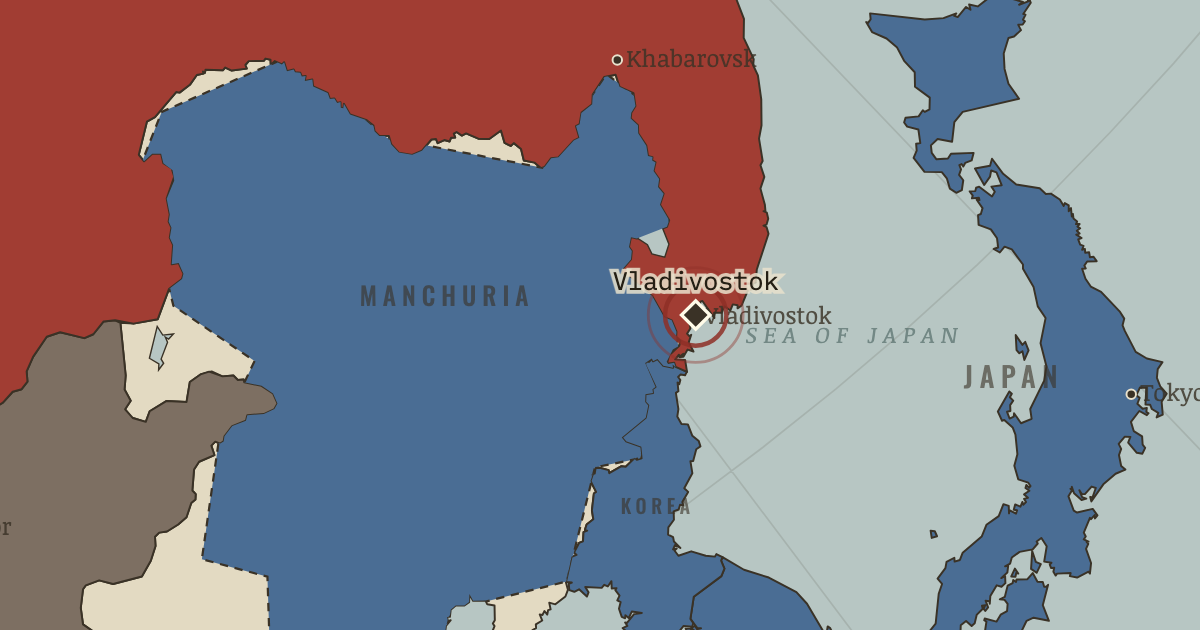
Vladivostok transit camp
27 Dec 1938 — In the transit camp at Vtoraya Rechka, where prisoners waited for ships to Kolyma, the poet Osip Mandelstam died, probably of typhus, weakened by hunger and cold, months after his second arrest and four years after a poem mocking Stalin first sent him into exile.
WW2 is free — every chapter. Try chapters 1–2 of any 2 other atlases (3 with a free account). Opening a new atlas uses one of them. Membership opens all 21 — Join.
Free printable Stalin’s Soviet Union study guide, sent by email ↓
The moment in context
The Gulag, the network of forced-labour camps run by the political police, grew from a decision to make prisoners pay for their own punishment and open up the empire’s empty regions. On 27 June 1929 the Politburo, the party’s small ruling committee that worked like a cabinet, decided to transfer all prisoners serving three years or more to camps run by the OGPU, the political police and a forerunner of the KGB. The government decree that followed in July ordered new camps in remote areas “for the purpose of colonising these regions and exploiting their natural resources”. The model was Solovki, where prisoners were fed according to the work they did, so the weak received less food and grew weaker. The deported “kulaks”, the better-off peasants branded rural capitalists during collectivisation, gave the police in 1930–31 a second labour force in the special settlements, guarded villages of exile. Once punishment had been made into an economic resource, the police had a reason to want more prisoners, which helps explain why arrests and labour plans were later linked.
From Gulag forced-labour camps, chapter 5 of The Soviet Union under Stalin, 1924–1953 (1936).
The place: Vladivostok transit camp — map and full story →
Teach this in 5 minutes
- Why it happened — Punishment was redefined as productive labour. Bolsheviks believed that labour could reform criminals and that a socialist state should not pay to keep idle prisoners. The Solovki camp, opened in…
- The turn — The White Sea Canal, 1931–1933. The White Sea–Baltic Canal is the hinge of the Gulag’s history because it was the first great project built entirely by prisoners and was presented…
- What it changed — A police empire with its own territory. Dalstroi governed the Kolyma region directly from 1931 to 1953, with the NKVD acting as government, employer and jailer at once. The dark hatching…
Then ask the room: Was the Gulag primarily an economic institution or an instrument of political terror? The argued answer is on the chapter page →
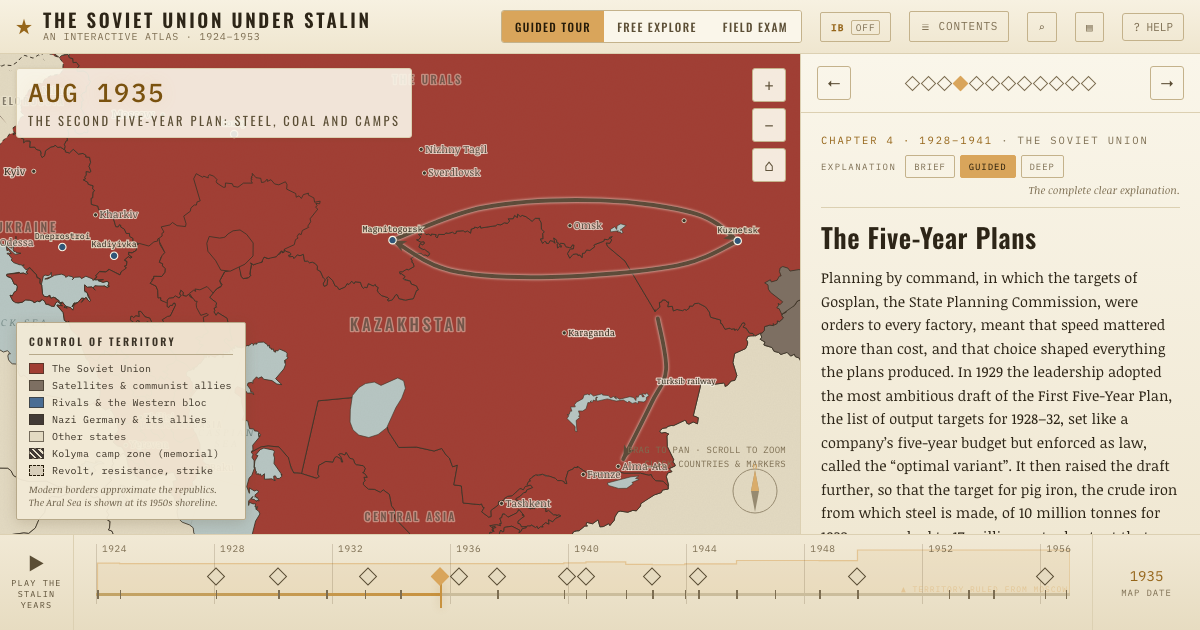
The atlas that shows it
THE FREE PRINTABLE STUDY GUIDE
Join the Dispatch — a short welcome series, then a letter when a new atlas opens — and the printable study guide for The Soviet Union under Stalin is yours now, free.
NO TRACKING · YOUR ADDRESS IS USED FOR THE DISPATCH AND NOTHING ELSE · UNSUBSCRIBE ANYTIME