MAPS OF HISTORY · IB HISTORY · PAPER 2 · POPULAR MOVEMENTS
IB HISTORY · PAPER 2 · THEMATIC STUDY
Paper 2: Popular Movements
Popular Movements is one of the four Paper 2 Thematic Studies of the new IB History course, first examined in May 2028, and it draws its examples from 1750 onwards. The theme is about movements that mobilised large numbers of ordinary people: why they arose, how they forced change, how states and opponents pushed back, and what they achieved. It is organised around four questions, and a strong essay uses examples from more than one region, so under each question below the chapters are grouped by region.
Every chapter listed here carries IB notes in its atlas: evidence to quote, primary sources and a practice question with a model essay plan. Between them they cover seventeen chapters in three atlases, set in Europe, the Americas, Asia and Oceania, and Africa and the Middle East.
WW2 is free — every chapter. Try chapters 1–2 of any 2 other atlases (3 with a free account). Opening a new atlas uses one of them. Membership opens all 21 — Join.
1. Why did popular movements emerge?
6 CHAPTERS WITH IB NOTES · 2 REGIONS
The Americas
- The Revolution Crosses the AtlanticTWO ROADS TO INDEPENDENCE · CHAPTER 2 · 1789–1791
- The Problem That Has No NamePROTEST AND CHANGE · CHAPTER 1 · 1945–1963
The National Assembly’s decree of 15 May 1791 gave full political rights only to men of colour born of a free father and a free mother, a few hundred people, and even that was cancelled on 24 September 1791.— Two Roads to Independence, chapter 2: The Revolution Crosses the Atlantic
Africa and the Middle East
- The White HighlandsTWO ROADS TO INDEPENDENCE · CHAPTER 7 · 1895–1939
- War, Land and the OathTWO ROADS TO INDEPENDENCE · CHAPTER 8 · 1939–1952
- Ben Ali: Stability and SilencePROTEST AND CHANGE · CHAPTER 8 · 1987–2010
- Twenty-Eight DaysPROTEST AND CHANGE · CHAPTER 9 · DECEMBER 2010 – JANUARY 2011
The Uganda Railway, built between 1896 and 1901 by 31,983 workers recruited in British India, cost about £5.5 million, far above the estimates presented to Parliament, and officials invited settlers to the highlands to make it pay.— Two Roads to Independence, chapter 7: The White Highlands
2. How did they create change?
5 CHAPTERS WITH IB NOTES · 4 REGIONS
Europe
- The Union UnravelsREMAKING THE STATE · CHAPTER 9 · 1989–1991
Because Gorbachev declined to send troops in 1989, every communist government in Eastern Europe fell that autumn and the Berlin Wall opened on 9 November. Nations inside the Union concluded that Moscow might not use force against them either.— Remaking the State, chapter 9: The Union Unravels
The Americas
- Organising for EqualityPROTEST AND CHANGE · CHAPTER 2 · 1963–1970
- The Personal Is PoliticalPROTEST AND CHANGE · CHAPTER 3 · 1968–1975
In its first year about a third of the complaints the EEOC received concerned sex discrimination, yet officials treated the clause as a “fluke”, which is why NOW was founded on 30 June 1966.— Protest and Change, chapter 2: Organising for Equality
Asia and Oceania
- Building the Meiji StateREMAKING THE STATE · CHAPTER 5 · 1877–1894
From 1881 the finance minister Matsukata Masayoshi shrank the money supply, raised taxes and founded the Bank of Japan, so rice prices roughly halved in some regions by 1884 and indebted silk farmers rose at Chichibu that November, which shows who paid for sound money.— Remaking the State, chapter 5: Building the Meiji State
Africa and the Middle East
- Building a DemocracyPROTEST AND CHANGE · CHAPTER 10 · 2011–2014
In the Constituent Assembly election of 23 October 2011 about 4.3 million Tunisians voted, and Ennahda won 89 of 217 seats, governing in a coalition with two secular parties.— Protest and Change, chapter 10: Building a Democracy
3. How were they challenged?
2 CHAPTERS WITH IB NOTES · 2 REGIONS
The Americas
- The ERA and the BacklashPROTEST AND CHANGE · CHAPTER 5 · 1972–1982
Nebraska voted on 15 March 1973 to rescind its ratification, and Tennessee, Idaho, Kentucky and South Dakota followed, raising a constitutional question that the courts never settled.— Protest and Change, chapter 5: The ERA and the Backlash
Africa and the Middle East
- Terrorism and FragilityPROTEST AND CHANGE · CHAPTER 11 · 2012–2015
A UN working group reported in July 2015 that up to 1,500 Tunisians were fighting in Libya and about 4,000 in Syria, figures widely reported as a total of about 5,500.— Protest and Change, chapter 11: Terrorism and Fragility
4. What was their impact?
5 CHAPTERS WITH IB NOTES · 3 REGIONS
The Americas
- Who Was Left Out?PROTEST AND CHANGE · CHAPTER 4 · 1970–1981
- A Global MovementPROTEST AND CHANGE · CHAPTER 6 · 1975–1985
In June 1973 the Relf sisters, aged twelve and fourteen, were sterilised at a federally funded clinic in Montgomery, Alabama; the lawsuit that followed cited estimates of 100,000 to 150,000 such sterilisations a year.— Protest and Change, chapter 4: Who Was Left Out?
Africa and the Middle East
- The Road to UhuruTWO ROADS TO INDEPENDENCE · CHAPTER 10 · 1960–1963
- Building a DemocracyPROTEST AND CHANGE · CHAPTER 10 · 2011–2014
KADU, founded on 25 June 1960 under Ronald Ngala, demanded majimbo, regions with protected powers over land, which the second Lancaster House conference of 1962 wrote into the constitution.— Two Roads to Independence, chapter 10: The Road to Uhuru
More than one region
- Two Movements ComparedPROTEST AND CHANGE · EPILOGUE · 1945–2015
Both left people out: the National Welfare Rights Organization collapsed in 1975, and in 2010 poverty in Tunisia’s Centre-West stood at 32 per cent, a gap the revolution did not close.— Protest and Change, chapter 12: Two Movements Compared
Practice questions and essay plans
Each question comes with the outline of a model plan: the thesis and the claim each paragraph makes. Plan your own answer first, then compare. The first plan comes from a free chapter and is shown in full. The full plans, with evidence, a counter-argument and a judgement, are in the chapters’ IB notes in each atlas.
PAPER 2 · TWO ROADS TO INDEPENDENCE · CHAPTER 2
To what extent was the rising of August 1791 caused by the ideas of the French Revolution?
French revolutionary ideas created the opening for the rising by dividing the colony’s free population and weakening authority, yet the rising itself was planned by the enslaved through their own networks and shaped by their own aims. French ideas were a trigger and a resource, while the driving force was the agency of the enslaved.
The Revolution divided the colony’s masters.
EVIDENCEPlanters formed colonial assemblies, the boldest at Saint-Marc in 1790; free men of colour demanded rights, and Ogé took up arms in October 1790; Paris granted rights in May 1791 and withdrew them in September.
LINKWith the free fighting each other, the forces that kept the enslaved in check were weakened.
The rising was organised through the enslaved’s own networks.
EVIDENCEDrivers met on 14 August 1791 and, by tradition, a ceremony at Bois Caïman led by Boukman bound the leaders; the rising began on 22–23 August across many estates at once.
LINKSuch coordination depended on structures planters ignored, from estate drivers to religious gatherings.
The insurgents’ aims were not simply French.
EVIDENCELeaders flew royalist flags and claimed the king had granted free days; Thornton argues many Kongolese veterans thought in terms of just kingship; in December 1791 the leaders asked only for freedom for a few hundred officers.
LINKThe ideas behind the rising were plural, and universal emancipation emerged later, in the course of the war.
Historians in the tradition of C. L. R. James stress that the language of rights reached the enslaved through sailors, servants and news, and that the timing of the rising, two years after 1789, shows the Revolution’s direct influence. The insurgents’ own appeals to the rights of man in later negotiations support that reading.
The French Revolution was a necessary trigger because it split the free and supplied a language of rights, but it was not the main cause of the rising, which grew from the enslaved’s organisation, experience and aims. The rising used French ideas without being defined by them.
Read the chapter behind this plan: The Revolution Crosses the Atlantic.
PAPER 2 · REMAKING THE STATE · CHAPTER 5
How far was the Freedom and People’s Rights movement responsible for the introduction of the Meiji constitution in 1889?
The movement was largely responsible for the timing of the constitution, because its petitions forced the promise of 1881. The content reflected the aims of the oligarchs, the small circle of leaders who ran the government, however, since they needed institutions the West would accept for treaty revision, and they designed a document that kept power with the emperor’s advisers.
Popular pressure made a constitution unavoidable.
Treaty revision gave the oligarchs their own reason to grant a constitution.
The oligarchs controlled the design and contained the movement.
The evidence for each point, the counter-argument and the judgement are in the IB notes of chapter 5 in the atlas. Read the chapter first: Building the Meiji State.
PAPER 2 · PROTEST AND CHANGE · CHAPTER 1
To what extent was the emergence of second-wave feminism in the United States caused by changes in women’s economic position after 1945?
Economic change was the deepest cause of second-wave feminism, because the rising number of married women in paid work, on unequal pay, created a daily grievance. It became a movement only when writers and officials named and measured that grievance, so economic change made the movement possible while ideas and institutions made it happen.
Women’s growing but unequal place in the labour market created the grievance.
Legal second-class citizenship gave the grievance a political target.
Ideas and institutions converted discontent into organisation.
The evidence for each point, the counter-argument and the judgement are in the IB notes of chapter 1 in the atlas. Read the chapter first: The Problem That Has No Name.
PAPER 2 · TWO ROADS TO INDEPENDENCE · CHAPTER 10
“Kenya’s independence was granted by Britain, not won by Kenyans.” Discuss.
The statement captures Britain’s control of the timing and setting of decolonisation but understates Kenyan agency. Britain decided to leave under pressures that Kenyans had created, and Kenyan parties shaped the terms of the settlement, from Kenyatta’s release to majimbo. The statement therefore needs careful qualification.
Britain controlled the process.
Kenyans made staying too costly.
Kenyan parties shaped the terms.
The evidence for each point, the counter-argument and the judgement are in the IB notes of chapter 10 in the atlas. Read the chapter first: The Road to Uhuru.
Key concepts
These are the concepts the IB notes of the seventeen chapters above name most often for this theme, with chapters to read for each.
- Causation · 9 CHAPTERS
Why something happened: the long-term conditions, the triggers and the choices behind it, and which of them mattered most. For example: The Revolution Crosses the Atlantic, The White Highlands, War, Land and the Oath, The Road to Uhuru. - Change · 7 CHAPTERS
What was different afterwards, how quickly it changed, and for whom. For example: War, Land and the Oath, The Road to Uhuru, Building the Meiji State, Organising for Equality. - Perspectives · 7 CHAPTERS
How people at the time, and historians since, have seen the same events differently, and why. For example: The Revolution Crosses the Atlantic, Building the Meiji State, Organising for Equality, Who Was Left Out?. - Significance · 6 CHAPTERS
Why an event, person or idea matters, judged by its effects and by how it has been remembered. For example: The Revolution Crosses the Atlantic, The Union Unravels, The Problem That Has No Name, Who Was Left Out?. - Consequence · 4 CHAPTERS
What followed from an event or decision, intended and unintended, in the short and the long term. For example: The White Highlands, The Personal Is Political, Building a Democracy, Terrorism and Fragility. - Continuity · 2 CHAPTERS
What stayed the same through an apparent upheaval, and why it survived. For example: Ben Ali: Stability and Silence, Terrorism and Fragility.
More atlases for this theme
The atlases below are filed under Popular Movements. Those marked “IB notes” carry notes in every chapter; the others cover the theme in their chapters, and each has its own IB History page with study notes and essay questions.
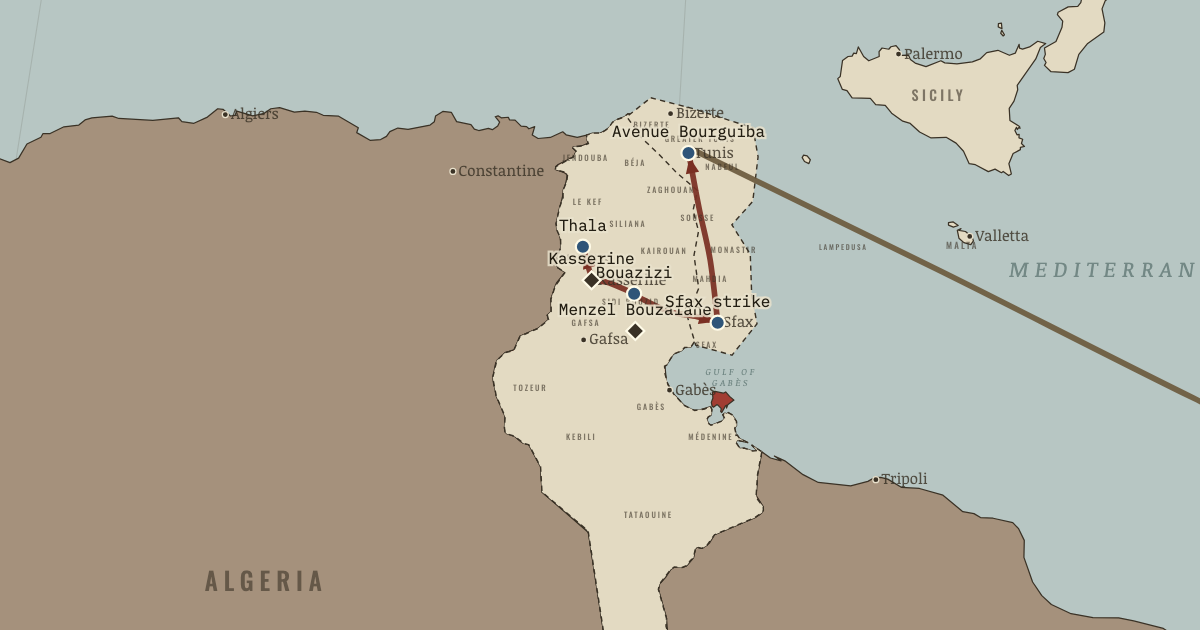
Second-wave feminism and the Tunisian revolution
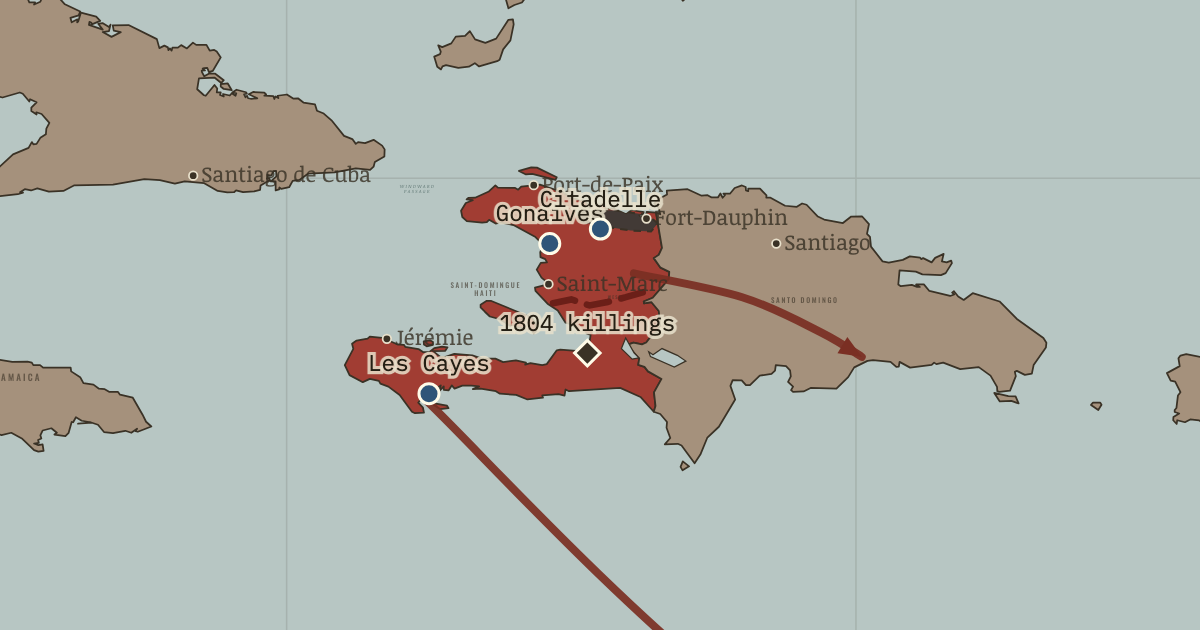
A slave revolution and a colony’s Emergency, side by side
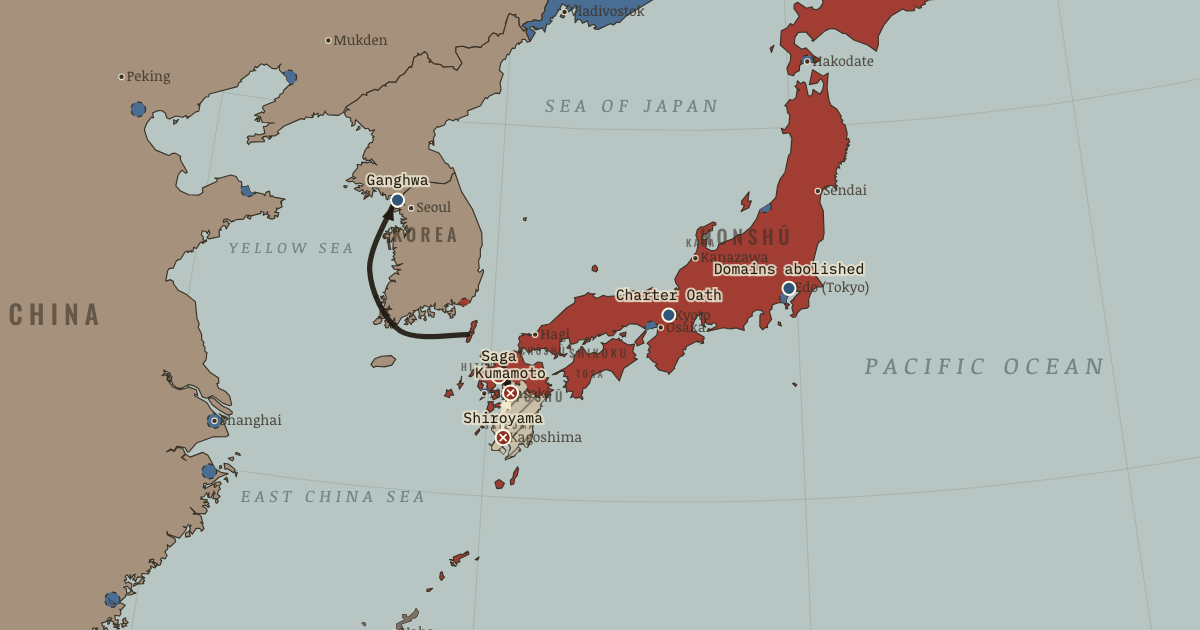
Two transitions from an old order, side by side
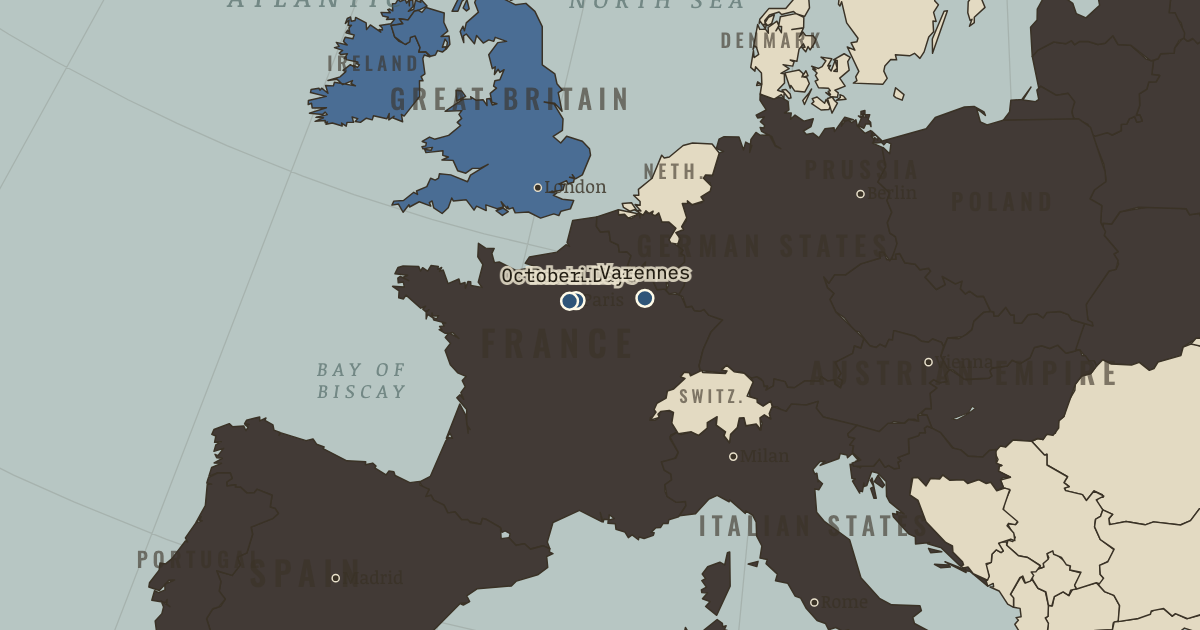
From the American Revolution to the barricades of 1848
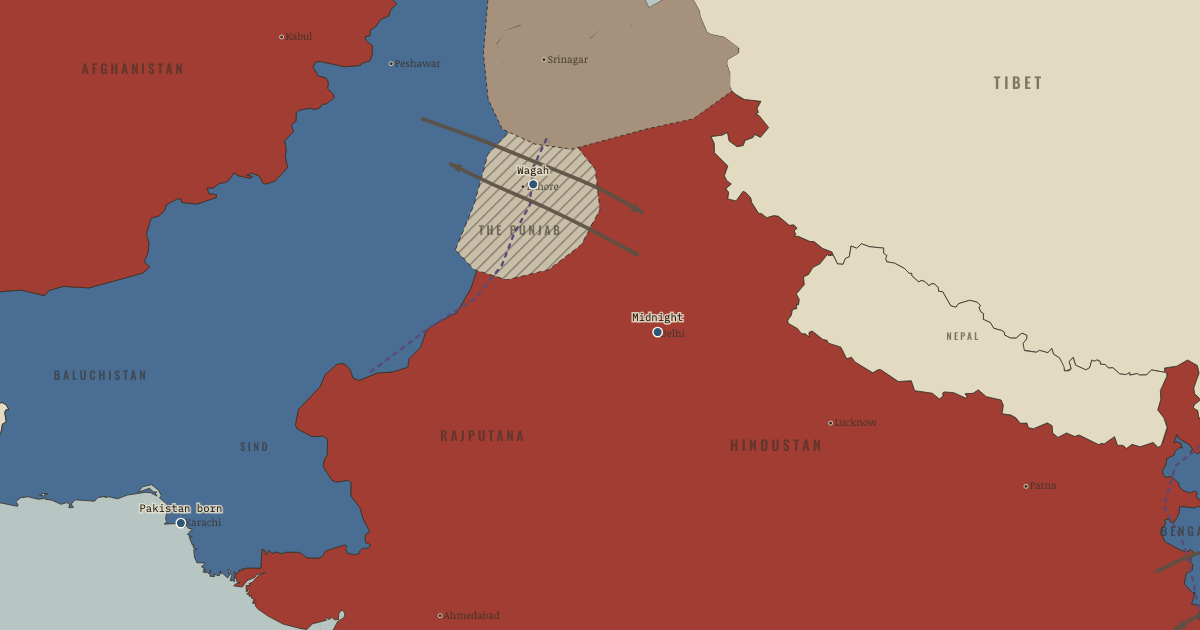
From the rising of 1857 to Nehru’s republic
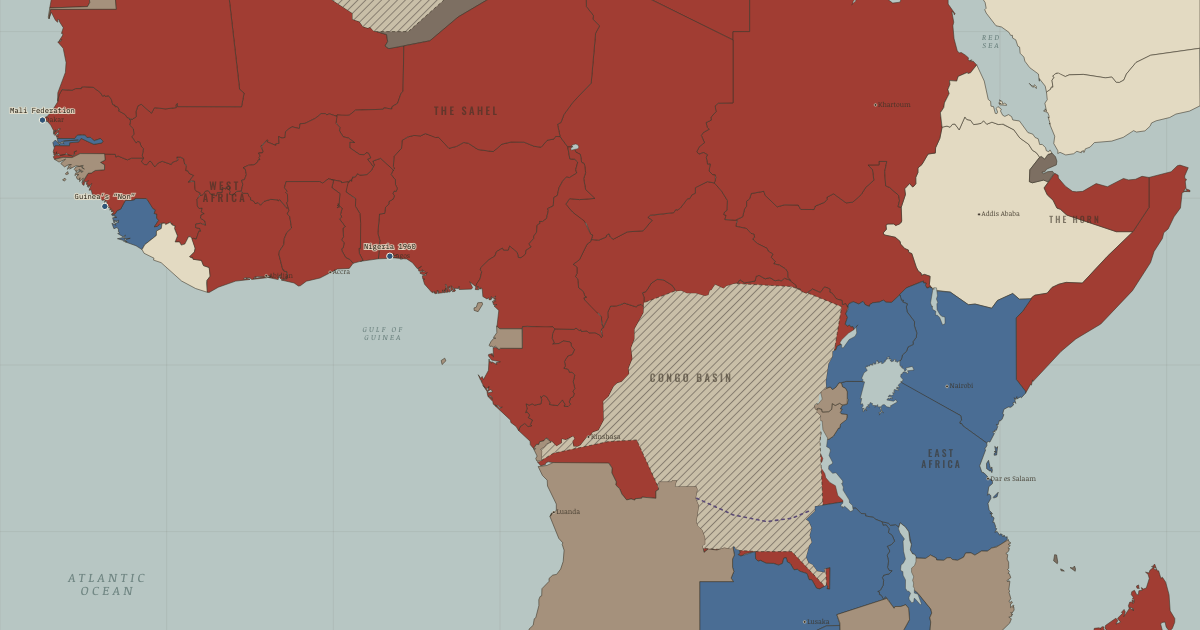
Fifty new nations in fifty years
How each began and what it left
The atlases without IB notes still answer the first and last questions of any theme: each opening chapter argues why its story began, and each closing chapter what it left behind. Here are those arguments in headline form, with the chapters that make them in full.
The Age of Revolutions
1775 – 1848 · 12 CHAPTERS
How it began. The World of 1775: War debt in search of a taxpayer · An Enlightenment you could buy for a penny · Empires of the enslaved · A continent of prior owners
What it left. 1848: The Springtime of Peoples: What survived the defeat · Realism replaces romanticism · The exiles carry it onward · The ledger of the age
Indian Independence & Partition
1857 – 1964 · 15 CHAPTERS
How it began. The Rebellion and the Crown: Dalhousie’s annexations and the Doctrine of Lapse · Awadh: an annexation that reached the barracks · An army that no longer trusted its masters · The cartridge: a rumour as trigger
What it left. Building the Republic: A democracy that held · The unfinished revolution of caste and gender · A planned economy and its limits · Borders still in dispute
The Decolonization of Africa
1945 – 1994 · 12 CHAPTERS
How it began. How Thin the Empire Really Was: Rule by a handful, through intermediaries · An economy built for extraction, not development · The war as solvent · Pan-Africanism finds its leaders
What it left. What Independence Achieved, and Could Not: Rwanda, April 1994 — the darkest counterpoint · Afro-pessimism versus the democratic wave
On the old course (2027 exams)
Students sitting the old course in 2027 will find the closest match in these world history topics, which our IB notes also tag:
- World history topic 8: Independence movements (1800–2000) · 5 CHAPTERS
Two Roads to Independence - Prescribed subject 4: Rights and protest · 2 CHAPTERS
Protest and Change
The old-course page lists every chapter by topic.
Revision tools
Test yourself on the atlases with IB notes for this theme. Each atlas ends with a map quiz that asks you to find places and moments on the map itself; the quick quiz and the printable study guide are free pages on this site.
- Protest and Change
MAP QUIZ · QUICK QUIZ · PRINTABLE STUDY GUIDE - Two Roads to Independence: Haiti and Kenya
MAP QUIZ · QUICK QUIZ · PRINTABLE STUDY GUIDE - Remaking the State: Meiji Japan and Post-Soviet Russia
MAP QUIZ · QUICK QUIZ · PRINTABLE STUDY GUIDE
Maps of History is independent and is not affiliated with or endorsed by the International Baccalaureate Organization. IB course names describe alignment only; paper, theme and section names follow the new course outline and may change when the final guide is published.
THE DISPATCH
A short welcome series, then a letter when a new atlas opens — and the printable study guide for Protest and Change is yours now, free.
NO TRACKING · YOUR ADDRESS IS USED FOR THE DISPATCH AND NOTHING ELSE · UNSUBSCRIBE ANYTIME