MAPS OF HISTORY · IB HISTORY · PAPER 2 · AUTHORITARIAN RULE
IB HISTORY · PAPER 2 · THEMATIC STUDY
Paper 2: Authoritarian Rule
Authoritarian Rule is one of the four Paper 2 Thematic Studies of the new IB History course, first examined in May 2028, and it draws its examples from 1750 onwards. The theme is about states ruled by one leader or one party: how such regimes came to power, how they kept it, what their rule did to the people under it, and how they were challenged. It is organised around four questions, and a strong essay uses examples from more than one region, so under each question below the chapters are grouped by region.
Every chapter listed here carries IB notes in its atlas: evidence to quote, primary sources and a practice question with a model essay plan. Between them they cover thirty-four chapters in five atlases, set in Europe, the Americas, Asia and Oceania, and Africa and the Middle East.
WW2 is free — every chapter. Try chapters 1–2 of any 2 other atlases (3 with a free account). Opening a new atlas uses one of them. Membership opens all 21 — Join.
1. Why did authoritarian rule emerge?
7 CHAPTERS WITH IB NOTES · 4 REGIONS
Europe
- The SuccessionTHE SOVIET UNION UNDER STALIN · CHAPTER 1 · 1924–1929
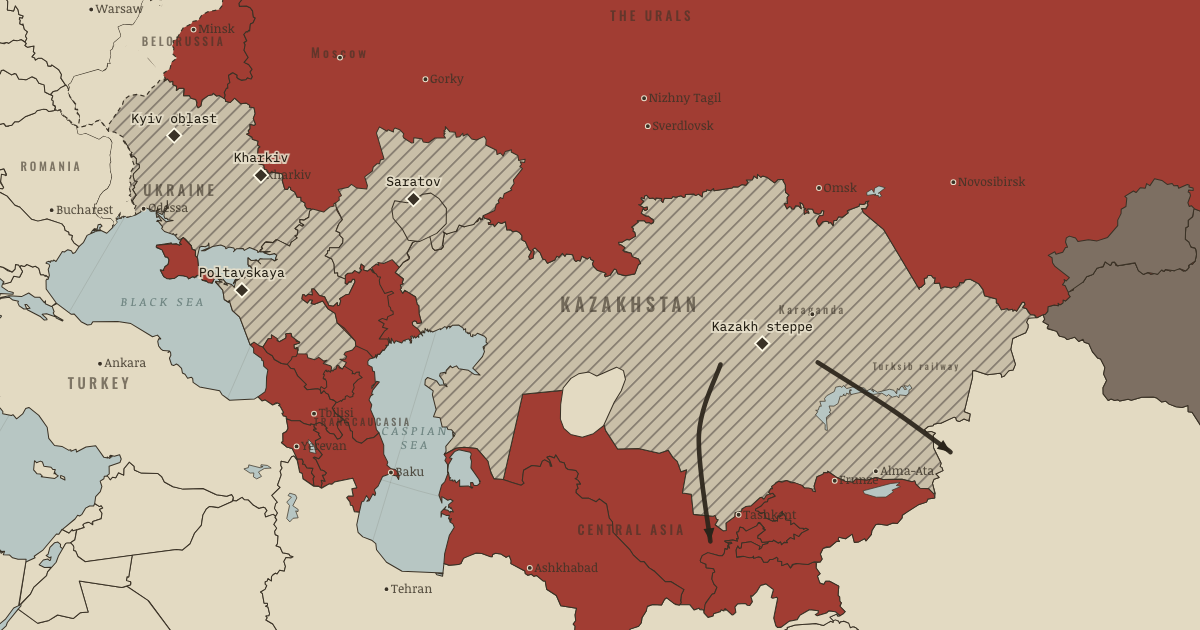
- The Great Turn: CollectivisationTHE SOVIET UNION UNDER STALIN · CHAPTER 2 · 1929–1933
Stalin became General Secretary in April 1922, a post his colleagues thought administrative; through the Secretariat he controlled the appointment of local party secretaries, who in turn chose the delegates to party congresses.— The Soviet Union under Stalin, chapter 1: The Succession
The Americas
- Dessalines and the Making of HaitiTWO ROADS TO INDEPENDENCE · CHAPTER 5 · 1804–1820
On 1 January 1804 at Gonaïves, Dessalines and his generals declared independence, renounced France for ever and named the country Haiti, the first state in the Americas founded by people who had freed themselves from slavery.— Two Roads to Independence, chapter 5: Dessalines and the Making of Haiti
Asia and Oceania
- Dismantling the Old OrderREMAKING THE STATE · CHAPTER 4 · 1868–1877
- Consolidating VictoryTHE PEOPLE’S REPUBLIC UNDER MAO · CHAPTER 1 · 1949–1950
- Korea and the CampaignsTHE PEOPLE’S REPUBLIC UNDER MAO · CHAPTER 2 · 1950–1953
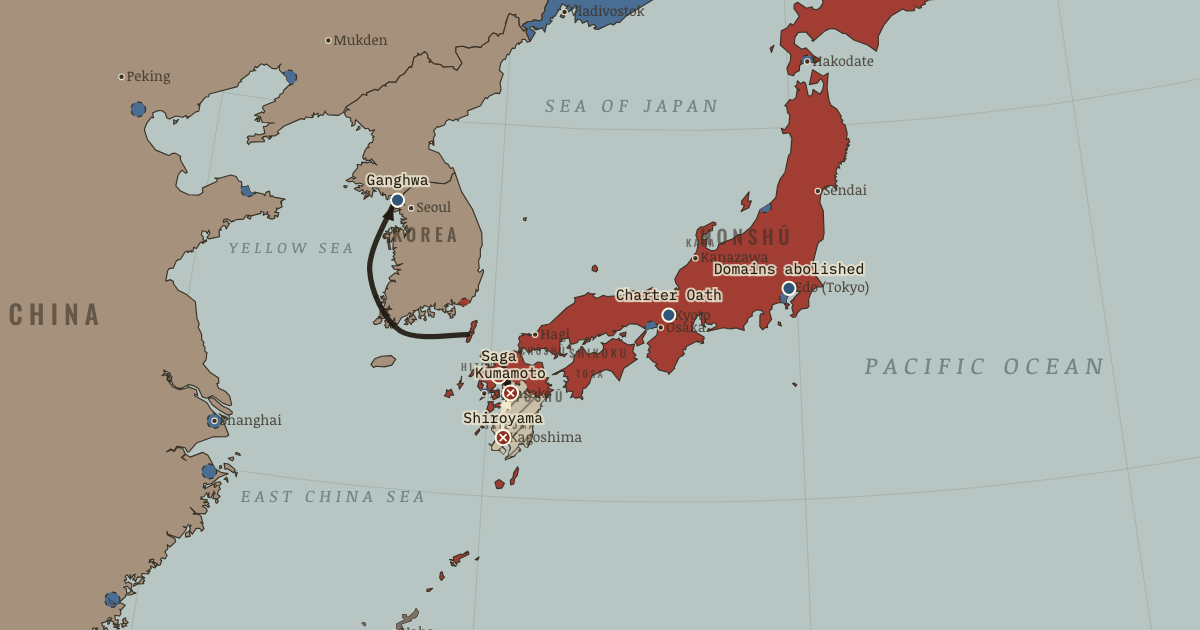
The Charter Oath of 6 April 1868 promised assemblies and “all matters decided by public discussion”, while its pledge to break the “base customs of the past” licensed sweeping change, so the leaders could invoke it for reform long before any assembly met.— Remaking the State, chapter 4: Dismantling the Old Order
More than one region
- Two Transitions ComparedREMAKING THE STATE · EPILOGUE · 1999–2000
Japan’s leaders abolished the domains in August 1871, three years after the restoration, and granted a constitution only in 1889. By then they had built an army, a national tax and industry, so central authority came before participation.— Remaking the State, chapter 12: Two Transitions Compared
2. How was it maintained?
19 CHAPTERS WITH IB NOTES · 3 REGIONS
Europe
- The Stagnant SuperpowerREMAKING THE STATE · CHAPTER 7 · 1964–1985
- The Five-Year PlansTHE SOVIET UNION UNDER STALIN · CHAPTER 4 · 1928–1941
- The GulagTHE SOVIET UNION UNDER STALIN · CHAPTER 5 · 1930–1953
- The Great TerrorTHE SOVIET UNION UNDER STALIN · CHAPTER 6 · 1936–1938
- Nations and DeportationsTHE SOVIET UNION UNDER STALIN · CHAPTER 7 · 1937–1944
- Propaganda and the CultTHE SOVIET UNION UNDER STALIN · CHAPTER 8 · 1929–1953
- Stalin at WarTHE SOVIET UNION UNDER STALIN · CHAPTER 10 · 1941–1945
- High StalinismTHE SOVIET UNION UNDER STALIN · CHAPTER 11 · 1945–1953
CIA estimates prepared for Congress put Soviet growth at about 5% a year in 1966–70 and under 2% in 1981–85, because the extra workers, capital and cheap resources that had driven earlier growth were running out.— Remaking the State, chapter 7: The Stagnant Superpower
Asia and Oceania
- The Closed CountryREMAKING THE STATE · CHAPTER 1 · 1600–1853
- Korea and the CampaignsTHE PEOPLE’S REPUBLIC UNDER MAO · CHAPTER 2 · 1950–1953
- Tibet and the FrontiersTHE PEOPLE’S REPUBLIC UNDER MAO · CHAPTER 3 · 1950–1959
- The Soviet ModelTHE PEOPLE’S REPUBLIC UNDER MAO · CHAPTER 4 · 1953–1957
- A Hundred FlowersTHE PEOPLE’S REPUBLIC UNDER MAO · CHAPTER 5 · 1956–1957
- Retreat and RecoveryTHE PEOPLE’S REPUBLIC UNDER MAO · CHAPTER 8 · 1961–1965
- The Cultural RevolutionTHE PEOPLE’S REPUBLIC UNDER MAO · CHAPTER 9 · 1966–1968
- From Soviet Ally to NixonTHE PEOPLE’S REPUBLIC UNDER MAO · CHAPTER 11 · 1960–1972
The shogun’s own lands and those of his direct retainers produced only about a quarter of Japan’s assessed rice harvest, while some 260 lords called daimyo kept their own samurai, taxes and courts, so the country had no national army and no national tax.— Remaking the State, chapter 1: The Closed Country
Africa and the Middle East
- Challenges after IndependenceTWO ROADS TO INDEPENDENCE · CHAPTER 11 · 1963–1978
- Bourguiba’s TunisiaPROTEST AND CHANGE · CHAPTER 7 · 1956–1987
- Ben Ali: Stability and SilencePROTEST AND CHANGE · CHAPTER 8 · 1987–2010
Under the Million-Acre Scheme, begun in 1962, the government bought just over a million acres from about 780 European farmers with British loans and settled some 35,000 families by 1971.— Two Roads to Independence, chapter 11: Challenges after Independence
3. How did it affect people’s lives?
13 CHAPTERS WITH IB NOTES · 2 REGIONS
Europe
- The Great Turn: CollectivisationTHE SOVIET UNION UNDER STALIN · CHAPTER 2 · 1929–1933
- The FaminesTHE SOVIET UNION UNDER STALIN · CHAPTER 3 · 1930–1933
- The Five-Year PlansTHE SOVIET UNION UNDER STALIN · CHAPTER 4 · 1928–1941
- The GulagTHE SOVIET UNION UNDER STALIN · CHAPTER 5 · 1930–1953
- Nations and DeportationsTHE SOVIET UNION UNDER STALIN · CHAPTER 7 · 1937–1944
- Daily Life, Women and FamilyTHE SOVIET UNION UNDER STALIN · CHAPTER 9 · 1930–1953
- Stalin at WarTHE SOVIET UNION UNDER STALIN · CHAPTER 10 · 1941–1945
Stalin’s article “Dizzy with Success” in Pravda on 2 March 1930 blamed local officials for “excesses”, and millions of peasants left the collective farms within weeks, revealing how little of the drive had been voluntary.— The Soviet Union under Stalin, chapter 2: The Great Turn: Collectivisation
Asia and Oceania
- Consolidating VictoryTHE PEOPLE’S REPUBLIC UNDER MAO · CHAPTER 1 · 1949–1950
- The Soviet ModelTHE PEOPLE’S REPUBLIC UNDER MAO · CHAPTER 4 · 1953–1957
- The Great Leap ForwardTHE PEOPLE’S REPUBLIC UNDER MAO · CHAPTER 6 · 1958–1960
- The Great FamineTHE PEOPLE’S REPUBLIC UNDER MAO · CHAPTER 7 · 1959–1961
- The Cultural RevolutionTHE PEOPLE’S REPUBLIC UNDER MAO · CHAPTER 9 · 1966–1968
- Down to the CountrysideTHE PEOPLE’S REPUBLIC UNDER MAO · CHAPTER 10 · 1968–1971
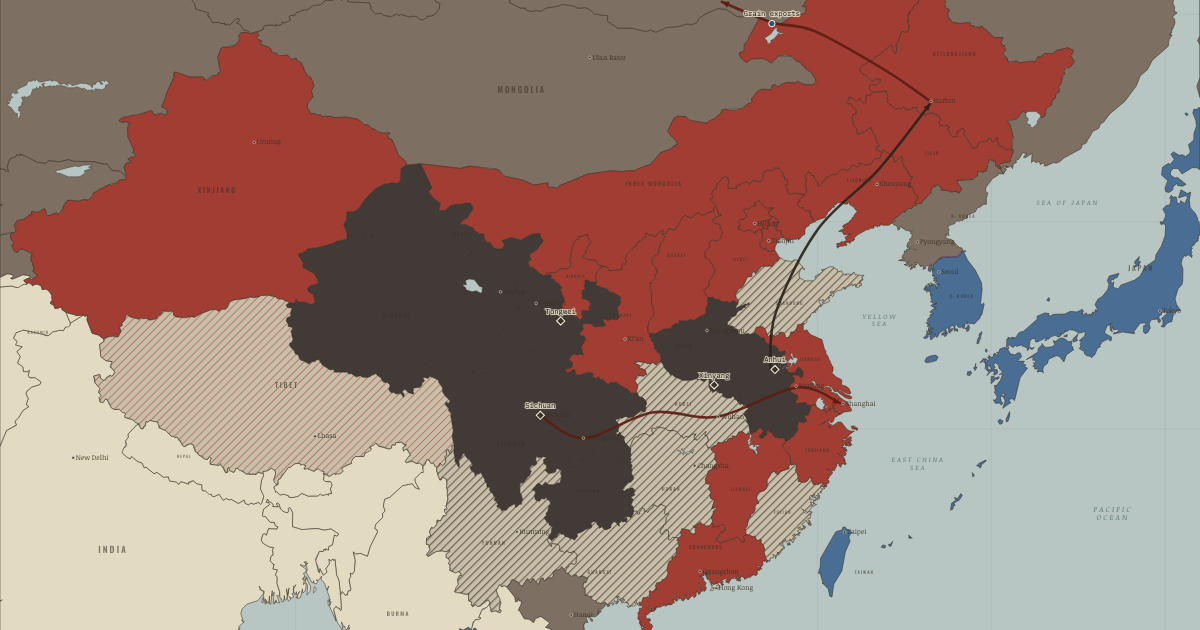
The Agrarian Reform Law of June 1950 transferred about 700 million mu of land, more than two-fifths of China’s farmland, to some 300 million peasants by 1953, giving the regime a mass base in the villages.— The People’s Republic under Mao, chapter 1: Consolidating Victory
4. How was it challenged?
13 CHAPTERS WITH IB NOTES · 3 REGIONS
Europe
- Gorbachev’s GambleREMAKING THE STATE · CHAPTER 8 · 1985–1989
- The SuccessionTHE SOVIET UNION UNDER STALIN · CHAPTER 1 · 1924–1929
- The Great Turn: CollectivisationTHE SOVIET UNION UNDER STALIN · CHAPTER 2 · 1929–1933
- The Great TerrorTHE SOVIET UNION UNDER STALIN · CHAPTER 6 · 1936–1938
- High StalinismTHE SOVIET UNION UNDER STALIN · CHAPTER 11 · 1945–1953
- Death and JudgementTHE SOVIET UNION UNDER STALIN · EPILOGUE · 1953–1956
By 1989 the budget deficit reached about a tenth of national output by Western estimates, and sugar and soap were rationed in many regions, which discredited the very idea of reform in the eyes of ordinary citizens.— Remaking the State, chapter 8: Gorbachev’s Gamble
Asia and Oceania
- Tibet and the FrontiersTHE PEOPLE’S REPUBLIC UNDER MAO · CHAPTER 3 · 1950–1959
- A Hundred FlowersTHE PEOPLE’S REPUBLIC UNDER MAO · CHAPTER 5 · 1956–1957
- The Great Leap ForwardTHE PEOPLE’S REPUBLIC UNDER MAO · CHAPTER 6 · 1958–1960
- Retreat and RecoveryTHE PEOPLE’S REPUBLIC UNDER MAO · CHAPTER 8 · 1961–1965
- Down to the CountrysideTHE PEOPLE’S REPUBLIC UNDER MAO · CHAPTER 10 · 1968–1971
- Mao’s Death and LegacyTHE PEOPLE’S REPUBLIC UNDER MAO · EPILOGUE · 1976
After the Lhasa rising of 10 March 1959 the Dalai Lama fled to India, where about 80,000 Tibetans followed him; the dead in Lhasa are estimated at roughly 2,000 to 10,000.— The People’s Republic under Mao, chapter 3: Tibet and the Frontiers
Africa and the Middle East
- Twenty-Eight DaysPROTEST AND CHANGE · CHAPTER 9 · DECEMBER 2010 – JANUARY 2011
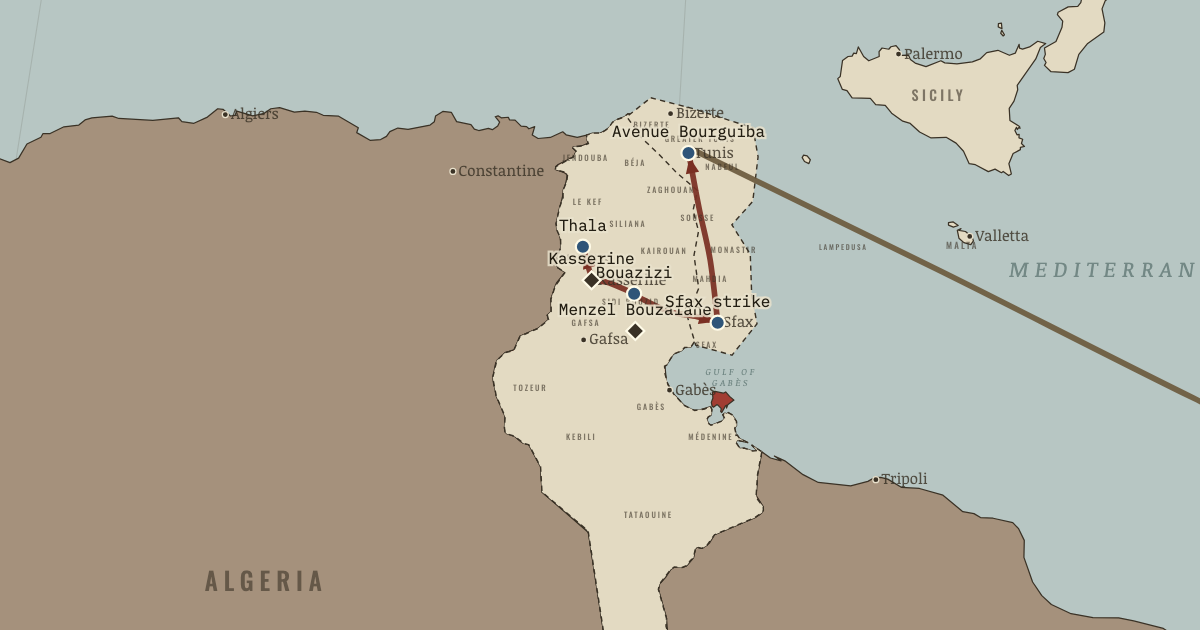
On 11 January 2011 the UGTT’s national leadership authorised regional general strikes, and on 12 January between 30,000 and 50,000 people marched in Sfax while strikes closed Kairouan and Tozeur.— Protest and Change, chapter 9: Twenty-Eight Days
Practice questions and essay plans
Each question comes with the outline of a model plan: the thesis and the claim each paragraph makes. Plan your own answer first, then compare. The full plans, with evidence, a counter-argument and a judgement, are in the chapters’ IB notes in each atlas.
PAPER 2 · TWO ROADS TO INDEPENDENCE · CHAPTER 11
To what extent did Jomo Kenyatta maintain power between 1963 and 1978 through methods inherited from colonial rule?
Kenyatta maintained power largely through institutions inherited from colonial rule, especially the provincial administration and detention laws, but he combined them with new methods: patronage through land and office, ethnic alliances and a carefully managed single party. Kenyatta also benefited from Cold War support for his pro-Western course.
The colonial state’s machinery was kept and used.
Patronage through land bound supporters to the regime.
Ethnic politics and the party narrowed opposition.
The evidence for each point, the counter-argument and the judgement are in the IB notes of chapter 11 in the atlas. Read the chapter first: Challenges after Independence.
PAPER 2 · REMAKING THE STATE · CHAPTER 1
Examine the methods by which the Tokugawa shogunate maintained its rule over Japan between 1635 and 1853.
The shogunate maintained its rule by keeping the lords weak through geography and expense, by filtering every contact with the outside world, and by leaving local government to the domains. These methods kept the peace for 250 years because they were designed against internal rivals, and that same design left the state with no national army or tax when a foreign threat arrived.
Geography and expense kept potential rivals weak.
Controlled contact removed any outside support for a rebel.
Delegation bought the lords’ acceptance at the price of central power.
The evidence for each point, the counter-argument and the judgement are in the IB notes of chapter 1 in the atlas. Read the chapter first: The Closed Country.
PAPER 2 · THE SOVIET UNION UNDER STALIN · CHAPTER 1
To what extent was Stalin’s rise to power by 1929 the result of his control of the party apparatus?
Control of the party apparatus was the decisive condition of Stalin’s rise, because it turned the power to appoint officials into reliable majorities at congresses. It worked, however, only because his rivals underestimated him and because his slogan of “socialism in one country” suited a party tired of waiting for world revolution.
The Secretariat let Stalin build a loyal following inside the party before his rivals noticed.
His rivals helped him because they feared Trotsky more than Stalin.
Stalin also offered the more attractive policy at each stage.
The evidence for each point, the counter-argument and the judgement are in the IB notes of chapter 1 in the atlas. Read the chapter first: The Succession.
PAPER 2 · PROTEST AND CHANGE · CHAPTER 7
To what extent did the reforms of Habib Bourguiba (1956–1987) improve the position of women in Tunisia?
Bourguiba’s reforms transformed Tunisian women’s legal position more than any comparable reforms in the Arab world, but because they were imposed by a one-party state they gave women rights without the freedom to organise, and their benefits reached urban, coastal women faster than the rural interior.
Family law changed fundamentally.
Political and reproductive rights followed.
Authoritarian rule limited women’s agency.
The evidence for each point, the counter-argument and the judgement are in the IB notes of chapter 7 in the atlas. Read the chapter first: Bourguiba’s Tunisia.
Key concepts
These are the concepts the IB notes of the thirty-four chapters above name most often for this theme, with chapters to read for each.
- Causation · 17 CHAPTERS
Why something happened: the long-term conditions, the triggers and the choices behind it, and which of them mattered most. For example: The Closed Country, The Stagnant Superpower, Gorbachev’s Gamble, The Succession. - Change · 14 CHAPTERS
What was different afterwards, how quickly it changed, and for whom. For example: Dessalines and the Making of Haiti, Dismantling the Old Order, Gorbachev’s Gamble, Two Transitions Compared. - Consequence · 13 CHAPTERS
What followed from an event or decision, intended and unintended, in the short and the long term. For example: Challenges after Independence, Dismantling the Old Order, The Famines, The Five-Year Plans. - Continuity · 13 CHAPTERS
What stayed the same through an apparent upheaval, and why it survived. For example: Challenges after Independence, The Closed Country, The Stagnant Superpower, Two Transitions Compared. - Perspectives · 13 CHAPTERS
How people at the time, and historians since, have seen the same events differently, and why. For example: Dessalines and the Making of Haiti, The Famines, The Great Terror, Nations and Deportations. - Significance · 12 CHAPTERS
Why an event, person or idea matters, judged by its effects and by how it has been remembered. For example: Dessalines and the Making of Haiti, Two Transitions Compared, The Succession, Propaganda and the Cult.
More atlases for this theme
The atlases below are filed under Authoritarian Rule. Those marked “IB notes” carry notes in every chapter; the others cover the theme in their chapters, and each has its own IB History page with study notes and essay questions.
Power, terror and the remaking of a country
Land reform, the Great Leap, the Cultural Revolution
Two transitions from an old order, side by side
Second-wave feminism and the Tunisian revolution
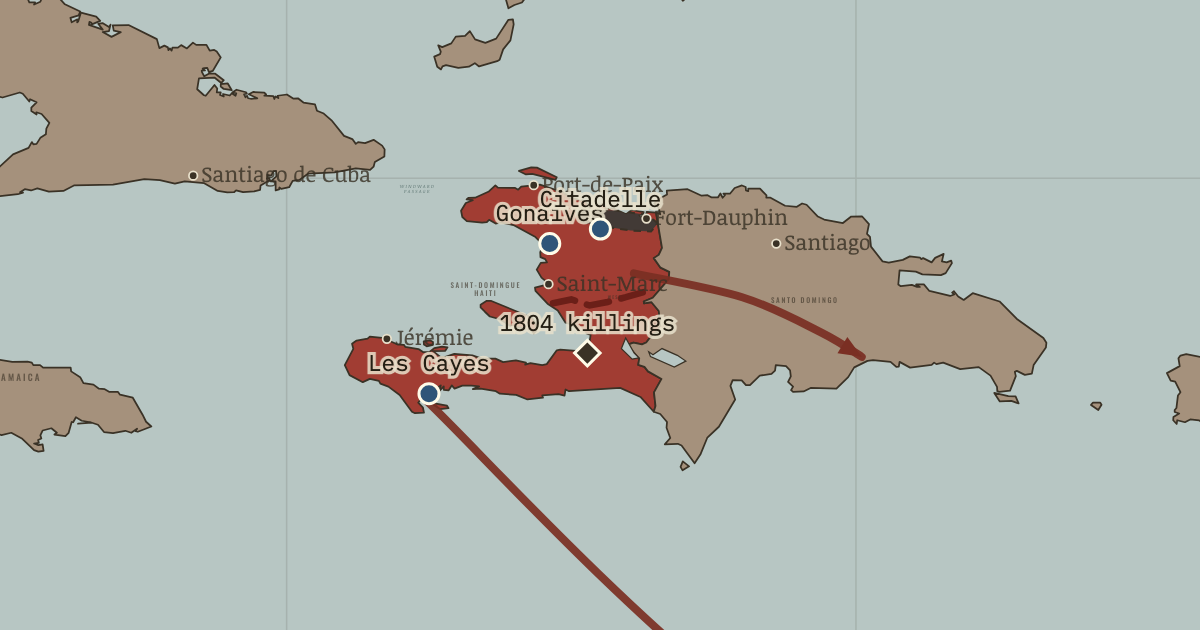
A slave revolution and a colony’s Emergency, side by side
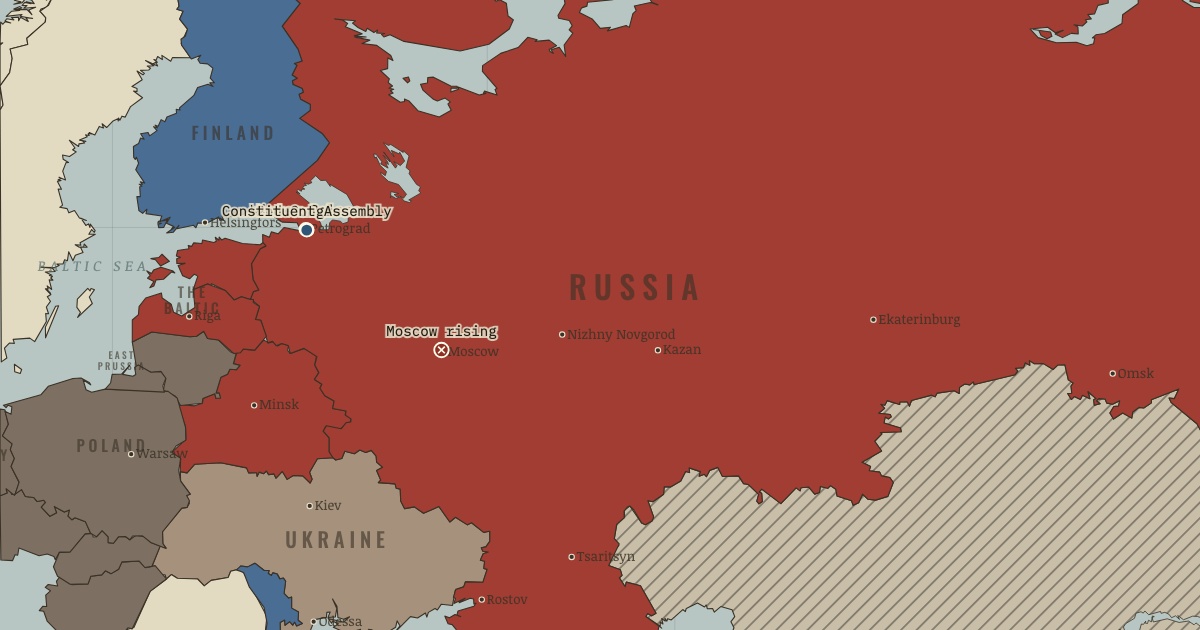
From the Great Reforms to the Soviet Union
How each began and what it left
The atlases without IB notes still answer the first and last questions of any theme: each opening chapter argues why its story began, and each closing chapter what it left behind. Here are those arguments in headline form, with the chapters that make them in full.
The Russian Revolution
1855 – 1924 · 14 CHAPTERS
How it began. The Great Reforms: Defeat on home soil · Serfdom as a military and financial brake · Fear of the village · An autocrat and his reformers
What it left. What Had Been Made: Stalin’s rise · A second, deadlier transformation to come · The world the revolution made
On the old course (2027 exams)
Students sitting the old course in 2027 will find the closest match in these world history topics, which our IB notes also tag:
- World history topic 10: Authoritarian states (20th century) · 16 CHAPTERS
The Soviet Union under Stalin, Protest and Change, The People’s Republic under Mao
The old-course page lists every chapter by topic.
Revision tools
Test yourself on the atlases with IB notes for this theme. Each atlas ends with a map quiz that asks you to find places and moments on the map itself; the quick quiz and the printable study guide are free pages on this site.
- The Soviet Union under Stalin
MAP QUIZ · QUICK QUIZ · PRINTABLE STUDY GUIDE - The People’s Republic under Mao
MAP QUIZ · QUICK QUIZ · PRINTABLE STUDY GUIDE - Remaking the State: Meiji Japan and Post-Soviet Russia
MAP QUIZ · QUICK QUIZ · PRINTABLE STUDY GUIDE - Protest and Change
MAP QUIZ · QUICK QUIZ · PRINTABLE STUDY GUIDE - Two Roads to Independence: Haiti and Kenya
MAP QUIZ · QUICK QUIZ · PRINTABLE STUDY GUIDE
Maps of History is independent and is not affiliated with or endorsed by the International Baccalaureate Organization. IB course names describe alignment only; paper, theme and section names follow the new course outline and may change when the final guide is published.
THE DISPATCH
A short welcome series, then a letter when a new atlas opens — and the printable study guide for The Soviet Union under Stalin is yours now, free.
NO TRACKING · YOUR ADDRESS IS USED FOR THE DISPATCH AND NOTHING ELSE · UNSUBSCRIBE ANYTIME