MAPS OF HISTORY · IB HISTORY · OLD COURSE
IB HISTORY · OLD COURSE · EXAMS IN MAY AND NOVEMBER 2027
IB History old course: notes for the 2027 exams
If your IB History exams are in May or November 2027, you sit the old course, the one first examined in 2017. Its Paper 1 has five prescribed subjects, its Paper 2 twelve world history topics, and Higher Level students add a regional option. The new course takes over from May 2028.
Our newest atlases were written for the new course, but their IB notes also tag every chapter that serves an old-course topic. This page lists those chapters topic by topic, each with a piece of evidence to use and a practice question. The chapter pages are free to read; the atlas adds the map, the full IB notes and the model essay plans.
WW2 is free — every chapter. Try chapters 1–2 of any 2 other atlases (3 with a free account). Opening a new atlas uses one of them. Membership opens all 21 — Join.
Prescribed subject 4: Rights and protest
2 CHAPTERS · 1 ATLAS
- Organising for EqualityPROTEST AND CHANGE · CHAPTER 2 · 1963–1970
- Who Was Left Out?PROTEST AND CHANGE · CHAPTER 4 · 1970–1981
At Atlantic City on 7 September 1968 a few hundred radical feminists protested against the Miss America pageant; nothing was burned, but the press invented the “bra-burner”, which made the movement famous and easy to mock.— Protest and Change, chapter 2: Organising for Equality
A question to practise: Evaluate the effectiveness of the methods used by women’s organisations to achieve equal treatment at work in the United States and Britain, 1963–1970. PROTEST AND CHANGE · CHAPTER 2 — the model plan is in the chapter’s IB notes in the atlas.
World history topic 7: Origins, development and impact of industrialization (1750–2005)
12 CHAPTERS · 1 ATLAS
- Why Britain?THE INDUSTRIAL REVOLUTION · CHAPTER 1 · c. 1750
- Cotton and the FactoryTHE INDUSTRIAL REVOLUTION · CHAPTER 2 · 1760–1830
- Steam, Coal and IronTHE INDUSTRIAL REVOLUTION · CHAPTER 3 · 1769–1830
- The Railway AgeTHE INDUSTRIAL REVOLUTION · CHAPTER 4 · 1825–1850
- Industrial SocietyTHE INDUSTRIAL REVOLUTION · CHAPTER 5 · 1800–1850
- ResistanceTHE INDUSTRIAL REVOLUTION · CHAPTER 6 · 1811–1848
- The Continent FollowsTHE INDUSTRIAL REVOLUTION · CHAPTER 7 · 1815–1870
- The Second Industrial RevolutionTHE INDUSTRIAL REVOLUTION · CHAPTER 8 · 1870–1914
- America IndustrialisesTHE INDUSTRIAL REVOLUTION · CHAPTER 9 · 1865–1914
- Japan: Industrialisation from AboveTHE INDUSTRIAL REVOLUTION · CHAPTER 10 · 1868–1914
- A Global TransformationTHE INDUSTRIAL REVOLUTION · CHAPTER 11 · 1850–1914
- Who Won and Who LostTHE INDUSTRIAL REVOLUTION · EPILOGUE · 1750–1914
Kenneth Pomeranz estimates that by about 1830 Britain’s imports of cotton, sugar and timber replaced the produce of 25 to 30 million acres, more than all its farmland, so colonies relieved Britain’s shortage of land.— The Industrial Revolution, chapter 1: Why Britain?
A question to practise: To what extent were economic factors the main reason why industrialisation began in Britain? THE INDUSTRIAL REVOLUTION · CHAPTER 1 — the model plan is in the chapter’s IB notes in the atlas.
World history topic 8: Independence movements (1800–2000)
5 CHAPTERS · 1 ATLAS
- The White HighlandsTWO ROADS TO INDEPENDENCE · CHAPTER 7 · 1895–1939
- War, Land and the OathTWO ROADS TO INDEPENDENCE · CHAPTER 8 · 1939–1952
- The EmergencyTWO ROADS TO INDEPENDENCE · CHAPTER 9 · 1952–1960
- The Road to UhuruTWO ROADS TO INDEPENDENCE · CHAPTER 10 · 1960–1963
- Challenges after IndependenceTWO ROADS TO INDEPENDENCE · CHAPTER 11 · 1963–1978
Under the Native Registration Ordinance, compulsory from 1919–20, every African man over sixteen had to carry a kipande recording his fingerprints and employers, which tied the labour market to police control.— Two Roads to Independence, chapter 7: The White Highlands
A question to practise: Examine the ways in which colonial rule in Kenya created the grievances that later fuelled nationalism, 1895–1939. TWO ROADS TO INDEPENDENCE · CHAPTER 7 — the model plan is in the chapter’s IB notes in the atlas.
World history topic 10: Authoritarian states (20th century)
16 CHAPTERS · 3 ATLASES
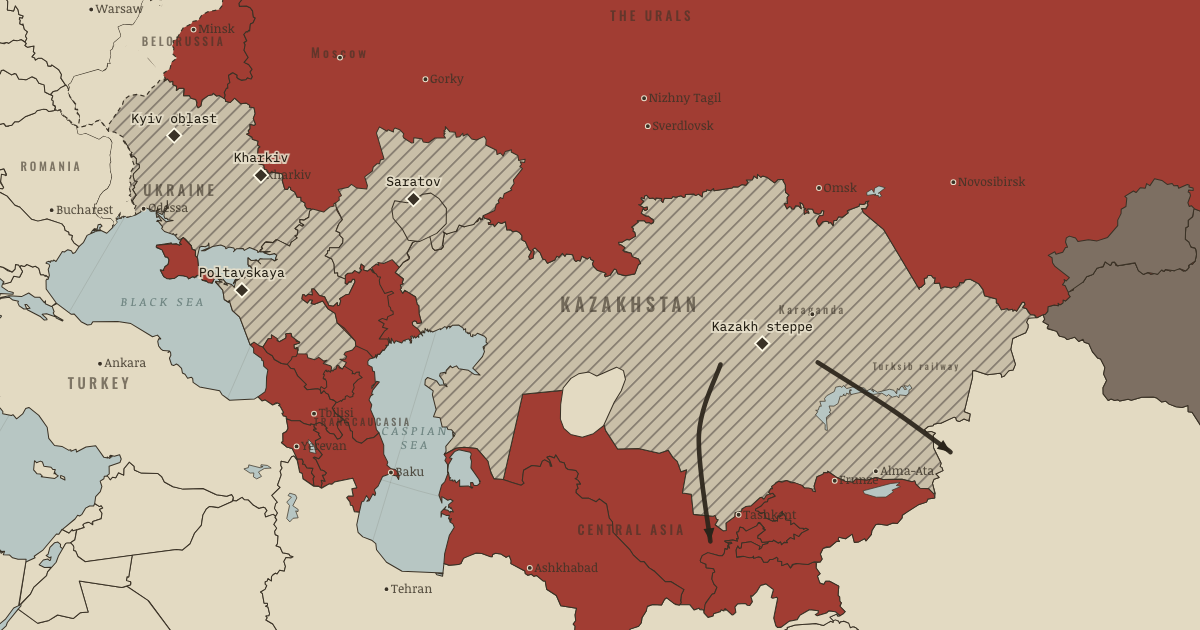
- The SuccessionTHE SOVIET UNION UNDER STALIN · CHAPTER 1 · 1924–1929
- The FaminesTHE SOVIET UNION UNDER STALIN · CHAPTER 3 · 1930–1933
- The Five-Year PlansTHE SOVIET UNION UNDER STALIN · CHAPTER 4 · 1928–1941
- The Great TerrorTHE SOVIET UNION UNDER STALIN · CHAPTER 6 · 1936–1938
- Propaganda and the CultTHE SOVIET UNION UNDER STALIN · CHAPTER 8 · 1929–1953
- Daily Life, Women and FamilyTHE SOVIET UNION UNDER STALIN · CHAPTER 9 · 1930–1953
- Death and JudgementTHE SOVIET UNION UNDER STALIN · EPILOGUE · 1953–1956
At the Fourteenth Congress in December 1925 the Leningrad delegation of Zinoviev and Kamenev was overwhelmingly outvoted, showing how quickly Stalin could turn on former allies once Trotsky had been weakened.— The Soviet Union under Stalin, chapter 1: The Succession
- Bourguiba’s TunisiaPROTEST AND CHANGE · CHAPTER 7 · 1956–1987
- Ben Ali: Stability and SilencePROTEST AND CHANGE · CHAPTER 8 · 1987–2010
Ahmed Ben Salah’s forced cooperatives provoked resistance at Ouardanine in January 1969, and Bourguiba abandoned collectivisation and had Ben Salah tried and jailed in 1970.— Protest and Change, chapter 7: Bourguiba’s Tunisia
The People’s Republic under Mao
- The Soviet ModelTHE PEOPLE’S REPUBLIC UNDER MAO · CHAPTER 4 · 1953–1957
- A Hundred FlowersTHE PEOPLE’S REPUBLIC UNDER MAO · CHAPTER 5 · 1956–1957
- The Great Leap ForwardTHE PEOPLE’S REPUBLIC UNDER MAO · CHAPTER 6 · 1958–1960
- The Great FamineTHE PEOPLE’S REPUBLIC UNDER MAO · CHAPTER 7 · 1959–1961
- The Cultural RevolutionTHE PEOPLE’S REPUBLIC UNDER MAO · CHAPTER 9 · 1966–1968
- Down to the CountrysideTHE PEOPLE’S REPUBLIC UNDER MAO · CHAPTER 10 · 1968–1971
- Mao’s Death and LegacyTHE PEOPLE’S REPUBLIC UNDER MAO · EPILOGUE · 1976
The 1954 Constitution guaranteed freedom of speech and of residence, yet the household registration regulations of January 1958 required peasants to obtain official permission before moving to a city.— The People’s Republic under Mao, chapter 4: The Soviet Model
A question to practise: To what extent was Stalin’s rise to power by 1929 the result of his control of the party apparatus? THE SOVIET UNION UNDER STALIN · CHAPTER 1 — the model plan is in the chapter’s IB notes in the atlas.
World history topic 11: Causes and effects of 20th-century wars
3 CHAPTERS · 2 ATLASES
- Europe UprootedUPROOTED · CHAPTER 1 · MAY 1945
- The DP CampsUPROOTED · CHAPTER 4 · 1945–1947
Nearly six million displaced persons were repatriated from the western zones of Germany by the end of September 1945, yet more than a million refused or were unable to go home and became the “last million” of the camps.— Uprooted, chapter 1: Europe Uprooted
The People’s Republic under Mao
- Korea and the CampaignsTHE PEOPLE’S REPUBLIC UNDER MAO · CHAPTER 2 · 1950–1953
Mao suggested in early 1951 that executions should run at about one per thousand people, and Yang Kuisong’s research in Party documents shows the centre setting ratios and then slowing the killing in late April 1951.— The People’s Republic under Mao, chapter 2: Korea and the Campaigns
A question to practise: Examine the reasons why the end of the Second World War in Europe led to mass displacement. UPROOTED · CHAPTER 1 — the model plan is in the chapter’s IB notes in the atlas.
World history topic 12: The Cold War: superpower tensions and rivalries (20th century)
5 CHAPTERS · 3 ATLASES
- High StalinismTHE SOVIET UNION UNDER STALIN · CHAPTER 11 · 1945–1953
Yugoslavia was expelled from the Cominform on 28 June 1948 after Tito refused Soviet direction, and Stalin answered with show trials of alleged “Titoists” such as László Rajk (1949) and Rudolf Slánský (1952).— The Soviet Union under Stalin, chapter 11: High Stalinism
- From Relief to RightsUPROOTED · CHAPTER 5 · 1947–1952
- Integration and the Cold WarUPROOTED · CHAPTER 6 · 1950–1961
- Geneva and the US ResponseUPROOTED · CHAPTER 10 · 1979–1982
The 1951 Convention covered only events before 1 January 1951 and let states limit it to Europe, while Article 1D excluded the 700,000 to 750,000 Palestinian refugees under UNRWA and Article 1E excluded German expellees.— Uprooted, chapter 5: From Relief to Rights
The People’s Republic under Mao
- From Soviet Ally to NixonTHE PEOPLE’S REPUBLIC UNDER MAO · CHAPTER 11 · 1960–1972
Henry Kissinger flew secretly from Pakistan to Beijing in July 1971, and on 25 October 1971 the UN General Assembly voted 76 to 35 to give China’s seat to the People’s Republic.— The People’s Republic under Mao, chapter 11: From Soviet Ally to Nixon
A question to practise: Compare and contrast the methods Stalin used to maintain control in the 1930s and after 1945. THE SOVIET UNION UNDER STALIN · CHAPTER 11 — the model plan is in the chapter’s IB notes in the atlas.
Higher Level · History of Asia and Oceania, section 15
5 CHAPTERS · 1 ATLAS
The People’s Republic under Mao
- Consolidating VictoryTHE PEOPLE’S REPUBLIC UNDER MAO · CHAPTER 1 · 1949–1950
- Tibet and the FrontiersTHE PEOPLE’S REPUBLIC UNDER MAO · CHAPTER 3 · 1950–1959
- The Great FamineTHE PEOPLE’S REPUBLIC UNDER MAO · CHAPTER 7 · 1959–1961
- Retreat and RecoveryTHE PEOPLE’S REPUBLIC UNDER MAO · CHAPTER 8 · 1961–1965
- From Soviet Ally to NixonTHE PEOPLE’S REPUBLIC UNDER MAO · CHAPTER 11 · 1960–1972
Land reform was carried out through “speak bitterness” meetings that often ended in killings; most estimates put the dead at between one and two million, and the violence made villagers complicit in the new order.— The People’s Republic under Mao, chapter 1: Consolidating Victory
A question to practise: Examine the reasons why the Chinese Communist Party was able to consolidate its rule over China between 1949 and 1953. THE PEOPLE’S REPUBLIC UNDER MAO · CHAPTER 1 — the model plan is in the chapter’s IB notes in the atlas.
Atlases with study notes for the old course too
These atlases were written before the IB layer and have no IB notes yet, but their chapters cover much of the old course’s content, from the causes of the world wars to the Cold War, and each has an IB History page with study notes and essay questions:
- The Crusades · 1095 – 1291
- The Mongol Empire · 1206 – 1294
- The Age of Revolutions · 1775 – 1848
- The American Civil War · 1840 – 1877
- The Russian Revolution · 1855 – 1924
- Indian Independence & Partition · 1857 – 1964
- The First World War · 1871 – 1923
- China in Revolution · 1911 – 1949
- The Road to War · 1931 – 1941
- The Second World War · 1936 – 1945
- The Cold War · 1945 – 1991
- The Decolonization of Africa · 1945 – 1994
Revision tools
Test yourself on the atlases whose IB notes tag old-course topics. Each atlas ends with a map quiz that asks you to find places and moments on the map itself; the quick quiz and the printable study guide are free pages on this site.
- The Industrial Revolution
MAP QUIZ · QUICK QUIZ · PRINTABLE STUDY GUIDE - Two Roads to Independence: Haiti and Kenya
MAP QUIZ · QUICK QUIZ · PRINTABLE STUDY GUIDE - The Soviet Union under Stalin
MAP QUIZ · QUICK QUIZ · PRINTABLE STUDY GUIDE - Protest and Change
MAP QUIZ · QUICK QUIZ · PRINTABLE STUDY GUIDE - Uprooted: Refugees in Europe and Indochina
MAP QUIZ · QUICK QUIZ · PRINTABLE STUDY GUIDE - The People’s Republic under Mao
MAP QUIZ · QUICK QUIZ · PRINTABLE STUDY GUIDE
Maps of History is independent and is not affiliated with or endorsed by the International Baccalaureate Organization. IB course names describe alignment only; paper, theme and section names follow the new course outline and may change when the final guide is published.
THE DISPATCH
A short welcome series, then a letter when a new atlas opens — and a printable atlas study guide of your choice is yours now, free.
NO TRACKING · YOUR ADDRESS IS USED FOR THE DISPATCH AND NOTHING ELSE · UNSUBSCRIBE ANYTIME